

st. Michael's Church Church
The chapel of St. Michael in the village of Kurima in Prešov region is a Baroque building from 1703 with a rotundy floor plan. It served as a family crypt of the Szirmay family, who at the time of construction became owners of the Kurim part of the Makovický estate. The chapel was built on a hill east of the village center.
The building has a circular floor plan and a flat ceiling. Only the altar space ends one field of the cross ridge vault. The building was secondary bricked Gothic stone quarry portal with one rod in the lining, which comes from the local church. The interior contains an incomplete altar with elements from the construction period and an image of the Assumption of the Virgin Mary from the second half of the 19th century in a pseudoclassicist frame.
Countess Carolina Szirmay is buried in the chapel. Its pseudogothic tombstone from 1869 bears the Latin inscription according to which she was born on 11 May 1802 in the county of Volkenstein Trotsburg and died on 8 December 1849.
The building was in ruins between 1839 and 1861. It subsequently undergone renovations in 1861, 1894 and 1907. In the first half of the 20th century, the chapel was repaired and covered. The area is registered by the Monument Office of the Slovak Republic under number ÚZPF 211.
The chapel stands at the cemetery in the northeastern part of the village Kurima, where it is accessible to visitors.
Tehdy a dnes
Drag the slider and compare how the monument might have looked when it was built with the view today.
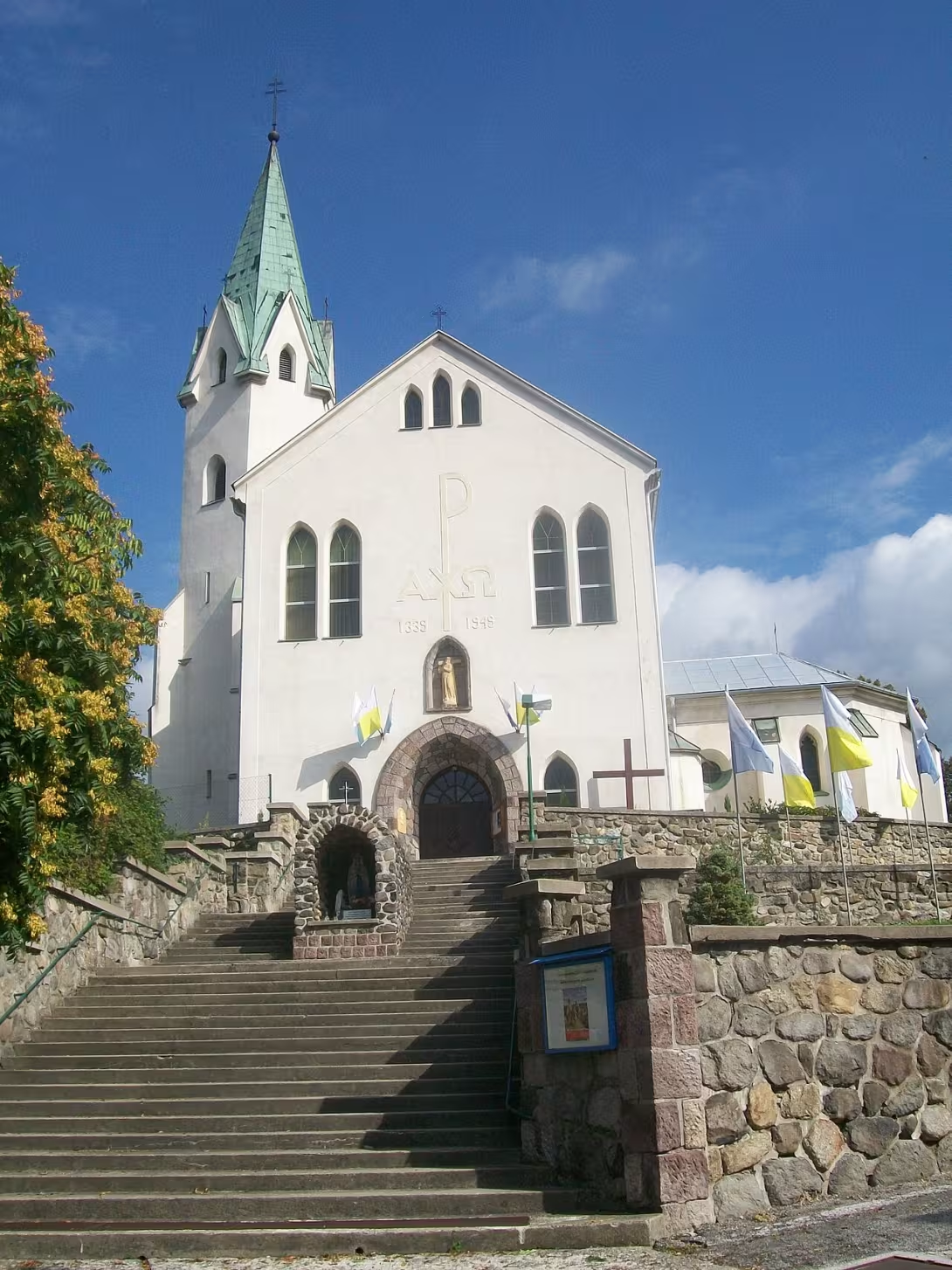
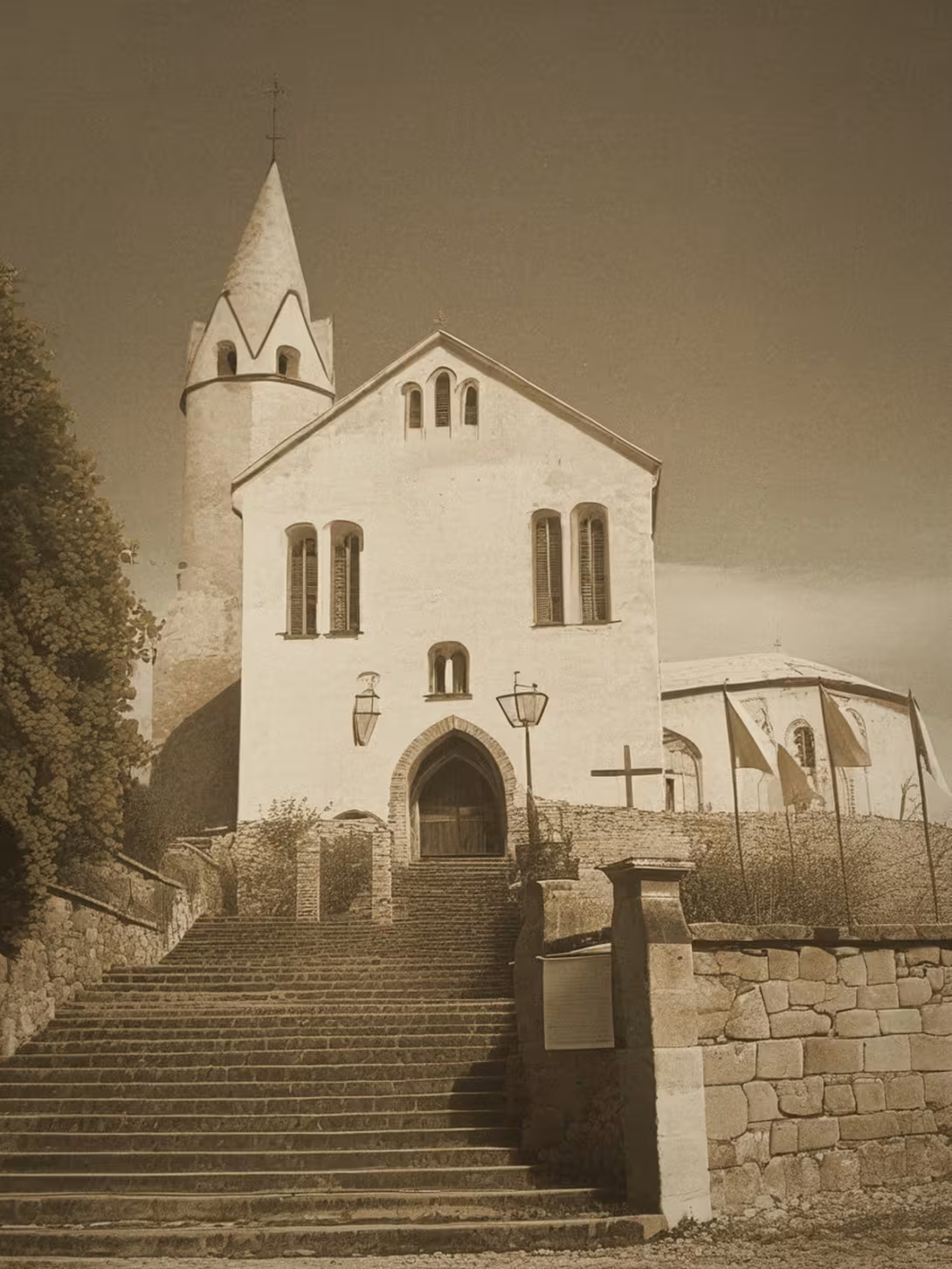
The historical view on the left is a visualisation generated by artificial intelligence and serves as inspiration.
Historical Milestones
- 1703
- construction of a baroque chapel
- 1839-1861
- the building was in ruins
- 1861
- renovation
- 1894
- renovation
- 1907
- renovation
- 1st half of the 20th century
- repair and roofing
Interesting facts
- It is a Baroque building from 1703 with a rotunda floor plan, which served as a family crypt of the Szirmay family. - The building was secondary bricked Gothic stone quarry portal, which comes from the local church. - The interior contains an incomplete altar and an image of the Assumption of the Virgin Mary from the second half of the 19th century. - Countess Karolina Szirmayová is buried in the chapel with a pseudogothic tombstone from 1869. - The building was in ruins between 1839 and 1861, later following several renovations.
Guide
Show guide text
The text was prepared by artificial intelligence and has not been editorially reviewed. It may contain inaccuracies.
We welcome you to the village of Kurima, in the heart of the Prešov region, where quiet witnesses of the past are floating before you right now. You stand in front of St. Michael's Church, which the locals know more like a chapel. When you look at it, you may be impressed by its modesty, but it is in this silversmith that there is a fascinating story about family sonhood, demise, and resurrection. Feel the atmosphere of this place and let yourself stop for a moment in today's fast world to feel the spirit of the Baroque era.
Let's now look at how this building originated and what its original meaning was. Let us write the year 1703, the period when the Baroque forms began to dominate the country. Just this year this chapel was built. However, it was not intended as the main church for the whole village, but had a much more personal and intimate character. She served as a family crypt for the Szirmay family. Imagine, then, that this place was not primarily for mass worship, but for silent prayer for the deceased and for honoring the memories of members of a noble family. It is a place of peace that was designed to link the world of the living with eternity.
Nyni pay attention to the architecture itself and to what you see right in front of you. If you look at the foundation or foundation, you will notice something very specific. This building has no classic rectangular shape, which we know from many local chapels. It has a rotational plan, which means its base is round. This shape gives the building a harmonious and closed character, typical for certain types of sacral buildings from this period.
However, as you approach the walls and take note of the details, you will encounter one of the most interesting features of this building. Look carefully at the portal, the entrance to the building. Note that this stony broken portal looks different from the rest of the baroque structure. And you're right, because it's not baroque, it's gothic. It's an element that didn't belong here from the beginning. This Gothic portal was walled to the chapel secondary. It comes from a local church and its presence here is a fascinating example of how older building elements in newer buildings were used in the past. It's what sorts of architecture in architecture where gothic meets baroque at one point.
The history of this building was not just a story of construction and beauty. If we look deeper into time, the chapel has gone through a period of deep decline. Between 1839 and 1861 there was a building in ruins. Imagine this view almost two hundred years ago - broken walls, growing surroundings, and silence that replaced prayers. It would be easy to assume that this family graveyard would disappear forever, but it happened differently. In 1861 came the first major renovation that saved the building from total extinction. Followed by further repairs in 1894 and 1907. Even in the first half of the 20th century, the construction was taken care of, and then it was repaired and finally covered, allowing it to survive until today.
If you now look inside, you will see a space that, although modest, still bears traces of its spiritual function. In the interior there is an incomplete altar, which testifies to the time and restoration. The most striking element, however, is the picture of the Assumption of the Virgin Mary, which comes from the second half of the eighteenth century. This picture complements the overall impression from the place and reminds us that even in the shadow of the family graveyard, people sought hope in heavenly protection.
It's fascinating to think about how many layers of history this little buildinghouse carries. From the Baroque foundation in 1703, to the tragic period of ruins, to resurrection in the nineteenth and twentieth centuries. And that secret detail - the Gothic portal that they brought here from another church to save a piece of older art. It is a place where time has stopped and where every stone tells of monuments that we have built so that we are not forgotten.
We're slowly saying goodbye to this quiet corner in Kurima. We hope that you were interested in this short trip to the past and that you could imagine how this rotunda chapel survived centuries of change. Now we invite you to enjoy the peace of this place for a while more, to go around the building, and perhaps to think quietly about what stories the walls would tell us if they could speak. Thank you for your attention and we wish you a pleasant continuation in your journey along beautiful Prešov region.
Tips for visitors
We recommend a visit in spring and summer, when the surroundings of the chapel in the flower. You come to the village of Kurima by car or public transport; check the current links in the internet search engine.
We recommend comfortable shoes in the field and water. Since it is a sacral structure, we recommend clothing according to the nature of the site.
For photography are suitable moments shortly before darkening, when soft light highlights the details of the facade of St. Michael's church. Images will arise from a high view or from the surroundings of the building, where its shape is visible in the country.
For families with children, visiting the chapel is an opportunity to take a short walk in nature and get to know the local architecture.
Frequently asked questions
Can the monument be visited?
Religious buildings are usually open mainly during services; at other times a visit is normally arranged with the parish or the operator. We have not verified specific times.
Where is the monument?
Location: Nám. Sv. Michala 182/30, Kurima, Prešovský kraj. The map on this page shows the exact spot.
Why is the monument protected?
It is listed in the Central List of the Monuments Fund of the Slovak Republic as a national cultural monument (ÚZPF no. 411-211).
For children
Close your eyes and imagine pressing a secret button on a time machine. Boom! It's bringing you back exactly 323 years.
We're in the village of Kurima. There is dense air and silence around us that only interrupts the noise of trees. Here, in a country where secrets meet, people build something special. It's not an ordinary house or a huge temple. It's a small, round structure that looks kind of like a fairy tale tower or a secret base. It's called St. Michael's Church, but everyone knows it simply as the Chapel.
Nearby
🏰 Historic sites (39)
- Kaštiel Kurima 0.1 km Námestie sv. Michala 210/35 web
- Kaštieľ Marhaň 6.7 km web
- Kúria 8.8 km
- Kúria 9.1 km
- Padlým ruským vojakom 9.7 km
- Kaštieľ Kalnište 11.2 km web
- Múzeum ukrajinskej kultúry 11.4 km web
- Pamätník padlím z I. svetovej vojny 11.5 km
- Hrad Svidník 11.6 km
- 10. výročie vzniku ČSR 12.1 km
- Vojenské múzeum 12.1 km Bardejovská 414/25 +421 54 752 1398 web
- Ludvík Svoboda 12.2 km
- Múzeum ukrajinsko-rusínskej kultúry 12.2 km Centrálna 258/6
- Kaštieľ Želmanovce 12.2 km web
- Galéria Dezidera Millyho 12.5 km web
- Kaštieľ Svidník 12.5 km Partizánska 45/20 web
- Horný kaštieľ Raslavice 12.7 km Kláštorná 102/47 web
- Dolný kaštieľ Raslavice 12.8 km Kláštorná 56/1
- Kaštieľ rodiny Banó 13.1 km
- cintorín z 1. svetovej vojny 13.1 km
🍽️ Restaurants and dining (104)
- Campari Club 6.7 km
- Pizza Marhaň 6.7 km web
- Hostinec 8.4 km
- PePe Pub 9.7 km web
- Motorest Polianka 11.9 km Stročín 120
- U San Marka 12.1 km
- Pizza Grill Cafe Marco 12.2 km Poštová 274
- Life Coffee Club 12.2 km
- ZDROJ Beer & Restaurant 12.2 km Centrálna 694/80
- Pivko pod kaštieľom 12.2 km
- Mc. KEBAB Svidník 12.2 km Komenského 65/16
- Cafe Siesta 12.3 km
- BURI Kebab 12.3 km Centrálna 676/75
- Vermex Lokal 12.3 km web
- Slávia 12.5 km
- Slávia 12.5 km web
- Reštaurácia Družba 12.5 km
- Bar U Joška 12.8 km +421 907 918 089
- Hanoi Bistro Svidník 13.0 km 8. mája 696/54
- Monte Carlo 13.0 km
🏨 Accommodation (17)
- Stara Posta 12.0 km web
- Hotel RUBÍN 12.2 km Centrálna 274/9
- Slávia 12.5 km Gen. Svobodu 706/37 web
- Comenius Apartments - Apartmány na rohu 12.6 km Komenského 315/24
- Penzión Adrián 12.8 km +421 903 633 210 web
- Motel Raslavičan 13.2 km
- Horal 13.2 km
- Hotel Alfa 13.5 km Dukelská 70/71
- Jami 14.4 km
- Poľovníček 14.4 km
- chata na Kozej brade 14.4 km
- Le Monde 14.6 km +421 902 123 555;+421 948 636 100
- B&B Alibi 14.8 km +421948123500 web
- Chata pod Haľagošom 14.9 km
- Hotel pod Bránou 14.9 km
- SEMAFOR 15.0 km +421 905 830 984 web
- Motorest Mark 15.0 km
🚲 Rentals and sport (7)
- Peem Servis 12.3 km web
- AquaRelax 13.0 km
- Kúpalisko Stropkov 14.4 km web
- Mc Sport 14.7 km
- Sportisimo 14.7 km
- Intersport 14.8 km
- Krytá plaváreň 14.9 km
🥾 Hiking and nature (139)
Thematic route
As there are no other objects in the area of the area, I propose a thematic route focused on the main objective and its area:
1. Church of St. Michael (Challengue) - The main monument in the village Kurima. 2. Church area - Outdoor space around the building. 3. Interior of the chapel - Indoor space, which serves local residents for prayer and meditation.
Seasonal recommendations
In the spring, the surroundings of St. Michael's Church in Kurim greenery. Fine lighting during this period makes it easier to photograph the exterior of the building. It is recommended that shoes suitable for wet terrain and visit in the morning.
Summer season brings intense light and rich colors of nature that contrast with the architecture of the chapel. Due to high temperatures it is advisable to arrive early in the morning or late in the evening when it is more peaceful around Prešov region. Practically easy, breathable clothing and sun protection.
In the autumn nature around the monuments turns into golden and red tones. The low sun creates long shadows and highlights the details of the facade. When planning the trip, it is advisable to count on colder weather and the kidneys with layers.
Zimą snow cover highlights the line of this sacral structure. In Advent times, days are short and natural light is limited. Warm, waterproof clothing and footwear with antislip soles are essential.
Visualisations and artistic views


The visualisations are generated by artificial intelligence and serve as inspiration.
Visitor Tips
No tips yet. Be the first!
Log in and add your tip.
Location on Map

Visitor photos
No photos yet. Be the first to add a photo from your visit!
Log in and add your photo or leave a rating.
You get more points for a visit verified in the app — we can tell from the GPS that you are there.
Reviews and comments