

st.Margita church Church
The church of St. Margita in the village Turčianske Jaseno in the Žilina region is a national cultural monument from the turn of the 13th and 14th centuries. The building combines Gothic architecture with Romanesque elements.
For the first time, the church is mentioned in written documents in 1332. According to the layout and architecture of the presbytery can be dated to the period around 1300. The building was built in an elevated position in the first quarter of the 14th century. It is believed that its creation was related to the construction workshop from the Monastery below Zniev.
Inside there are crypts. The original fresco decoration from the 14th to 16th centuries included consecration crosses. Decorative painting with medallions was created in the Presbytery in 1587. The summer number 1321 is engraved on the altar menu.
At the end of the 16th century, the church passed into the hands of Protestants, who covered the original frescoes with lime. Between 1636 and 1648 the ship was renaissanceally closed and adapted to liturgical needs. During this period the original southern entrance was bricked and the building was made available from the west side. From 1653 comes painted wooden empora. At the beginning of the 18th century, the building returned to the ownership of the Catholic Church, which transferred it to the village in 1830.
In 1904 was replaced roofing and in 1967 the church received a new shingle roofing. He obtained the status of a national cultural monument in 1963. In 1964 the municipality handed it over to the ownership of the state under the administration of the Monikastav in Martin. Archaeological research from 1982 revealed masonry of old additions. Fresco decoration was restored in the late 1990s.
The church of St. Margita belongs to the parish Martin and is registered under number ÚZPF 547.
Tehdy a dnes
Drag the slider and compare how the monument might have looked when it was built with the view today.
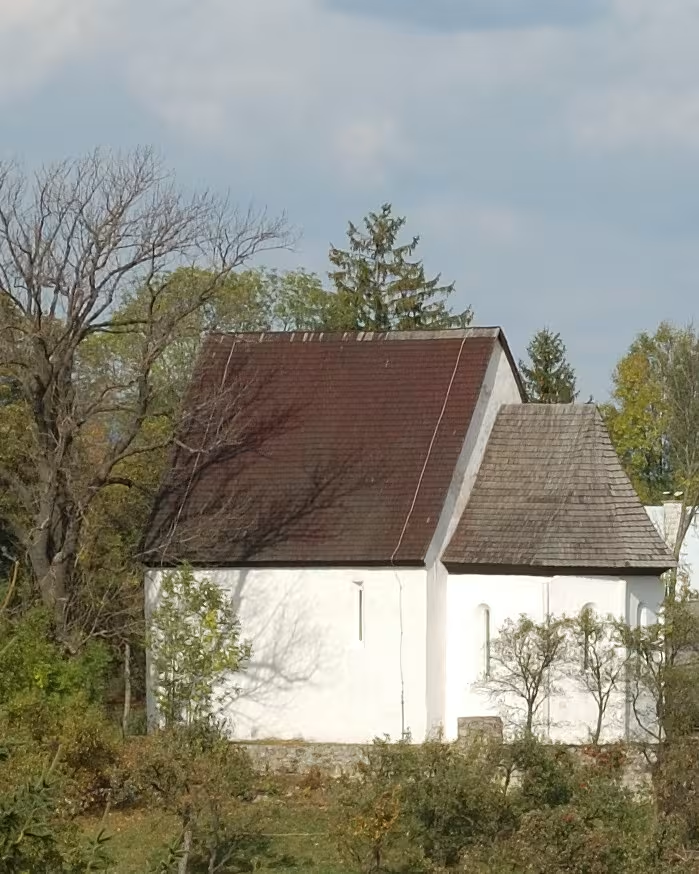
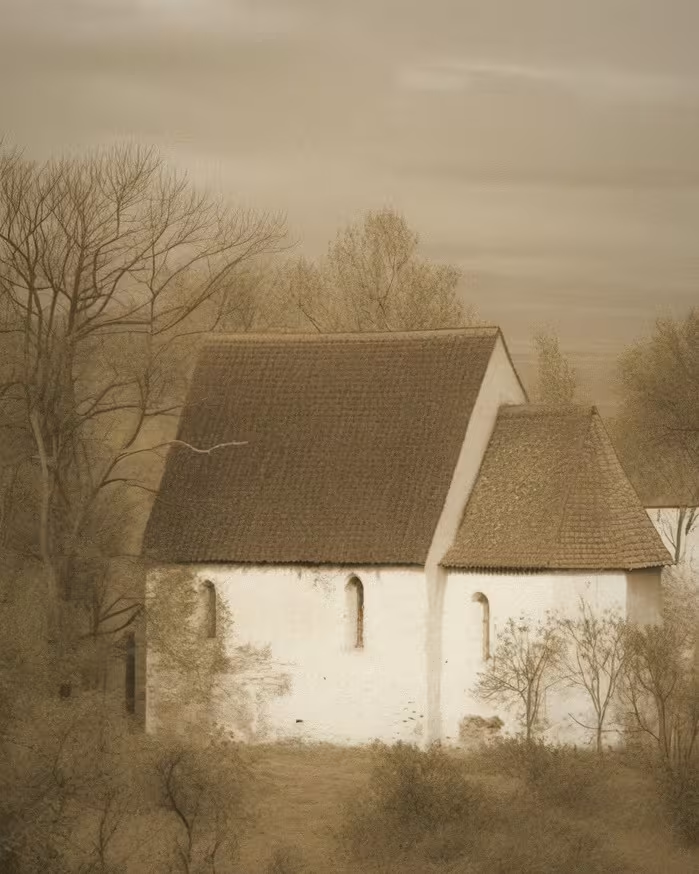
The historical view on the left is a visualisation generated by artificial intelligence and serves as inspiration.
Historical Milestones
- 1332: first written mention in documents
- 1321: summer on the altar menu
- 1587: creation of decorative painting with medallions in the presbytery
- 1636 - 1648: renaissance lockdown
- 1653: formation of painted wooden empora
- Early in the 18th century: a return to ownership of the Catholic Church
- 1830: conversion of church to village
- 1904: replacement of roofing
- 1963: acquisition of national cultural heritage status
- 1964: Transfer to the State under the administration of the Monument
- 1967: new shingle roofing
Restoration history
| Years | Type | Extent | Condition after restoration |
|---|---|---|---|
| 2018 |
Obnova
kostol sv.Margity |
Časť obnovená komplexne | vyhovujúci |
Source: Monuments Board of the Slovak Republic — open data, licence CC BY 4.0
Artistic features
-
maľba s kresťanským symbolom — Konsekračný kríž
omietka, freska · romanika · 2.pol.13.st. -
maľba figurálna — Adam a Eva
omietka, freska · gotika raná · 1.pol.14.st. -
maľba figurálna — Súbor stredovekých malieb
omietka, freska · gotika · 2.pol.14.st. -
maľba figurálna — Imago Pietatis
omietka, freska · gotika raná · 1.pol.14.st. -
maľba s nápisom — Nápis
omietka, secco - maľba na suchú omietku · bez slohových znakov · 2.pol.16.st. -
maľba figurálna — sv.Katarína,sv.Margita
omietka, freska · gotika raná · 1.pol.14.st. -
maľba figurálna — sv.Krištof
omietka, freska · gotika raná · 1.pol.14.st. -
maľba figurálna — Súbor stredovekých malieb
omietka, freska · gotika neskorá · prelom 15. a 16.st. -
maľba figurálna — Panna Mária Ochrankyňa,sv.Margita Antiochijská,sv.Barbora
omietka, freska · gotika neskorá · prelom 15. a 16.st. -
maľba figurálna — Súbor stredovekých malieb
omietka, freska · gotika raná · 1.pol.14.st. -
maľba figurálna s dekorom — Medailón s polpostavou muža
omietka, freska · gotika · 2.pol.14.st. -
maľba s kresťanským symbolom — Konsekračný kríž
omietka, freska · romanika · 2.pol.13.st. -
maľba figurálna — sv.Peter,sv.Pavol,sv.Ján Evanjelista
omietka, freska · gotika raná · 1.pol.14.st. -
maľba figurálna — Narodenie Krista
omietka, freska · gotika raná · 1.pol.14.st. -
maľba figurálna — Svätica
omietka, freska · gotika neskorá · prelom 15. a 16.st. -
maľba s kresťanským symbolom — Konsekračný kríž
omietka, freska · romanika · 2.pol.13.st. -
maľba dekoratívna — Výzdoba sanktuária
omietka, freska · gotika · 2.pol.14.st. -
maľba s kresťanským symbolom — Konsekračné kríže
omietka, freska · romanika · 2.pol.13.st. -
maľba figurálna s dekorom — Hlava Krista
omietka, freska · gotika · 2.pol.14.st. -
maľba figurálna — sv.Alžbeta podáva kráľovskú korunu mrzákovi
omietka, freska · gotika raná · 1.pol.14.st. -
maľba figurálna — Neidentifikovaná scéna
omietka, freska · gotika raná · 1.pol.14.st. -
maľba figurálna — sv.Helena
omietka, freska · gotika · 2.pol.14.st. -
maľba figurálna — sv.Michal vážiaci duše - Psychostasis
omietka, freska · gotika raná · 1.pol.14.st.
Source: Monuments Board of the Slovak Republic — open data, licence CC BY 4.0
Interesting facts
The building combines Gothic architecture with Romanesque elements. - It is believed that the church was established in connection with the construction workshop from the Monastery below Znievom. - In the interior there are crypts and on the altar mension is engraved the number 1321. - Decorative painting with medallions was created in the Presbytery in 1587. - From 1653 comes painted wooden empora.
Guide
The guide was voiced by a synthetic voice created by artificial intelligence.
Show guide text
The text was prepared by artificial intelligence and has not been editorially reviewed. It may contain inaccuracies.
Welcome to Turčianska Jasen. You stand by one of those places where time seems a little different than we know it in our fast and constantly changing world. In front of you, the church of St. Margita, a monument, which is not only a building of stone and mortar, but a silent witness of the centuries that raced around us. Look at his silhouette, how he fits into the local country. At first glance, you may not feel the whole depth of it, but let yourself be carried away by the atmosphere of this place. Feel the silence surrounding him, and imagine how many twisted fates, prayers, and lives this place has driven for its existence ferry.
Although we are today seeking every information from the past, it is not possible for us to know everything completely. The history of this church is just like life - sometimes clear, sometimes shrouded in mistyness. The unknown exact name of the architect who first drew the plans of the building, nor the exact name of the people who molded the religious life in that area. However, this anonymity does not mean that this place is meaningless. On the contrary, it is this unknownness that gives the church a special, almost mystical charm. We're just here as short-term visitors, while this building here lasts, unknown, but unhindered.
However, there are clues that help us to understand where this church came from. We believe that its origin was closely connected with the construction workshop that worked in the Monastery under Zniev. That's a very important lead for us. The monastery under Znievom was at the time when the church was formed, an important center of high art and professional skill. If masters from such an important place moved in this area, it means that the church of St. Margita was not just a mere village building, but a result of the work of people who understood the material, geometry and spiritual dimension of architecture.
Now, when you look at the construction itself, pay attention to the way two different worlds face it. The church is a fascinating example of how different styles mix in time. In it you will see elements of Roman architecture, which is characterized by its stability, thicker walls and a feeling of inadequacy. It's a style that talks about safety and strength. At the same time, however, you will find elements of Gothic that bring lightness, vertical dynamics and the desire to connect with the heavens. This combination is not just an aesthetic matter; it is a visual record of how the taste, technology and understanding of the world changed during the centuries when the church broke down and modified.
Let's go mentally to what awaits you in the interior. When you come in, try to turn down your sensitive organs for a while. Crypts are hiding under your feet. These underground spaces are places where history rests in its purest form. They are places of deep peace that remind us that every generation that stood before is part of something far greater than our moment.
When you look at the altar draft later, pay attention to one of the most important details you will find here. The stone itself is engraved C.E. 1321. Imagine the power of this number. It is a direct voice from the past that connects us to the time of the transfer of traditions, when each engraved sign had to be performed with immense precision and respect. This year it tells us that in this particular time, in this place, there was something important that people wanted to remember forever.
Don't miss what happened later. There is something in the presbytery that is proof of another chapter in the history of this church. In 1587 a decorative painting with medallions was created here. It's a fascinating contrast to the old, rocky fortress you see. This painting brings to the space softness and artistic richness of the period that has long passed, but its legacy in the form of these medallions still lives right in front of your eyes. It is like a conversation between the century and the end of the sixteenth century that takes place in the silence of this holy space.
See this architecture as a living organism that keeps growing and changing, yet retains its soul. Every detail, from thick stone to fine painting, is part of a great story that we are only a small part of.
I won't hold you much longer now. I invite you to continue your next browsing, to move slowly through space, to see the light on the walls, and to be swallowed up by this place. Don't forget to stop at the details that will address you the most. You may be interested in the game of shadows in boxes or the accuracy of the engraved numbers on the altar. Enjoy this time, feel peace, and be inspired by what has been built up with such devotion. Thank you for the company and I wish you a pleasant further discovering of the beauty of Turčiansky Jasen.
Tips for visitors
The best time to visit the church of St. Margita in Turčianske Jasen is the spring and summer, when the surrounding area is covered with green vegetation. You can reach the village by car or public transport; check the current links in the internet search engine.
When visiting, we recommend footwear with fixed soles and suitable clothing at the entrance to the temple. Photography is most appropriate in the early morning hours or shortly before sunset, when soft light highlights the architecture of the church and surrounding landscape.
For families with children, we recommend a visit with a short historical game or by observing details of the facade. In the absence of other attractions in the immediate vicinity, it is recommended to focus on the aesthetics of the building and the tranquility of the local environment.
Frequently asked questions
Can the monument be visited?
Religious buildings are usually open mainly during services; at other times a visit is normally arranged with the parish or the operator. We have not verified specific times.
Where is the monument?
Location: č. 20, Horné Jaseno, Turčianske Jaseno, Žilinský kraj. The map on this page shows the exact spot.
Why is the monument protected?
It is listed in the Central List of the Monuments Fund of the Slovak Republic as a national cultural monument (ÚZPF no. 316-547).
For children
Imagine finding yourself in 2000. No, it's not a time machine, it's a real event that happened about 20 years ago. At that time, something special began on the hill in the village of Turčianske Jaseno in Žilina region. There were walls built, but they did not look like ordinary buildings. It was the walls of St. Margita's church. And here begins our story full of secrets that might surprise you.
Nearby
🏰 Historic sites (125)
- Ján Jessenius 0.1 km
- Pamätník Jonáša Záborskeho 1.6 km
- Pamätník SNP 2.1 km
- Socha partizána 2.3 km
- Pamätník SNP 2.4 km
- Vyhlásenie obnovy ČSR 2.7 km
- Sklabiňa 4.0 km
- Múzeum hradu Sklabiňa 4.0 km
- Natálka H. 2019 4.0 km
- Justhovský kaštieľ 4.3 km
- Juraj (György) Lahner 4.3 km
- Obecná múzeum Notariát 4.5 km
- Juštovský kaštieľ 4.5 km
- Franklinovský kaštieľ 4.5 km
- Sándor Petöfi 4.6 km
- SNP 4.6 km
- Modrý kaštieľ 4.6 km
- sv. Ján Nepomucký 4.9 km
- Múzeum slovenskej dediny 4.9 km Jahodnícke háje +421432458111 web
- Múzeum kultúry Rómov 5.0 km
🍽️ Restaurants and dining (197)
- Krčma u Zemana 0.1 km
- Ovčín 0.6 km web
- U deda Lysca 1.8 km
- Ďuríkov dvor 2.4 km
- Bistro u Želky 2.5 km
- Hostinec LOCH Sklabiňa 2.5 km
- Denný bar u Jozefa 2.5 km Belá 277
- Belmondo Pizzeria & Sport pub 2.8 km +421 910 659 300 web
- Kantorka 4.0 km +421 908 472 699
- Poctivý Dražkovský výčap 4.1 km
- U Martina 4.5 km web
- Pod skalkou 4.5 km
- Oravská krčma 5.0 km
- Ranč 5.0 km
- Tomčiansky dvor 5.6 km +421 903 909 798 web
- Döner Kebab Ľadoveň 5.8 km +421 948 946 334 web
- Sviečka 5.8 km
- Pizza milano 5.8 km +421 434 22 33 55 web
- U draka 5.9 km
- Flek. 6.1 km
🏨 Accommodation (57)
- Turistická ubytovňa Hôrka 0.8 km web
- Chata u Hnilicu 1.5 km
- Kaška 1.9 km
- Penzión Babia Hora Jasenská dolina 2.0 km web
- Nezábudka 2.0 km
- Penzión Jarabina 2.1 km
- Chata Pammpeliška 2.1 km
- Chalupa pod Lyscom 2.8 km
- Penzion Brest 2.9 km web
- Indiánske teepe 4.0 km
- U Martina 4.5 km
- Zrubová chata Brotnica 4.7 km +421 903 531 047
- Penzión Ľadoveň 5.8 km web
- Turiec 6.6 km A. Sokolíka 132/2 +421434012077 web
- Apartmány Turiec 6.6 km +421 908 255 558 web
- martINN 6.9 km
- Penzión Čierna pani 7.2 km +421 43 413 15 23 web
- Hotel Bystrička 8.5 km web
- Turistická ubytovňa 8.5 km +421 905 205 476
- Eso 8.7 km web
🚲 Rentals and sport (28)
- Ovčín - Boulder&Bistro 0.6 km Dolné Jaseno 160 web
- Športové centrum Diaková 3.3 km
- Segoland - lanový park 6.4 km +421 918 402 854 web
- Sport 2000 6.5 km
- Marki Sport 6.6 km
- Max Šport 6.7 km web
- Novsport 6.7 km
- Sportisimo 6.8 km
- Adventura Sports 6.8 km
- unisport 6.9 km
- Plaváreň 6.9 km
- Fit Club Strojár 7.0 km
- Všešportový areál 7.2 km
- Motokáry Martin 7.6 km +421 940 548 131 web
- Športová hala Podháj 8.0 km Československej armády 1698/10
- Kolkáreň 8.1 km Kollárova 1212/20
- Intersport 8.3 km
- Športový dom 8.3 km Hlavná 841/22
- Fatra Sport 8.4 km
- Decathlon 8.4 km
🥾 Hiking and nature (317)
- Stráže 0.4 km
- Rozhľadňa Na Tŕní 1.1 km
- Rozhľadňa na Kalníku 1.3 km
- Hradište 1.4 km
- Dubovec 1.7 km
- Hríb 1.8 km
- Hradište 2.0 km
- Babia hora 2.1 km
- Brvenné 2.4 km
- Sklabinská dolina 2.9 km
- Lipie 3.0 km
- Tlstý diel 3.0 km
- Ostrá 3.1 km
- Medzijarky 3.2 km
- Káblikovo 3.3 km
- Kobyla 3.3 km
- Čierne Blato 3.4 km
- Silava 3.4 km
- Breziny 3.5 km
- Bôry 3.6 km
Thematic route
As there are no other objects in the area of the area of the main objective, I propose a thematic route:
1. Church of St. Margita - Visit of medieval church in the village Turčianske Jaseno. 2. Interior of the church - Examination of the altar, artistic details and historical building equipment. 3. Church area - Walk around the courtyard and surroundings of the building.
Seasonal recommendations
The spring visit to the church of St Margita in Turčianske Jasen is associated with the flowering of surrounding nature. The meadows and trees in the flower contrast with the dark facade of the building. Soft and diffuse light is suitable for outdoor photography without sharp shadows. For variable weather, layering of clothing and waterproof jacket is recommended. In the morning it is appropriate to come while the surroundings are quiet.
Summer in Turčianska kolina brings bright sun and long days, which allows detailed observation of church architecture. Intense light highlights the texture of stone and vegetation. Since the neighborhood is visited in the summer, it is recommended that you arrive in the morning or late afternoon to avoid crowds. Clothing should be light and breathable; a hat and safety glasses are also recommended.
In the autumn surrounding the church turns color to gold and red. The leafy trees form a background for historical construction. The light is lower and warmer in this period. Due to colder and wet weather, it is necessary to have a warm jacket and shoes suitable for wet trails. During this period, tourism is falling.
Zimą is surrounding the church covered with snow, contrasting with the dark tones of the building. Light is short and sharp, which creates shadow effects on the facade. Layered and warm clothing including winter jackets, gloves and hats is recommended. In winter months there are fewer people around.
Visualisations and artistic views


The visualisations are generated by artificial intelligence and serve as inspiration.
Photographs from the area
Real photos taken near the monument

Source and licence are given for each image.
Visitor Tips
No tips yet. Be the first!
Log in and add your tip.
Location on Map
More monuments – Turčianske Jaseno
Show all in the town




Visitor photos
No photos yet. Be the first to add a photo from your visit!
Log in and add your photo or leave a rating.
You get more points for a visit verified in the app — we can tell from the GPS that you are there.
Reviews and comments