








vetracia šachta hlavnej dedičnej štôlne Chimney
This hall in the village Stará Kremnička in Banská Bystrica region represents the ventilation chimney of the main hereditary shaft. According to data from the register of the Monument Office of the Slovak Republic, this object comes from the first half of the 19th century, namely 1842.
The Monument Office of the Slovak Republic records this area under number ÚZPF 2728. The area consists of one object, which is a ventilation chimney without specific essays. According to the official annotation this building was built between 1842 and 1843.
This hall is located in the village Stará Kremnička and is protected as a national cultural monument. In the system of the Monument Office it is registered under number 32D-2728.
This shed is located in the village Stará Kremnička. It is a technical object from the first half of the 19th century, which is part of national cultural protection. Visit this site and get to know the technical monuments of this region.
Tehdy a dnes
Drag the slider and compare how the monument might have looked when it was built with the view today.
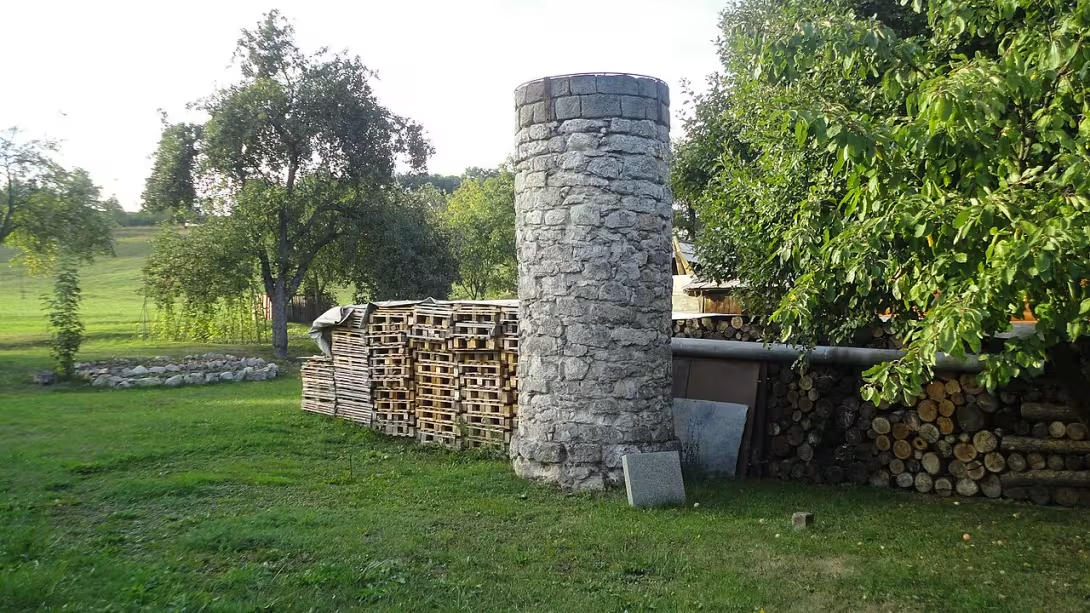
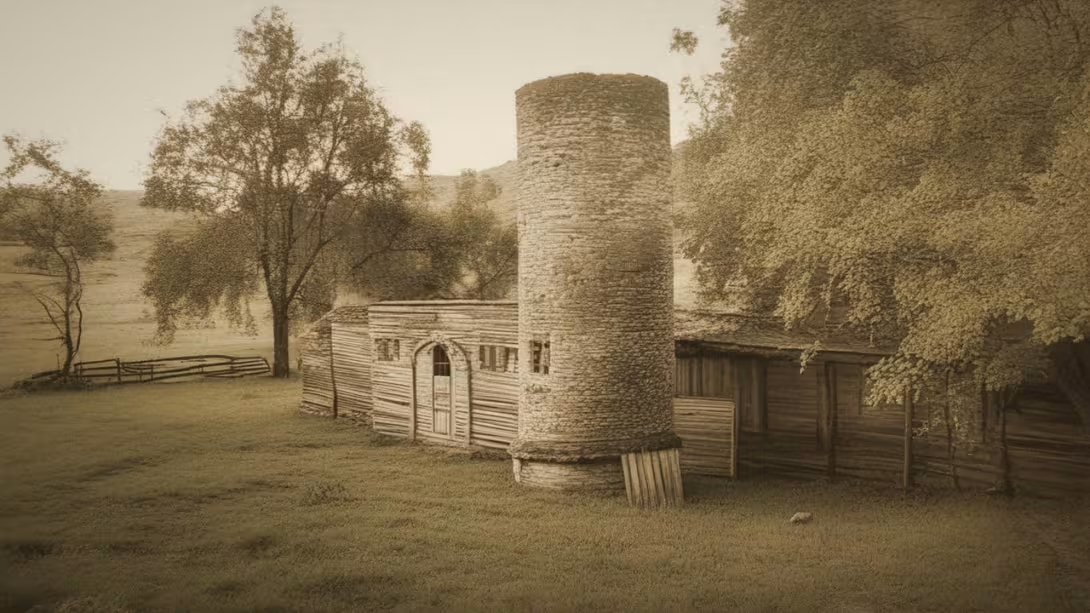
The historical view on the left is a visualisation generated by artificial intelligence and serves as inspiration.
Historical Milestones
- 1842
- Building a ventilation chimney of the main hereditary shaft.
- 1842 - 1843
- Period of construction of the building by official annotation.
- 19th century
- Expansion of metal mining and the development of technological equipment for the galleries.
Guide
Show guide text
The text was prepared by artificial intelligence and has not been editorially reviewed. It may contain inaccuracies.
Welcome to the Old Kremnička, in the place where history of mine and nature joins in a quiet dialogue. Right now you are facing an object that at first glance may seem subtle, but in fact it is a key element of ancient technical ingenuity. In front of you is the ventilation shaft of the main hereditary shed. Stop for a moment, breathe in the clean air of the surrounding forests and see the atmosphere of this place. You may feel that you are only in front of a mere structure, but in fact you are looking at the breathing system of a huge underground organism that has ever throbbing life, noise, and hard work deep under your feet.
To understand the meaning of what you see, we must first stop at the very concept of hereditary stiletto. In mining terminology it was not just an ordinary path in the rock. The village hall was a strategic investment project. Its main purpose was mine drainage. Water was the greatest enemy for the miners; if the shafts were flooded, the works stopped and the mines became inconsolable. The village hall was paradise with a gentle gradient from the lowest point b Mine towards the surface so that water can naturally drain out of the underground using gravity. The inheritance refers to the financial model of construction. The cost of the paradise of such a huge work was distributed among all mine owners who benefited from this stony. Everyone contributed as much as possible and as needed, making construction a shared responsibility and a common interest.
Now let's go back to what you see right in front of you. This ventilation shaft was a necessary complement to the hereditary shed. Imagine deep, dark corridors where moisture was accumulating and where air became heavy and unbreathed. Without air circulation, working at depths would be almost impossible and extremely dangerous. The vent worked as a straight link between the underground world and the surface. Its task was to ensure access to fresh air for miners while allowing the ventilation of harmful gases or dust generated by paradise and mining. Now, when you look at this shaft, view it as a window that in the past opened the way of life into darkness.
Now look carefully at the overall shape of this object. Although time wiped out many details and today we do not know exactly who his architect was or in which particular year was completed, the existence of the shaft itself speaks much about the functionality and pragmatism of mining architecture. Notice how the structure fell into the field. The mining industry was not about aesthetics, it was about efficiency. Every detail had a specific purpose. Look at the contours and see how this construction connects two completely different worlds. Above you is the light of the sky and the noise of the trees, but right below you, at the depth of the earth, there is a network of corridors that have ever defined the wealth and fate of the entire region.
Who were the people who worked here? Although history has preserved the names of large mine owners or high officials, the names of specific miners who dug thousands of meters of corridors and built this shaft remained in oblivion. That is where the deep emotional dimension of this place lies. You stand before the memory of thousands of anonymity. Imagine those men who, in the dark, in the light of the oil lamp, with a stake and a chisel in their hands, created this underground world. For them, this vent was not just a technical element, but a symbol of hope. It was through these holes that the deep air reached them, allowing them to endure long hours in a claustrophobic environment.
But there is a mystery in this place. Since we do not know the exact chronology or specific personalities associated with the construction of this shaft, it becomes a silent witness who does not tell us everything. It's fascinating to think about how many generations of people have gone through this place, how many conversations the miners have had while resting and how many secrets they have hidden beneath your tracks. Why was the shaft placed here? How exactly in this part of Stará Kremnička did individual galleries overcame? These questions remain open and invite us to reflect on the transmissibility of human works. What has ever been a highlight of technology and a necessity for survival is now a quiet monument to encircled nature.
Now feel the silence that surrounds this place. It's a silence that contrasts with the noise that he had to rule here centuries ago. The sound of falling instruments, the calling of miners, the noise of running water in the hereditary shed. It was all combined today in a peaceful picture. The ventilation shaft you're facing is like a center that connects the past with the present. It is a reminder that man was able to overcome huge obstacles to obtain precious raw materials from the depths of the earth and that behind every gram of precious metal was deadly work and precise engineering.
Before you go any further, take one moment to think. Look around at the country of Old Kremnica. The whole area is basically a huge archive, where chapters are written not only in books but directly in the rock and underground corridors. The vent is just one of many inputs to this archive. Although he does not tell us the names of his creators, he tells us about their courage, their knowledge of geology, and their ability to cooperate on projects that exceeded the possibilities of one person.
Now that you know what an important role this shaft has fulfilled and what the hereditary hall meant for the lives of miners, I invite you to continue to explore this fascinating area. Let yourself be guided by quiet paths and look for further traces of ancient mining that are still hidden in the land of Old Kremnica. Every stone and hole in the earth has its own story waiting to be discovered.
Thank you for spending this moment with us at the main hereditary chamber vent. We hope that you have felt respect for the people who have worked here before us and that you have gained a new perspective on what seems to be a simple construction at first sight. We wish you a pleasant next trip and many new discoveries in this magical corner of Banská Bystrica region. Let the journey continue to find out more secrets that Stará Kremnička carries. We say goodbye to you and wish you a peaceful and inspiring day.
Tips for visitors
The best time to visit are spring and autumn, when temperatures are more stable. In summer it is colder underground, in winter it is necessary to count on low temperatures.
When travelling by public transport, check the current connections in the traffic search engine.
What to take with you: Wear tight closed shoes for uneven terrain and layered clothing, because the temperatures near the mining are different from the outdoor environment. Useful is your own lamp.
Photography: The best shots will be produced in natural daylight illuminating the surface part of the shaft. Technical details of the construction and historical elements at the entrance are interesting.
Tips for families with children: The visit is used to get to know the history of mining. With younger children, take care of safety and constant supervision.
Frequently asked questions
Can the monument be visited?
This is a technical monument. Some are open as exhibitions, others are out of use or on private land. We have not verified whether this one is accessible.
What are the opening hours and admission?
We have not verified the opening hours or admission. Current information is published by the operator.
Where is the monument?
Location: Stará Kremnička, Banskobystrický kraj. The map on this page shows the exact spot.
Why is the monument protected?
It is listed in the Central List of the Monuments Fund of the Slovak Republic as a national cultural monument (ÚZPF no. 32D-2728).
For children
Close your eyes and imagine pressing a secret button on a time machine. Boom! It'll take you right back 184 years. The year is 1842. There are no cars or phones around you, but dense forests and sounds of metal instruments that hit hard rocks. Welcome to the Old A crematorium where a huge underground secret lies right under your feet.
Thematic route
1. Ventilation shaft area (type: entrance area) - Place to start the tour with local mining information.
2. Ventilation shaft of the main hereditary shed (type: technical monument) - Shaft designed to provide ventilation at depths.
3. Exhibition in the area (type: information point) - Information about the functioning of hereditary galleries in the Kremnicky region.
4. The immediate vicinity of the shaft (type: natural space) - View of the country of the village Stará Kremnička and the connection of the monument with the terrain.
Seasonal recommendations
Ventilation shaft of the main hereditary shed in Stará Kremnica is an interesting technical object located in the picturesque surroundings. In spring months, the area is characterized by blooming vegetation and fresh atmosphere. It is recommended to prepare clothes suitable for variable weather, ideal layering. During this period, crowds are not as dense as in summer.
Summer months bring the highest attendance, as sunny weather attracts tourists to the Kremnica area. The surroundings of the hall are in full bloom, creating a contrast to the historical shaft. Humidity and falling leaves in autumn can affect the stability of the roads, so we recommend wearing firm footwear.
In winter, the shaft is surrounded by snowy landscapes and short days give the place a special touch. Since the weather may be harsh, it is essential to carry very warm clothing. Planning a visit in brighter hours of the day is appropriate due to smaller daylight and possible weather.
Visualisations and artistic views

The visualisations are generated by artificial intelligence and serve as inspiration.
Visitor Tips
No tips yet. Be the first!
Log in and add your tip.
More monuments – Stará Kremnička
Show all in the town
Visitor photos
No photos yet. Be the first to add a photo from your visit!
Log in and add your photo or leave a rating.
You get more points for a visit verified in the app — we can tell from the GPS that you are there.
Reviews and comments