

church of the Assumption of the Virgin Mary Church
Church of Assumption of Our Lady in the village Turzovka in Žilina region is a Baroque sacral building from 1759. The building reflects historical development from the first wooden churches to the present brick building and contains Baroque and rococo equipment.
The village Turzovka was founded in 1598 by the owner of the Bytčianske manor Juraj Thurzo on the site of the originally long Polish settlement Predmier. In 1602, Thurzo issued a privileged document in which he ordered the inhabitants to build a church and a parish. To this end, he set aside two farm settlements. The first wooden church was built in 1614. In May 1615 a new parish was founded, which previously belonged to the parish in Hričov. In 1692, a second wooden church was established, dedicated to St Elizabeth of Hungary. The first brick church, dedicated to the reverence of the Virgin Mary, was built by believers in 1728. Due to the growth of the village and the parish it was necessary to build a larger building. The foundation stone of the present church was laid on 4 July 1757 and the construction was completed in 1759 with financial and material assistance of the Bytčiansky estate. The ceremonial consecration took place on August 10, 1834, with the participation of the diocese bishop Joseph Vurum.
It is a single-boat baroque building with a polygonal closure of the Presbytery, built-in sacristy and a tower. The tower is finished with an onion roof with a slim lateral. The Baroque facade with semi-circularly finished windows is divided by a lysene frame. The interior covers a rolling arch with lunetts, which is captured by inter-klenches running into the pillars.
The main baroque altar comes from the beginning of the 18th century and has a picture of the Assumption of the Virgin Mary in the centre. The side altars are also Baroque from the 18th century. Their original images of Saint John Nepomuk from 1873 and the Divine Heart from 1882 by J. B. Clemens were replaced with newer plastic. The 18th-century Baroque pulpit has on the parapet images of church fathers from J. B. Klemens from 1878. The main altar, side altars, pulpit and organ cabinet were in 1910 polychromed by A. Pudl from Mistek. The baptistery is rococo from the middle of the 18th century; it is a wall building with canopy and sculpture Baptism of Christ at the top. The Neobaroque organ from the late 19th century contains parts of the older Baroque organ from 1799. In the interior there are fourteen oil paintings on the sheet depicting the Cross Road, painted by J. B. Klemens in 1880. Colorful windows come from 1910 and their author is O. Walter from Pešt.
The original wooden church in the 17th century changed the owner several times depending on the political situation. It was owned by local Gospels or by a Catholic minority. Definitely entered the property of Catholics in 1673. At the time the first church was formed, the earthen had the bell preserved. Turzovská parish in the past managed the branches Vysoké and Olešná, and later it belonged to the Podsovy and residents in the Dlhá valley. The administrative parish has undergone changes in the context of the Trenčín, Čadčiansky and Žilina archidiaconate. In 1871 it became the seat of one of the dean of Nitra diocese, which lasted until February 1952. Since 2008 the parish belongs to the Diocese of Žilina.
The church is registered in the Central List of Monument Fund of Slovakia under number 194/1. The building was repaired and renovated in 1938. Currently the state of the church is good, the object serves its purpose and is located in the northern part of the village.
Tehdy a dnes
Drag the slider and compare how the monument might have looked when it was built with the view today.
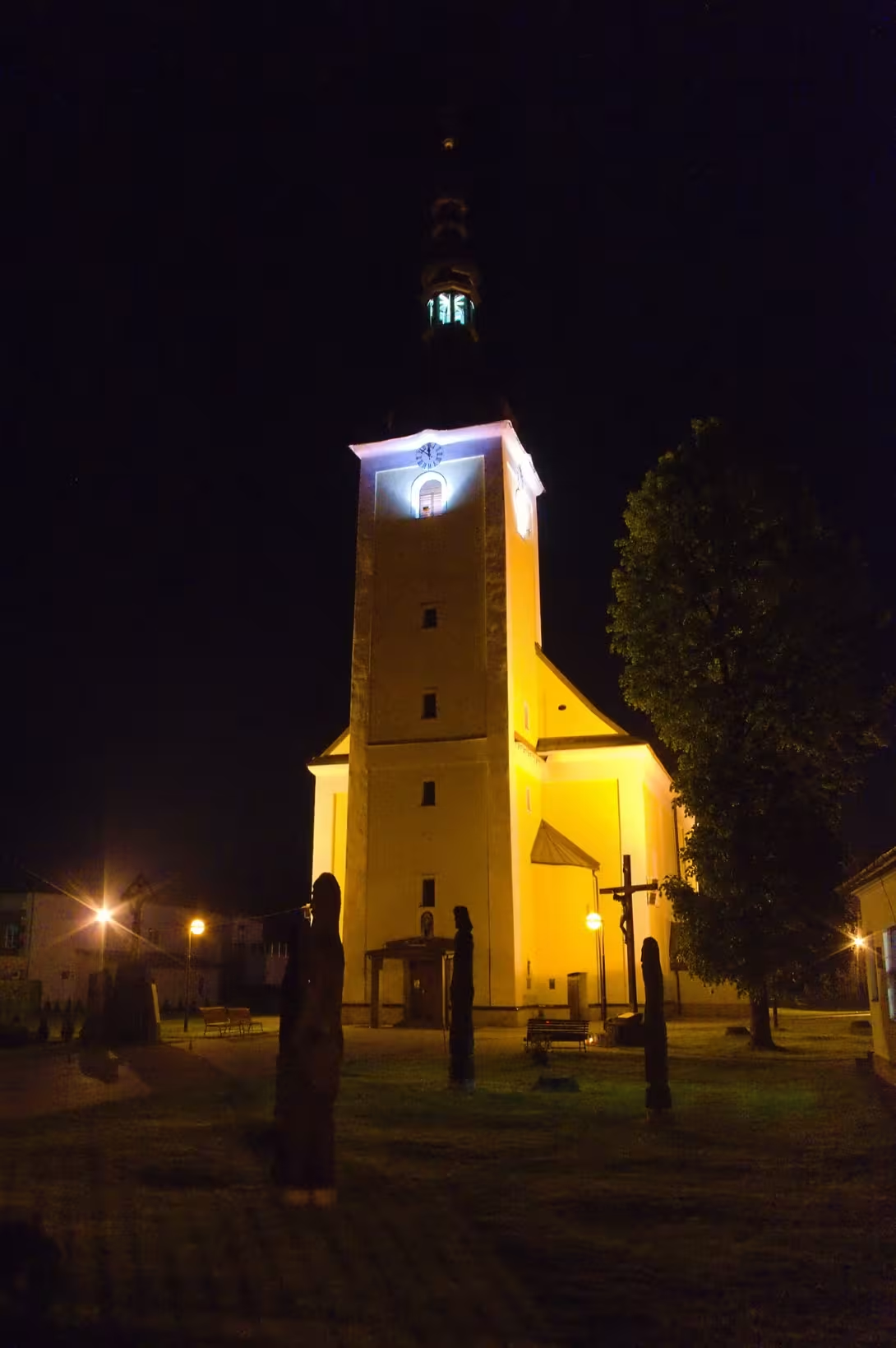
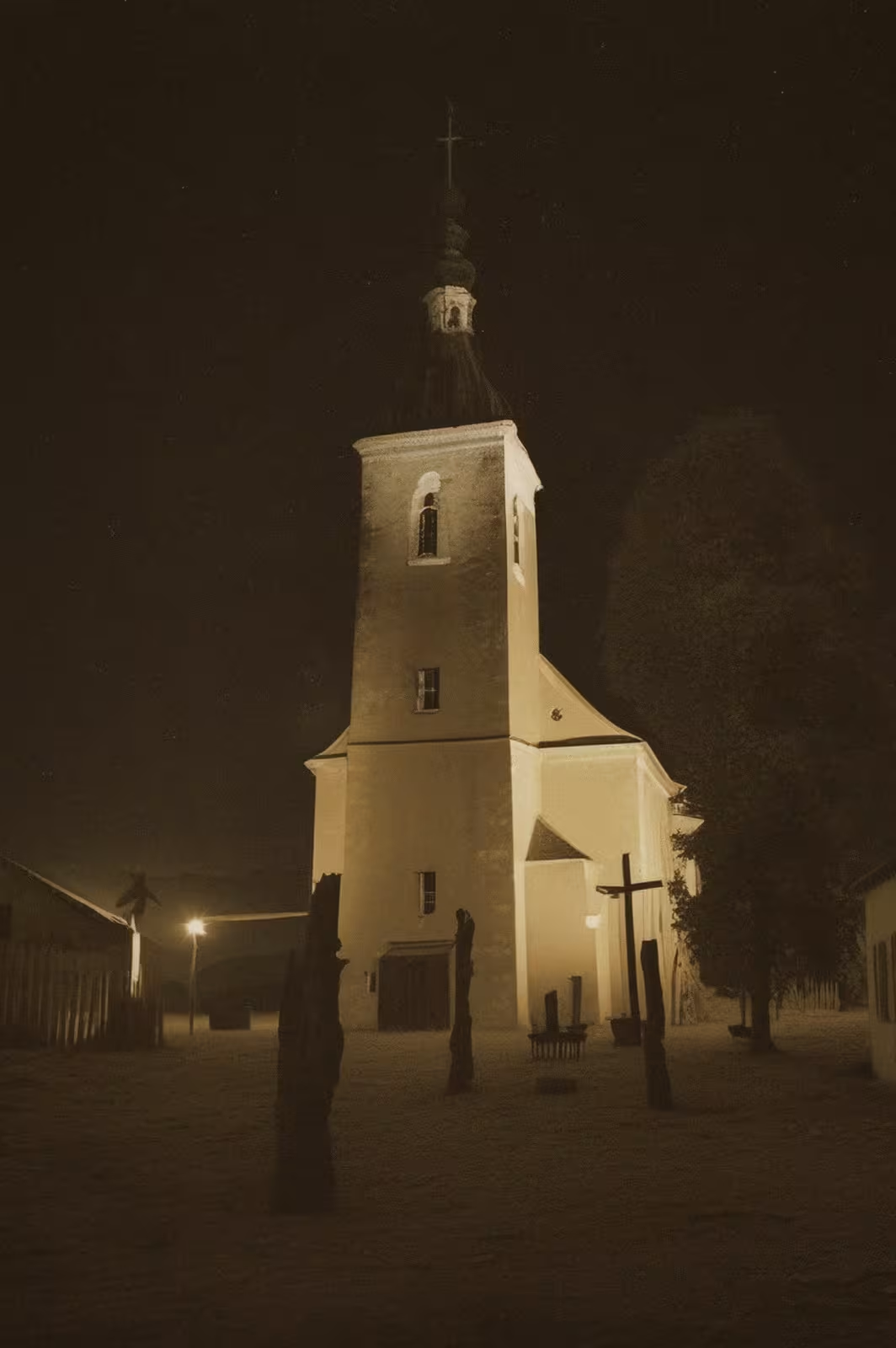
The historical view on the left is a visualisation generated by artificial intelligence and serves as inspiration.
Historical Milestones
- 1757
- laying the foundation stone of contemporary church
- 1759
- completion of church construction
- 1834
- ceremonial consecration with the participation of Bishop Joseph Vurum
- 1938
- repair of church
Artistic features
-
vitráž s kresťanským symbolom — Holubica Ducha svätého
sklo, vkladanie do siete · moderna · 2.pol.20.st. -
vitráž s kresťanským symbolom — Sviatosť zmierenia
sklo, vkladanie do siete · moderna · 2.pol.20.st. -
vitráž s kresťanským symbolom — Sviatosť pomazania chorých
sklo, vkladanie do siete · moderna · 2.pol.20.st. -
vitráž s kresťanským symbolom — Sviatosť krstu
sklo, vkladanie do siete · moderna · 2.pol.20.st. -
vitráž s kresťanským symbolom — Cyrilometodejská tradícia
sklo, vkladanie do siete · moderna · 2.pol.20.st. -
vitráž s kresťanským symbolom — Sviatosť manželstva
sklo, vkladanie do siete · moderna · 2.pol.20.st. -
vitráž figurálna s dekorom — sv.Alžbeta Uhorská
sklo, vkladanie do siete · eklektizmus · 1901-1910 -
vitráž figurálna s dekorom — sv.Štefan Kráľ
sklo, vkladanie do siete · eklektizmus · 1901-1910 -
vitráž s kresťanským symbolom — Sviatosť posvätenia kňazstva
sklo, vkladanie do siete · moderna · 2.pol.20.st. -
vitráž s kresťanským symbolom — Sviatosť oltárna
sklo, vkladanie do siete · moderna · 2.pol.20.st. -
vitráž s kresťanským symbolom — Sviatosť birmovania
sklo, vkladanie do siete · moderna · 2.pol.20.st.
Source: Monuments Board of the Slovak Republic — open data, licence CC BY 4.0
Interesting facts
- Contemporary baroque church from 1759 reflects historical development from the first wooden buildings to the brick building. - The first wooden church in the village was built in 1614 while the second wooden church was built in 1692. - The first brick church was built in 1728 and the current building was completed in 1759. - The interior contains a rococo baptistery from the mid-18th century and a neo-baroque organ from the late 19th century, which uses parts of the older organ from 1799. - There was a bell that was made by the landlord at the time of the first church.
Guide
The guide was voiced by a synthetic voice created by artificial intelligence.
Show guide text
The text was prepared by artificial intelligence and has not been editorially reviewed. It may contain inaccuracies.
We welcome you to Turzovka, in the heart of Žilina region, where time seems to slow down and history speaks from every stone. You stand right in front of the Church of the Assumption of the Virgin Mary, which dominates the space around you. Now that you are looking at it, you may first see the peace and dignity of this building, which has served as a spiritual center and a place of comfort for almost three centuries. Change the noise of the present moment for a moment in silence and let us guide you through the history of this place.
In order to understand the meaning of the building you are currently facing, we must storm deep into the past. The building you see today is not the first temple in this village. The story of spiritual life in Turzovka begins much earlier and reflects the natural development of the local community. The first church in the village was built in 1614. At that time it was a wooden building that was typical of our pre-mountain areas. Wood was available and processing was fast, but such buildings were prone to wear and natural disasters. Almost a hundred years later, in 1692, a second wooden church was established in the village, which replaced its predecessor and again provided space for prayer and community.
Gradually, however, the needs of the community have changed and, with a growing sense of stability and prosperity, the inhabitants have begun to focus on more permanent materials. The first step towards today's form was the year 1728, when the first brick church was built. It was an important breakthrough because the transition from wood to stone and mortar signalled the increase in the importance of the village and the desire for construction that would last generations. It is this development from the first modest wooden walls to the massive brick building that is key to understanding the value of the building, which is now right in front of you.
Now see the overall form of the building. The present baroque church, which you perceive sanctuary, is the result of planning from the middle of the eighteenth century. The foundation stone of this building was laid in 1757. At that time, the construction of such a large object was a huge joint effort of the whole village and its surroundings. The work progressed quickly and already two years later, in 1759, the construction of the church was successfully completed. Although we do not know the names of the specific architects who designed this project, their work testifies to the tastes and sense of proportions typical of the Baroque era.
Now look at the facade and the overall silhouette, note the harmony it brings into the space. Barok as a style sought balance and at the same time gewisse grandeur. Although time left its mark, the building maintained its original characteristics. It is fascinating to think that in 1938 the church was repaired to preserve its integrity for future generations, including you who visit it today.
A key moment in the history of this temple was the ceremonial consecration, or sanctification of the building. Although the church was finished in 1759, its official sanctification took place only in 1834. It was a great social and religious festival, which was taken care of by Bishop Joseph Vurum. Imagine this scene almost two hundred years ago: the whole village in the best coats, ringing bells, and the arrival of the bishop, who, by his ceremony, definitively fixed the place of this temple in the spiritual map of the region. It was then that the building became an official holy place where baptisms were handed over, weddings were celebrated, and people left on their last journey.
Maybe now you're interested in what's gone wrong with those predecessors. It's one of the silent mysteries of local history. When you look at brick walls, you might wonder if there is a trail underneath them after the first wooden church from 1614 or the second one from 1692. It was often the case that new buildings were created in the same place where the older ones stood to preserve the sanctified earth. This constant cycle of building, decay and restoration is very significant in Turzovka. From wood to a small brick church and finally to this magnificent Baroque building. It is a journey that has lasted for over a hundred and fifty years.
Now note the atmosphere surrounding this space. The Assumption Church of the Virgin Mary is not just a set of materials and dates. He is a witness to thousands of stories of people living here, working and praying. Every detail you see now is the result of the efforts of people who wanted to leave something permanent. Baroque architecture with its typical features in this environment acts naturally and at the same time noble.
If we stop at one point, it's the time gap between the completion of the building and its consecration. Strangely enough, the building was finished in 1759, but Bishop Vurum sanctified it only in 1834. Almost seventy-five years apart. We can only speculate whether it was administrative problems, financial complications or other historical circumstances of the time. This detail gives a mysterious touch to the place and reminds us that history is not always a direct line but a set of coincidences and delays.
Now that you have learned the basic information about the establishment and development of this temple, we recommend that you enjoy the view of the building for a while more. Walk slowly through its circumference, perceive the texture of the walls, and imagine how centuries have changed in this space. From the meadows and forests of the 17th century to the present form of the village.
We hope this short trip to the past has helped you to better understand the meaning of the Church of Assumption of Our Lady. It is a place where the faith, architecture and perseverance of the local people meet. Now you can quietly continue your review of Turzovky and discover other hidden treasures of this beautiful region. Thank you for your attention and we wish you a pleasant day full of new discoveries.
Tips for visitors
Best time for visit and reason
- Autumn (especially September and October) At this time the surroundings of the Church of the Assumption of the Virgin Mary revives the warm colors of the leaf, which creates the right conditions for photography. The sunny morning or evening gives the building fine stone and golden light, which highlights the architectural details.
- Winter (December - February) If you prefer a cool atmosphere, winter months are suitable for visiting. Snow covering the surrounding forests and hills gives the church the original appearance. In the morning is often the most difficult and light is suitable for photography.
-- -
What to Take With You
- Camera or smartphone with high-quality camera The church offers interesting architectural details that are worth capturing. When shooting in the winter months it may be useful to have a stativa for stable images.
- Weather-changing clothing The weather changes rapidly in the mountain area. Warm clothing, delivery system or sunbolts are suitable for any changes.
- Small bag or bag It allows you to carry the camera, clothing and other items comfortably.
-- - Photography - the best places and light
- Main entrance to the church Capture the church from the corner, which highlights the facade and the main entrance. The ideal light is in the morning or evening when the sun shines create contrasting tints.
- Church surroundings (forests and hills) Interesting are panoramic views of the surrounding terrain. In clear weather, the view of the church and the surrounding forests can be captured.
- Gold and Blue Hour These times of the day (at sunset or sunrise) provide the most beautiful light for photography. In such light, the church gets warm or cool tones.
-- - What to visit nearby (within 30 minutes of the place)
- Žilina (about 30 minutes by car) The town offers historical and cultural attractions such as the Žilina Castle with a view of the city. You can also visit the city museum or walk along the streets.
- Turčianske Teplice This thermal area is known for its healing springs and relaxation options. Suitable for a rest stay or a short trip.
-- - Tips for families with children
- Church story. Explain to children the history of the church and its importance to the local community. Show them the architectural details and let them look for differences between old and modern buildings.
- Ambient survey Children can find it interesting to walk around the church and watch animals, plants or look for interesting stones. During the winter months they can watch a change in nature or look for traces of animals in snow.
- Picnic in nature If you have something to eat, choose a quiet place around the church or in the forest and organize a small picnic.
-- - *For up-to-date information on connections and their developments, it is appropriate to use online connection search engines or contact the local transport company. *
Frequently asked questions
Can the monument be visited?
Religious buildings are usually open mainly during services; at other times a visit is normally arranged with the parish or the operator. We have not verified specific times.
Where is the monument?
Location: Turzovka-Stred, Turzovka, Žilinský kraj. The map on this page shows the exact spot.
Why is the monument protected?
It is listed in the Central List of the Monuments Fund of the Slovak Republic as a national cultural monument (ÚZPF no. 312-194).
For children
A mysterious church that changes like a fight
267 years ago - when your grandmothers and grandpas weren't even in the world - there was a little church in Turzovka that looked like who you were. But the church had a secret: it wasn't the first! There were others standing before him, older than the witch book. Imagine: wooden churches that changed as clothes when times changed.
Nearby
🏰 Historic sites (36)
- Zdenka Schelingová 0.0 km
- Pomník padlým 0.0 km
- Tomáš Uhorčík 0.2 km
- Ján Haranta a Pavol Hrtús-Jurina 0.2 km
- Rudolf Jašík 0.2 km
- Mestské múzeum Karola Točíka 0.2 km
- sv. Ján Nepomucký 0.3 km
- Pamätník oslobodenia 1918 0.4 km
- Desatoro 4.0 km
- Rodný dom Jozefa Kronera 5.0 km web
- Matka Tereza a Ján Pavol II. 5.3 km
- Pamätník obetiam Semetešskej tragédie 6.2 km
- Pamätná izba astronauta E. A. Cernana 6.4 km +421 905 884 634 web
- Najsvätejšie Srdce Ježišovo 6.5 km
- Hrdinom SNP 7.1 km
- Pamätník obetiam druhej svetovej vojny 8.6 km
- Jan Široký 11.5 km
- Drotárske múzeum Jozefa Holánika Bakeľa 11.8 km
- Ing. Ferdinand Schindler 12.0 km
- Kysucké múzeum 12.4 km web
🍽️ Restaurants and dining (145)
- Bufet Poliklinika 0.1 km
- U Macvejdu 0.1 km
- Artemis 0.1 km
- Gril House 0.2 km
- PUB 66 0.2 km
- Mraznička 0.2 km
- Bohumín 0.3 km
- Bowling club 0.3 km
- Depo 0.3 km
- U Bogáňov 0.3 km
- Stará tržnica 0.4 km
- Fénix 0.4 km
- Hostinec u Lemeša 0.5 km
- Fotbal club Victoria 0.5 km
- Priority Music Club 0.6 km
- Fresh Corner 0.7 km
- Staré Ihrisko 0.8 km
- Smažák 1.6 km
- U Jozefa 1.8 km
- Hostinec Baník 1.8 km
🏨 Accommodation (44)
- Kriváň 4.2 km
- Dom Navštívenia 5.1 km +421 903 821 804 web
- Kovox 5.3 km web
- Severka 5.6 km web
- Maria 5.6 km
- Apartmán Pod lipou 5.8 km web
- Klokočovan 6.5 km
- Turistická ubytovňa U Cipára 6.9 km +421 915 880 042 web
- Resort Barborka 7.8 km Zákopčie 726 +420732284009 web
- Drevenica u Studniara 8.0 km web
- Sudopark - Drevená dedina 8.1 km web
- Chata Korcháň 9.5 km web
- Doroťanka 9.8 km web
- Letní tábor Košárky 10.6 km
- Hotel Pančava 11.2 km
- Penzión Stará fara 11.2 km +421 414 364 015 web
- Poľana 11.3 km
- Penzión Medea 11.8 km web
- Hotel Centrum 12.0 km web
- Lipa 12.1 km web
🚲 Rentals and sport (18)
- Areál športu a oddychu 0.6 km
- Mestská športová hala 11.5 km
- Mestská plaváreň 11.8 km Športovcov 1825/2
- Kostra bike 12.2 km web
- Omega sport 12.3 km
- Cami sport 12.4 km
- Unimarket 12.4 km
- Intersport 12.5 km Slobody 3093/4C
- Mestská športová hala Pratex 12.6 km Andreja Hlinku 2772/38A
- Wellness Bauer 12.9 km web
- Hotel Bauer 12.9 km web
- Dětský lanový park 13.0 km
- Dětské brouzdaliště 13.9 km
- ANTIK SmartWay Bikesharing 14.8 km
- Detský vodný park 14.8 km web
- Cyklošport 14.8 km Struhy +421 903 669 436
- Rekreačno-oddychový areál 14.8 km
- ANTIK SmartWay Bikesharing 15.0 km
🥾 Hiking and nature (220)
- Lovásov 0.7 km
- Živčákov vrch 1.9 km
- Bukovina 2.1 km
- Komarov vrch 2.2 km
- Veľká lúka 3.0 km
- Rusinov vrch 3.0 km
- Grúň 3.2 km
- Varechovka 3.4 km
- ropný prameň 3.5 km
- Korňanský ropný prameň 3.5 km
- Vysoká 3.7 km
- Halgašovský vrch 3.8 km
- Kľukanka 4.0 km
- Prameň u Lurdskej Panny Márie 4.0 km
- Prameň u Srdca Ježišovho 4.0 km
- Očný prameň 4.0 km
- Prameň u Srdca Panny Márie 4.0 km
- Solisko 4.1 km
- U zimného pňa 4.4 km
- Vysoká 4.6 km
Thematic route
Church of the Assumption of the Virgin Mary Type: Temple Why it is worth visiting: Baroque sacral building from the 18th century, which is an important example of Slovak sacral architecture.
Square outside the church Type: Area Why it is worth visiting: Surroundings of the church with preserved historical elements and bell clock.
Church Tower Type: Architectural Dominant Why it is worth visiting: The tower overlooks the village Turzovka and surrounding landscapes.
Church Interior Type: Exposure Why it is worth visiting: It stores archival materials and objects from parish history that document the development of the local church.
Seasonal recommendations
Jaro In spring, the Church of the Assumption of the Virgin Mary in Turzovka is presented in a new light. Sunlights pouring through the stains create a color game that gives the interior a meditative atmosphere. Surroundings of the church, surrounded by greening forests and fields, will be built on life - birdsongs and the sound of winds in treetops blend with the spiritual atmosphere of sacral space. It is advisable to choose April or May for a visit when you avoid the main tourist season and enjoy the spring beauty. Clothes suitable for variable weather are recommended - light layers that protect from cold morning winds but do not restrict the movement. Walks along the surrounding forest roads are pleasant at this time, because the church is also reached on foot. -- -
Leto During the summer months, Turzovka turns into a clean oasis where the Church of the Assumption of the Virgin Mary stands in contrast to the bitter sunshine. The stone walls of the church create cold shelters. The surrounding area is drier, but birdsongs and insect sounds give the landscape a vivid rhythm. The best time to visit is in the morning before ten o'clock or evening after the sixth. It is recommended to light, but covering clothes - hat with a headband, sunny blossoms and soft boots, because the terrain around the church can be uneven. In summer, it is advisable to carry water, as there are no drinking stalls in the forest area. -- - Podzim In winter Turzovka the Church of the Assumption of the Virgin Mary dresses up in golden and brown shades of leaves. Freshly cleaned air and cool, bright days give the place a pleasant atmosphere. The surrounding area is changed in a mosaic of colors - from red leaf to brown pine, which is reflected in stains. The best period for a visit is in September or early October, when the weather is stable and temperatures pleasant. Layered clothing - a sweater or a sweater that protects from cold evenings is recommended. Walks on forest trails are pleasant, because leaves create natural carpets that blush sounds. It is also appropriate to visit the church in the morning when forests dress in dew. -- - Winter Winter Turzovka will be transformed into a clean country where the Church of the Assumption of the Virgin Mary stands in a white coat of snow. Snow covers soften the contours of stone walls and turn forests into white landscapes. Sunlights in the noon are reflected from stains and create a game of light in the interior of the church. The best period for the visit is December or January, when the snow cover is the thickest. It is recommended to warm but not bulky clothing - thermo-washing, tracksuit and waterproof boots, as the roads can be slippery. Walks on forest roads are difficult, but every step in the snow adds a sense of completeness. It is advisable to visit the church in the midday, when the sun turns west and light creates shade crossings on the facade of the church and snow areas.
Visualisations and artistic views


The visualisations are generated by artificial intelligence and serve as inspiration.
Photographs from the area
Real photos taken near the monument


Source and licence are given for each image.
Visitor Tips
No tips yet. Be the first!
Log in and add your tip.
Location on Map
More monuments – Turzovka
Show all in the town




Visitor photos
No photos yet. Be the first to add a photo from your visit!
Log in and add your photo or leave a rating.
You get more points for a visit verified in the app — we can tell from the GPS that you are there.
Reviews and comments