

the Church of the Holy Heart of Jesus Church
The Church of the Holy Heart of Jesus in Torysa village in Prešov region is a classicistic sacral building from 1844. This monument, registered in the Central List of Monument Fund under number 386/1, stands on a hill in the northern part of the village and represents the result of a tragic event that destroyed the original church, manor house and a large part of the settlement in 1813. The building is remarkable not only by its classicistic character, but also by the preserved wall painting on the chorus, which documents the history of the destruction of the old church and the manor house in the earthquake and flood.
The history of this place is closely linked to the disaster of 1813. The original church together with the manor house and most of the village Torysa were destroyed by a combination of flood and earthquake. This event required the construction of a new sacral building to replace the lost spiritual and community central building. The new church was built in 1844 and became the new center of the spiritual life of the village. Construction took place in the spirit of classicalism, which was very widespread in Europe at the time and marked by clarity of forms and symmetry.
Architecturally it is a one-ship church built on the landscape plan of the Latin cross. The Presbytery has a polygonal closure, which is typical of classicistic sacral architecture. The tower is built directly into the shield facade, creating an organic whole with a total structure. The exterior of the church is late classicistic. The facade is decorated with corner rustics, lyrics and thermal windows that give the building a dignified and harmonious look. These elements demonstrate the emphasis on the aesthetic quality and precision of the construction work from the second half of the 19th century.
The interior of the church is encircled by spring vaults. Interklenbé zásmáms add to the pots of pilasters, creating a clear vertical division of space. On the west side there is a brick chorus. On its parapet there is a wall painting with text that describes the destruction of the old church and the manor house in the earthquake and flood in 1813. This painting was restored in 1921 along with the overall repair and painting of the church. The presence of this text in the interior serves as a permanent reminder of the history of the village and its ability to restore after the disaster.
The interior of the church contains several important liturgical objects and altars. The side altar dedicated to St. Catherine Alexandria is classicistic and carries an image of the saint from painter V. Klimkovič from 1858. Pendant of this altar is the side altar of St. John Nepomuk, which has a similar style and probably contains an image from the same author, V. Klimkovič. These works testify to the artistic record of the period and the connection of local sacral architecture with painting art at the time.
Another important subject is the classicistic Tabernaculum with statues of cherubs from the early 19th century. It is secondary located, indicating that it could have been moved from another location or used in another configuration before its current location. The oldest objects in the church include chalice, cibórium and crucifix from 1758, which come from Master J. Szilassy. These objects are older than the building of the church from 1844, which shows that they were preserved from the original facility or transferred from another place in the region. Their presence links the present church with the previous history of sacred life in Torys.
The church was repaired and painted in 1921, resulting in the restoration of wall paintings and the overall appearance of the interior. This reconstruction was important to preserve the monument in good condition. Today the state of the church is rated as very good and the building serves its original purpose, that is, as a place of worship and spiritual life of believers. The monument office of the Slovak Republic records the area under the number of the ÚZPF 386, while the only building in the area is this church.
For visitors the church is accessible and stands on a hill in the northern part of Torysa. Location at the elevated place gives him a significant role in the country profile of the village. Visit of this monument offers the opportunity to know not only the classicistic architecture, but also the specific history of the village, which survived the difficult test of fate in 1813. Wall painting with text about the destruction of the old church and the manor house is a rare document that reminds the interior of the tragedy and subsequent restoration.
The Church of the Holy Heart of Jesus in Torys is proof of the resilience and ability of the local community to rebuild. The maintenance of liturgical objects from 1758 and altars from V. Klimkovič testifies to the continuity of spiritual life despite disasters. For tourists and lovers of history, this monument is a valuable source of information about classicalism in Slovakia and the local history of the Prešov region. A visit to the church makes it possible to understand how sacral buildings become bearers of the memory of the village, which overcame natural disasters and restored its spiritual center.
Tehdy a dnes
Drag the slider and compare how the monument might have looked when it was built with the view today.
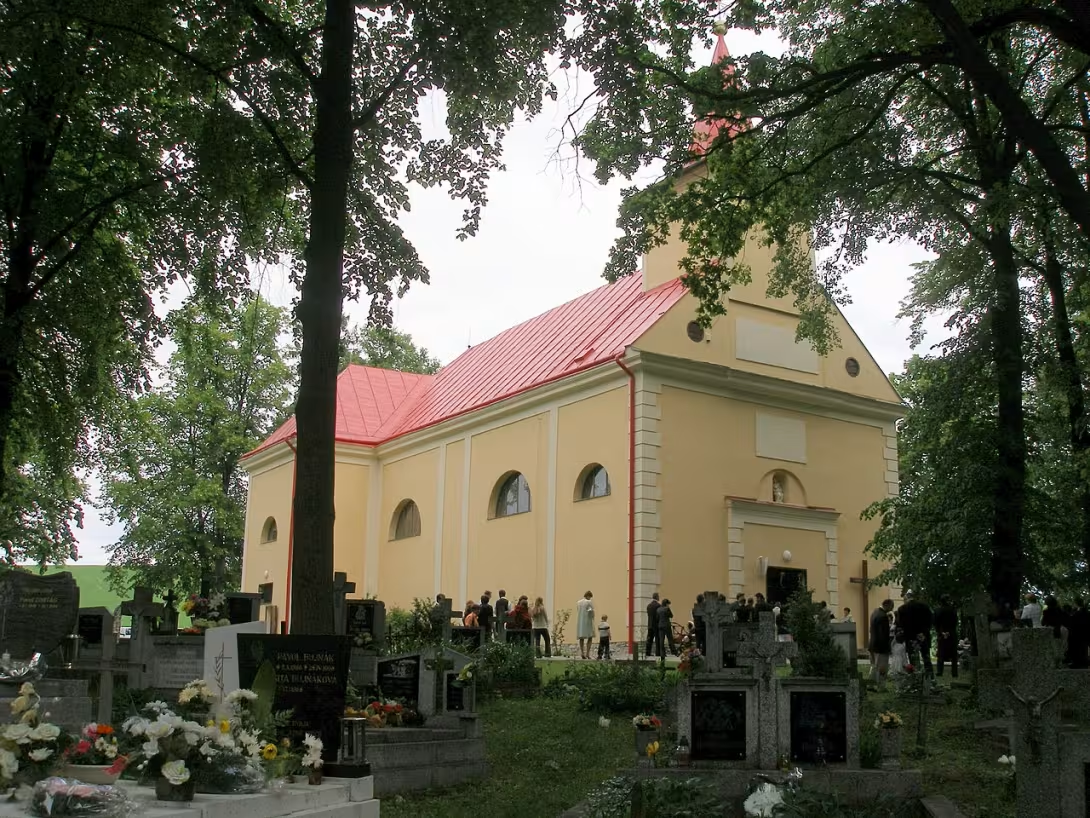
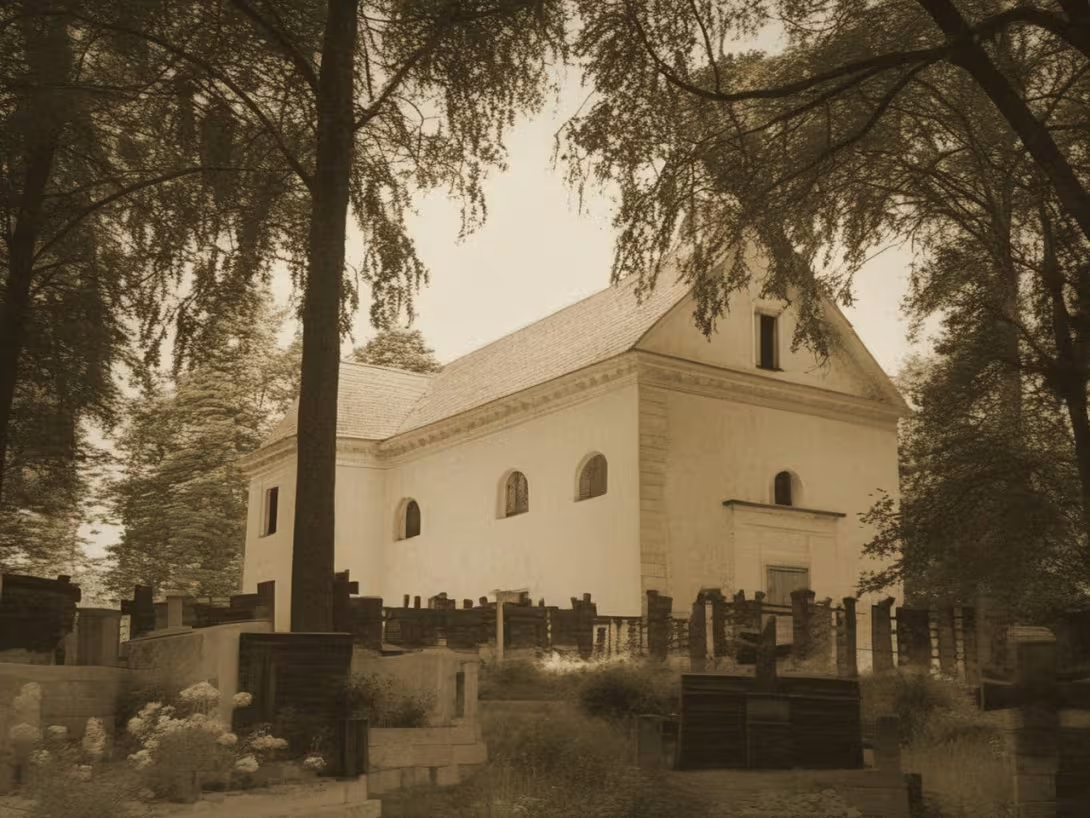
The historical view on the left is a visualisation generated by artificial intelligence and serves as inspiration.
Historical Milestones
- Destruction of the original church and manor house in 1813 by flood and earthquake
- The construction of a classicistic church on the floor plan of the Latin cross in 1844
- Repair and painting of the church in 1921
Artistic features
-
vitráž figurálna s dekorom — Pieta
sklo, vkladanie do siete · moderna · 1971-1980 -
vitráž s rastrom — Raster štvorcový s lemom
sklo, vkladanie do siete · moderna · 1971-1980 -
vitráž figurálna s dekorom — sv.Peter,sv.Pavol
sklo, vkladanie do siete · moderna · 1971-1980 -
vitráž figurálna s dekorom — sv.Cyril,sv.Metod
sklo, vkladanie do siete · moderna · 1971-1980 -
vitráž figurálna s dekorom — sv.Katarína Alexandrijská,sv.Anna vyučuje Pannu Máriu
sklo, vkladanie do siete · moderna · 1971-1980
Source: Monuments Board of the Slovak Republic — open data, licence CC BY 4.0
Interesting facts
- The Church of the Holy Heart of Jesus in Torys was built in 1844 as a substitute for the original sacral building, which together with the manor house and village destroyed the combination of earthquake and flood in 1813.
- At the church's chorus there is preserved wall painting from 1921 which document the tragic event of the destruction of the old church and manor house in 1813.
- The interior of the church is encircled by Prussian vaults and has side altars dedicated to St. Catherine Alexandria and St. John Nepomuk, which are works of painter V. Klimkovič from 1858.
Guide
Show guide text
The text was prepared by artificial intelligence and has not been editorially reviewed. It may contain inaccuracies.
You can see in Torys where one of the most important sacral monuments of our region is situated in front of you. You stand before the church of the Most Holy Heart of Jesus, who took the poles as a symbol of determination and restoration after the tragic events of the past. The pleasant appearance of this building, its simple elegance and silent authority immediately surprises - as if they were looking at the church trying to preserve memory of what happened here. This church was built in 1844 as a substitute for the original sacral building, which together with the manor house and the entire village destroyed the combination of earthquake and flood in 1813. This was the year that meant to Torsa and her inhabitants the loss of not only a material but also a spiritual base. The new church, which was then formed, was more than just a building - a symbol of renewal, follow-up to the past and trust in the future. It is not known who was his architect or who was involved in its implementation, but every stone here is telling about how people are trying to get a fresh start after such disasters. Let's move on to something unique for this church. Feel the atmosphere when you look at his choir. Here, a wall painting from 1921 was preserved, documenting a tragic event known as the Torski flood. This painting, still preserved, is one of the few visual records of this tragedy. On it is captured the moment that has become part of the memory of the village - people who are trying to survive, destroyed houses and collapsed buildings. It is a strong example of how art and sacral architecture can serve as a memory barrier to the past. If you look at this painting, you may be told something about how people in the past tried to keep their memory of what happened. This painting is not just decoration, but a document telling the story of the village, which must have been born of ash. Note how art here is integrated into sacral space - how it becomes part of worship and memory. Nyní look around and see more detailed church architecture. Its simple but nice look can be described as a strong combination of classicism and local traditions. Pleasant proportions, simple details and nice symmetry are characteristic for the construction of this time. The church takes bars over the village as a protector who seeks to protect not only the physical but also the spiritual welfare of its inhabitants. When you are in this place, it is easy not to link its history to the story of the village. Torsa, which had to be born of ashes twice - for the first time after the earthquake and flood in 1813 - and for the second time after the other disasters that were repeated here in the past. Every stone lying here talks about how people were trying to recover, about how they were trying to get a fresh start. One of the most interesting things about this church is how it became part of the village's memory. It is not known who was his architect or who was involved in its implementation, but every detail, every stone here tells about how people were trying to recover from tragedy. The church is here as a symbol of determination, as a symbol of the fact that even after the greatest disasters can be started again. Look at the choir and this preserved painting. This painting is one of the few visual records of this tragedy, and it is proof of how people tried to keep memory of what happened. It is an example of how art and sacral architecture can serve as a memory barrier to the past. If you manage to cross this memory, you may be told something about how people in the past have tried to preserve their identity and their history. Church of the Most Holy Heart Jesus ' is here to symbolize that even after the greatest disasters, it is possible to begin again. It is a place where past and present meet, where tragedies and foundation meet. Before you leave, look at this painting again at the chorus. This painting is one of the few visual records of this tragedy, and it is proof of how people tried to keep memory of what happened. It is an example of how art and sacral architecture can serve as a memory barrier to the past. Torsa and her church The Holy Heart of Jesus are the place that tells tales about determination, about restoration, and about how people strive for a new beginning. When you leave, take something from this atmosphere, from this history and from this memory. When you return home, you may be told something about how important it is to keep memory of the past and how important it is to try to get a fresh start after every blow of fate. Have a good trip and look again at this monument, which is here as a symbol that even after the greatest disasters can be started again.
Tips for visitors
Church of the Holyst Heart of Jesus in Torys
Best visit time It is best to visit from April to October when it is during milk. In winter the church and its surroundings are smaller, but it is possible to enjoy a quiet atmosphere.
What to take with you Always take a compass device or GPS. It is advisable to prepare a quality camera or smartphone with a good camera for photography. Some visitors may take tea spoons or other small aids.
Photography The best places are mainly the facade of the church, its tower and surrounding landscape. It is advisable to take pictures in the solar world, for example in the morning or evening light. The church looks most beautiful when it's sunny. In the interior it is good to find out before whether photography is allowed.
What to Visit Around There are few important historical towns around the church. For families with children it is advisable to observe natural beauties and some historical panamates nearby.
Frequently asked questions
Can the monument be visited?
Religious buildings are usually open mainly during services; at other times a visit is normally arranged with the parish or the operator. We have not verified specific times.
Where is the monument?
Location: č. 248, Torysa, Prešovský kraj. The map on this page shows the exact spot.
Why is the monument protected?
It is listed in the Central List of the Monuments Fund of the Slovak Republic as a national cultural monument (ÚZPF no. 418-386).
For children
The mysterious way to church with a mysterious heart
Long before ours was born in the world today, Torys was a great village where people who cared for their fields, sheep, and family lived. There was an old church that was so old that it couldn't be done. So in 1844, when it was 182 years since what happened, they built a new church of the Most Holy Heart of Jesus. It was like a new house for people who lived here, but also for all those who had joy and prayer.
Nearby
🏰 Historic sites (50)
- Kaštieľ Šarišské Dravce 2.0 km web
- Kúria 2.5 km Ľadová 171/7
- Kúria 2.5 km Ľadová 174/1
- Brazovica 2.6 km
- Kúria 2.7 km
- Kaštieľ rodu Berzevici 2.8 km web
- Kaštieľ Krivany 2.8 km Záhradná 44/4
- Kúria rodu Berzevici 3.4 km
- Ježiš Kristus 4.2 km
- Hrad Hamborek - Brezovička 5.4 km
- ThDr. Ján Švec - Slavkovian 6.7 km
- sv. Ján Nepomucký 6.9 km
- Pieta 6.9 km
- Centrum tradičnej kultúry 7.0 km +421907612070 web
- Panna Mária Medžugorská 7.2 km
- sv. Hubert 7.2 km
- Kamenica 7.7 km
- Panna Mária 8.0 km
- Bajerovským rodákom 8.2 km
- Hrdinom sovietskej armády 8.2 km
🍽️ Restaurants and dining (38)
- Pizzeria Burger Bar Brezovica 3.1 km Brezovica 76 +421 90 808 2707
- Bar Poloma 3.5 km
- U Frenkyho 4.2 km
- Motorest Špárová 5.9 km
- Biely Kôň 6.1 km
- Pohostinstvo u Joja 6.1 km
- Döner Kebab Lipany 6.2 km Krivianska 553 +421 949 820 300 web
- Reštaurácia XXL 6.2 km +421 905 451 318 web
- Pizzeria Biely dom 6.2 km +421 905 159 622 web
- Dublin bar 6.3 km
- Trója 6.4 km web
- Orlik 6.4 km
- PIZZA BONO 6.5 km Kollárova 131/2 web
- RS Kyjov 6.7 km +421 915 392 540 web
- Music Pub 6.9 km
- Ikigai Streetfood 7.0 km Sabinovská 64/3 +421 950 893 149 web
- U svätého Floriána 7.0 km
- Bowling u Piťa 7.2 km
- Bačovská koliba - Farma Kamenica 7.2 km +421 908 996 077 web
- Bar pod Skalku 7.3 km
🏨 Accommodation (19)
- Penzión Hamborek 3.7 km +421 908 889 049 web
- Špárová 5.9 km
- Penzión Music 6.9 km +421 918 404 147 web
- Penzión u Nepomúckeho 6.9 km +421 918 789 149
- Chata Evička 7.1 km web
- Agropenzión SANTANA 7.2 km Kamenica 600 +421 948 255 040 web
- Kaštieľ Rožkovany 8.5 km +421 908 471 001
- Rekrea 8.6 km
- U Alžbetky 10.0 km
- UFO 10.5 km
- Zlaté kopyto 12.0 km
- Chmeľov 12.3 km
- Zuzana 12.3 km
- Hotel Canyon 12.4 km Lipovce 158 158 +421903601973 web
- Marina 12.6 km
- Chata Plavnica 12.9 km +421 52 43 93 807 web
- Simona pod Smrekovicou 13.4 km
- LIMBA 14.6 km +421 911 656 056 +421 904 113 714 web
- Janka 14.8 km
🚲 Rentals and sport (5)
- Feltysport 5.9 km Ovocinárska 12 +421 907 121 005 web
- Cyklošport 6.5 km +421 905 459 795 web
- Mestské kúpalisko Lipany 6.5 km
- Aquapark Lipany 7.2 km web
- Bike Rent Michal 7.7 km 421 905 897 522 web
🥾 Hiking and nature (224)
- Kadlub 2.0 km
- Gerginovec 2.6 km
- Homôľka 3.0 km
- Starý prieloh 3.0 km
- Mokyta 3.0 km
- Capia hora 3.2 km
- Vajcovka 3.4 km
- Hančová 3.4 km
- Švabľovka v Kostolnom hone 3.4 km
- Hyje 3.7 km
- Horská knižnica 4.3 km
- Brezovské skaly 4.5 km
- Osemprutý vrch 4.6 km
- Demianka 4.8 km
- Ščob 4.8 km
- Pod Demiankou 4.8 km
- Ščob 4.8 km
- Zlatá hora 5.0 km
- Predné Bandovce 5.0 km
- Balažka 5.0 km
Thematic route
Thematic tour route in Torysa
1. Church of the Holyst Heart of Jesus It is a modern church with strong architecture, built in the 20th century. It belongs to the spiritual center of the region and decorated with rich interior decoration. Its climate is suitable for a prayer or rest stay.
2. Conveyance in the centre of the village The centre of the village with traditions and local events. Besides the church there are historical houses and local shops that reflect authentic rural life.
3. Local monument or memorial board (as available) If it exists in the village, for example, to commemorate important events or personalities, it provides context to the history of Torysy and its inhabitants.
4. Surroundings of the church - park or green settlement Suitable for a short walk or rest. The environment complements the overall impression of the place.
Seasonal recommendations
Jaro
Then the Church of the Holy Heart of Jesus in Torys will awaken to life after winter lies. Sunny peppers, which are reflected from the green leaves of the surrounding trees, form playful seams on the facade of the church and noon the sun illuminates its stone details as it would paint them. The atmosphere is full of fine air that smells like wet ground and flowering grasses. The surrounding area is barbed into pastel tones, from green leaves to yellow flowers that begin to appear in the fields and edges of forests. This is the time when the monument becomes part of nature, which after winter sleep is lost. For a visit at this time it is advisable to dress up in a sleek but covered dress, because morning and evening cold winds can be unfavorable. It is best to visit the church in the morning when the surrounding area is quiet and the sun creates the most beautiful lighting. The harmonious transition from dark winter colors to a bright spring palette can be best perceived. -- -
Summer
In the summer months, the Church of the Most Holy Heart of Jesus becomes part of a vivid image that dominates the Tory Panorama. The bitter sun, reflected from the white facade of the church, contrasts with dark stone details and seams that move on the earth as living beings. The atmosphere is full of animals found here in abundance - from the birds that built their nests here to the butterflies that fly around the church. The surrounding area is green and dense, the forests and fields spread far away, creating a feeling of complete peace and rest. For a visit at this time it is advisable to wear light, but protective clothing that protects from sunlight. It is best to visit the church in the morning or in the evening when the sun is not so intense and the temperature is favorable. At that time the beauty of the church is best perceived in combination with the surrounding nature, which is in full bloom. -- -
Podzim
The dark days in Torys around the Church of the Holy Heart of Jesus bring a unique atmosphere that differs from other seasons. The sun no longer seems so intense, but its peppers are reflected from the yellow and red leaves of trees that are beginning to fall. The facade of the church thus becomes part of a picturesque picture that changes every day. The atmosphere is full of silence and tranquillity, the leaves that accumulate on the earth create an outright covered ground that adds a sense of complete rest. The air smells of burnt leaves and wet ground, preparing for winter sleep. For a visit at this time it is appropriate to dress up in warmer clothes, because temperatures are starting to decrease. It is best to visit the church in the morning, when the surrounding area is quietest and the sun creates the most beautiful winter lighting. At that time the beauty of the church can best be perceived in combination with surrounding nature, which is prepared for winter sleep. -- -
Winter
In the winter months, the Church of the Holyst Heart of Jesus in Torys becomes part of the freezing but beautiful image. Snowflakes that settle on the church facade create a unique atmosphere that differs from other seasons. The sun doesn't seem so bright anymore, but its hips are reflected in white effort and form a magical picture that is reflected in the church. The atmosphere is full of silence and tranquillity, snowflakes that accumulate on the ground create an outright covered ground that adds a sense of complete rest. The surrounding area is covered with a white cover that creates a feeling as if time had stopped. For a visit at this time it is advisable to dress up in warmer clothes that protect against cold and wind. It is best to visit the church in the morning when the surroundings are quietest and the sun creates the most beautiful winter lighting. At that time the beauty of the church can best be perceived in combination with surrounding nature, which is covered with white snow cover.
Visualisations and artistic views


The visualisations are generated by artificial intelligence and serve as inspiration.
Photographs from the area
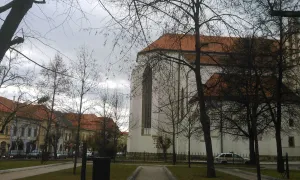
Real photos taken near the monument

Source and licence are given for each image.
Visitor Tips
No tips yet. Be the first!
Log in and add your tip.
Location on Map
Visitor photos
No photos yet. Be the first to add a photo from your visit!
Log in and add your photo or leave a rating.
You get more points for a visit verified in the app — we can tell from the GPS that you are there.
Reviews and comments