

evangelical church Church
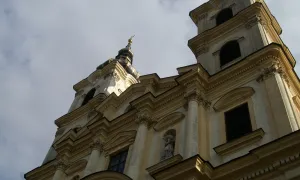
Evangelic church in the village Hlboké in Trnava region is a Baroque sacral building from 1787. It was created as a tolerance church. In the interior there is a classicistic altar with an image from Vienna and an organ from 1857.
The foundation stone was laid on April 24, 1787 by priest John Bacho. The church was completed and consecrated on November 11 of the same year. Equipment was gradually added to the premises.
The building has a hall rectangular floor plan with a flat altar cap and a slightly imagined tower. Facades are smooth, divided by cordon ledge. Two opposite shorter facades decorate baroque volute shields with a round window. The side facade is built a small hallway with a gabled roof and a brick baroque shield. The tower from 1887 is finished with an onion roof with lateral. The interior has a flat ceiling and on three sides brick chorus with wooden cassette parapet.
The main altar from 1857 is made in classical style. In the column architecture with segment shield is the image of Christ at sea from 1857, which was painted by Viennese painter A. Ivanovich. The painting was restored in 1949 by V. Dropp. The pulpit from the 19th century is in historic style; on its parapet are paintings of heads of four evangelists. The baptist from the late 19th century has a wooden carved lid with the sculpture of Christ's Baptism. The organ from 1857 by Master Martin Šaška has late baroque-classicist ornamentation. It consists of a five-piece cabinet with gold decoration and image of Martin Luther.
J. M. Hurban played a role in completing the equipment. In 1857 he made an altar painting for the sum of 1,000 gold and bought the organ. Even in Hurban's life, new benches, a restored baptistery and a made pulpit were installed in the building. In 1886 new bells were brought from Vienna.
The church was restored after World War II. In 1949 the building was equipped with a new roof and in 1952 hours were installed on the tower. The area is listed in the Central List of the Slovak Monument Fund under number ÚZPF 608, the church itself under number 608/1.
The church stands in the central part of the village Deep. The building fulfills its original purpose.
Tehdy a dnes
Drag the slider and compare how the monument might have looked when it was built with the view today.
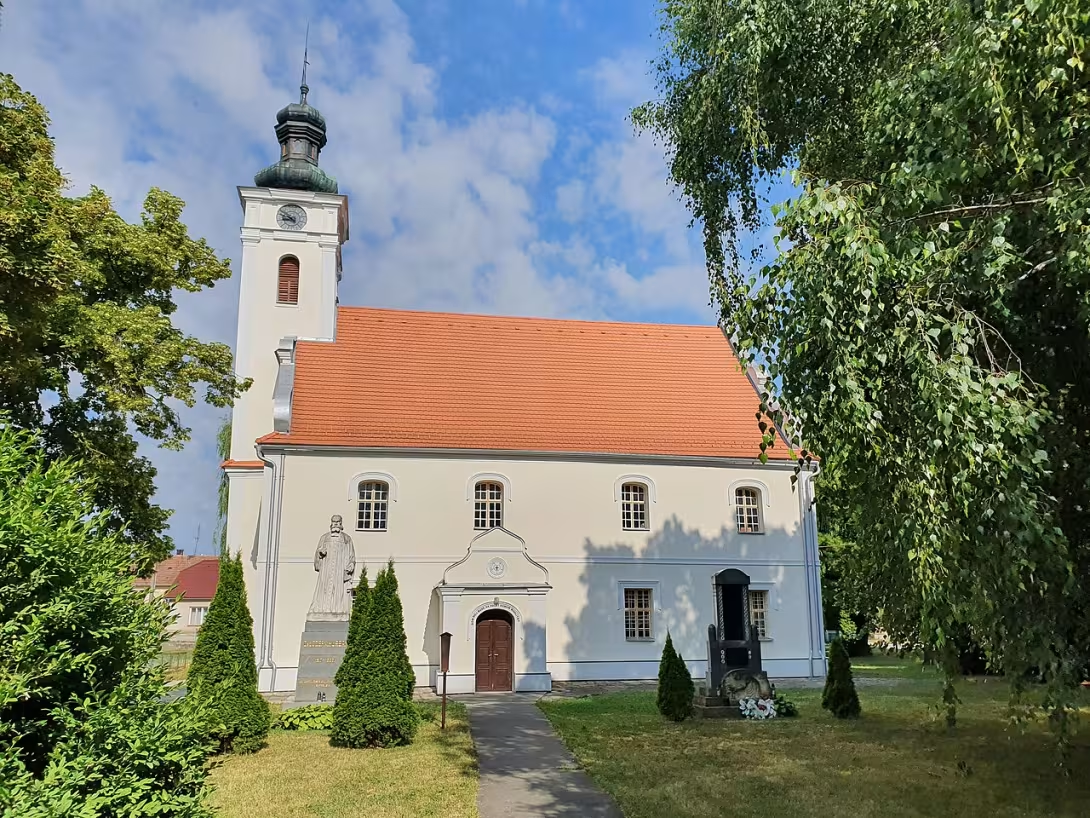
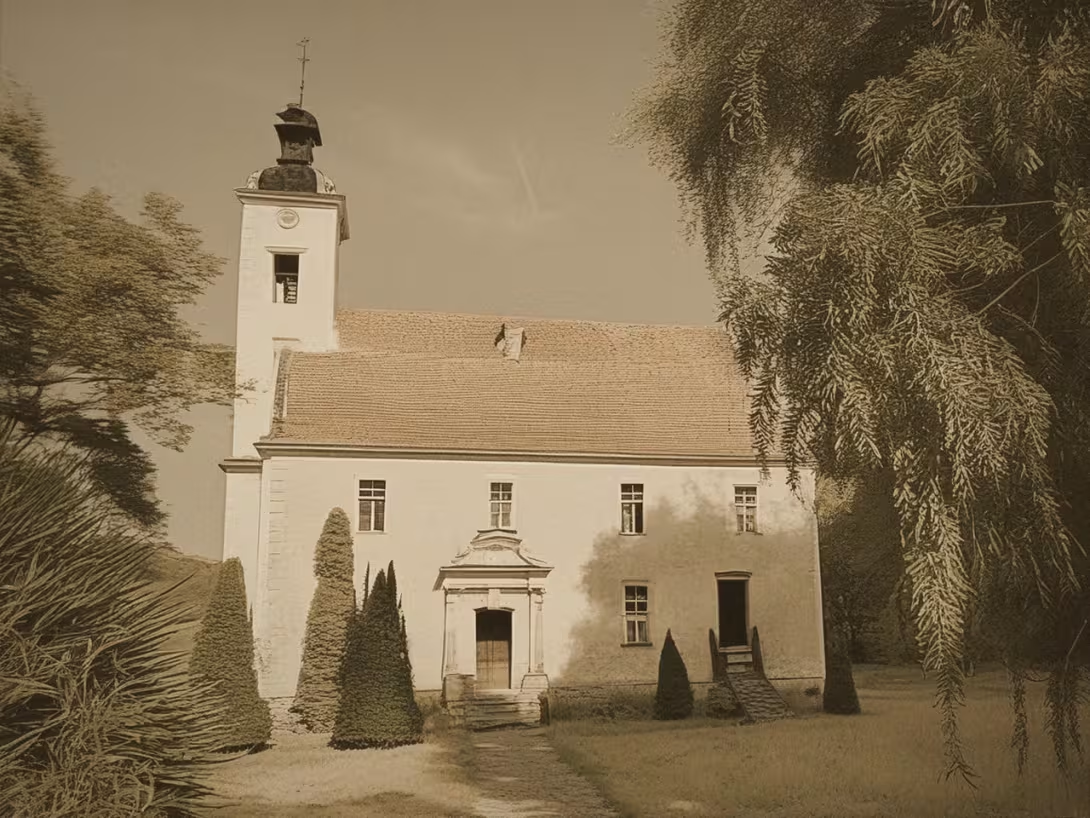
The historical view on the left is a visualisation generated by artificial intelligence and serves as inspiration.
Historical Milestones
- 1787
- laying of the foundation stone (24 april) and consecration of the church (11 november)
- 1857
- purchase of the classicistic main altar with the image of Christ at sea and organ from Martin Šaška
- 1886
- importing new bells from Vienna
- 1887
- restoring the empor and over-wounding the tower
- 1949
- equipment new roof and restoration of altar painting V. Droppom
- 1952
- installation of clock on the tower
Restoration history
| Years | Type | Extent | Condition after restoration |
|---|---|---|---|
| 2018 |
Obnova
evanjelický kostol |
Čiastočná | dobrý |
| 2016–2017 |
Obnova
evanjelický kostol |
Komplexná | dobrý |
Source: Monuments Board of the Slovak Republic — open data, licence CC BY 4.0
Interesting facts
- It is a Baroque sacral building from 1787, which was created as a tolerance church. - In the interior there is a classicistic altar with an image of Christ at sea, which was painted by Viennese painter A. Ivanovich. - The organ from 1857 by Master Martin Šaška has late baroque-classicist ornaments and an image of Martin Luther. - In completing the equipment played the role of J. M. Hurban, who had made the altar painting and purchased the organ. The pulpit from the 19th century is in a historic style, and on its parapet are paintings of heads of four evangelizers.
Guide
Show guide text
The text was prepared by artificial intelligence and has not been editorially reviewed. It may contain inaccuracies.
Welcome to the village Deep. You are standing in front of a building that is a silent but profound witness to the history of this region. An evangelical church is shut down in front of you, a building that by its presence completes the character of the local country and reminds us of the period of searching for religious balance and social recognition. Now that you are looking at it, you may perceive its calm atmosphere and moderation, typical of many sacral buildings in the area. Look at the overall appearance of the building and you perceive its architecture, which invites you to stop and think about what has been going on in the last two centuries. In order to understand why this church was created in this form, we must rush back into the late eighteenth century. The year 1787 was therefore crucial. It was then that, in April, namely on the twenty-fourth day, the foundation stone of the building was laid. It is important to note that it is a so-called tolerance church. This term is not random. It originated at a time when the Toleration Patent issued by Emperor Joseph II paid in Habsburg, Austria. This document allowed Protestants to build their temples, albeit with certain limitations. It was in this spirit of tolerance and newfound space for the creed of its faith that the church was built and soon after that, the eleventh day of November of the same year, was solemnly ordained. Imagine, then, the enthusiasm of the local people who, after a long time, were finally able to meet in a building that was designed directly for their community. Now that you are aware of the exterior of the building, note its overall composition. Although the original architects are unknown, the building bears clear signs of the Baroque period in which it originated. Look up at the tower. The one you see today is not entirely original in its present form. In 1887 the building was renovated, when the tower was overwhelmed, which gave it the present time and increased its visibility in the surroundings. If you look even higher, you will see the clock that was installed on the tower later, namely in 1952. These lessons not only served as a practical tool for the inhabitants of the village, but also became part of the visual identity of this place. Let us go now in our minds to cross the threshold and swallow into the interior where the most precious treasures of this temple are hidden. If you enter the premises of the church, you first sense the feeling of spatial harmony. Your attention should now be directed towards the main altar. This is a classicistic work purchased in 1857. Classicism is characterized by cleanliness of lines and by the return to ancient designs, which creates a beautiful contrast to the Baroque shell building. The most significant element of the altar, however, is its image. We are witnessing the illustration of Christ at sea, which was painted by Viennese painter A. Ivanovich. This image is not only a work of art but a deep symbol of trust and faith in a time of storm and uncertainty. In 1949 this painting passed through the restaurant in the hands of expert V. Droppa, thanks to which we can and today enjoy its original beauty and detail. In addition to the altar, there is another fascinating element in the interior, which is the organ. This instrument comes equally from 1857 and its author is Master Martin Šašek. As you take a closer look at the organ, you will notice its rich ornament that combines late baroque elements with classicistic style. The organ is not only a musical instrument but a real artistic object that complements the overall aesthetic of the temple. Imagine how the tones of this organ resonated under arches of the church during Sunday services and holidays, accompanying generations of Deep people in their spiritual journey. If you look around in the interior, notice the empor, or raised stands for believers. In 1887 it was renewed, which shows that the village sought constant improvement and maintenance of its sacred space. The whole interior complements the feeling of care, which was also manifested in 1949, when the church got a new roof, which ensured the protection of all the valuables inside, from the influence of time and nature. While you look into the details, I would like to remind you of one interesting thing that connects this church with the distant town of Vienna. In 1886 new bells were imported to Deep from Vienna. The bells are the heart of her social life in each village, and in this case they brought to the Deep Sound, which complemented the atmosphere of the tolerance temple. Bells are not just metal objects; they are voices that called people to prayer, announced glad tidings, or warned of danger. It is fascinating to think about how this church developed. From the foundation of the foundation stone in 1787, through the increase of the classicistic altar and organ in the mid 19th century, to more modern adjustments in the 20th century. Each of these steps speaks of the endurance of a community that wanted to build a place of peace and spiritual refuge. This church is not only a set of dates and names, but a living monument to the people who lived here, loved and sought answers to the questions of existence. Note how various epochs connect in this space. Baroque base building, classicistic equipment and later technical additions, such as clock on the tower. It all forms a harmonious whole that tells a story about taking influences from large cultural centres such as Vienna and adapting them to local conditions. Now that you've learned about the main miles and gems of this evangelical church, I invite you to go through the whole facility in peace. Feel the silence that prevails and let the history of this place surround you. You can take another look at the details of the organ by Martin Šaška or look deeper into the eyes of Christ in the image of A. Ivanovich. Every detail, from an overwhelmed tower to a restored image, is a piece of puzzle that composes the overall image of the identity of the village Deep. I hope this short trip to the past has helped you to better understand the meaning of this construction. This church remains a symbol of tolerance and artistic taste, especially within the sacral architecture of the Trnava region. Thank you for your attention and for devoting time to this historical monument. We wish you a pleasant next day and a pleasant sequel to discovering the beauty of our country. Let your curiosity continue to guide you and enjoy the peace of this place. Allow yourself to remain in the shadow of this tower for a while longer and then embark on your next journey.
Tips for visitors
When to visit and why
The church is suitable to visit in the spring and summer months when the interior lights up the sun. The morning after sunrise is suitable for photography thanks to soft light. In the evening, the building gets warmer colors.', 'In winter, sunny days are more precious. During the winter visit we recommend choosing a sunny day to observe the details of the building.
What to Take With You
We recommend comfortable shoes (e.g. boots on flat sole) as the terrain around the area may be uneven. On sunny days we recommend a hat, cap and sunbolts.', 'If you are planning to photograph, take a classor or camera with enough zoom to capture the details of architecture. The polarisation filter will help to suppress the reflections from water or wet soil.
Tips for Photography
Suitable places are chorus and side chapels, where light creates sines and highlights architecture. The interior is suitable to photograph in the morning when light is lighter.
What to visit nearby (up to 30 min)
In the vicinity of Deep is Trnava, approximately 20-30 minutes drive away. In Trnava you can visit the Trnava Castle with a view of the city or Trnava Museum.', 'The interested people will attract agricultural landscapes and villages that are suitable for cycling or hiking. Local watercourses and streams are suitable for nature photography.
Tips for families with children
Children may be interested in church details such as stains, statues or historical tombstones.
Frequently asked questions
Can the monument be visited?
Religious buildings are usually open mainly during services; at other times a visit is normally arranged with the parish or the operator. We have not verified specific times.
Where is the monument?
Location: č. 378, Hlboké, Trnavský kraj. The map on this page shows the exact spot.
Why is the monument protected?
It is listed in the Central List of the Monuments Fund of the Slovak Republic as a national cultural monument (ÚZPF no. 215-608).
For children
The Mysterious Church in Deep
Nearby
🏰 Historic sites (163)
- Obetiam 1. svetovej vojny 0.0 km
- Jozef Miloslav Hurban 0.0 km
- Obetiam 2. svetovej vojny 0.0 km
- Jozef Miloslav Hurban 0.1 km
- Oslobodenie Červenou armádou 0.1 km
- Uzákonenie spisovnej slovenčiny 0.1 km
- Svetozár Hurban-Vajanský - rodný dom 0.1 km
- Jozef Miloslav Hurban 0.1 km
- Pamätná izba Jozefa Miloslava Hurbana 0.1 km web
- Jozef Miloslav Hurban 0.2 km
- Jozef Miloslav Hurban 0.3 km
- Pomník popravených 1848 2.4 km
- Pamätník obetiam 1. svetovej vojny 2.9 km
- Husitské hradby 3.3 km
- Múzeum Senica 3.4 km Štefánikova 724/20 +421 34 651 50 01 web
- 100. výročie vzniku 1. Československej republiky 3.5 km
- L. Novomeský 3.6 km
- sv. Florián 3.7 km
- Immaculata 3.7 km
- sv. Ján Nepomucký 3.7 km
🍽️ Restaurants and dining (113)
- U Kačabu 0.1 km +421 907 282 833
- Jumbo 0.5 km
- U strýca 0.5 km
- U Jakuba 2.7 km +421 917 588 612
- Pohoda 3.0 km
- Zanzibar 3.3 km Sadová 1580/16A
- Pub pod vŕškom 3.5 km
- Babičkina kuchyňa 3.6 km +421 948 369 700
- Pekařství Bistro Křižákovi 3.6 km +421 948 369 700
- AZIA BISTRO HANOI 3.6 km
- Pizzeria Maldini 3.6 km
- Bagetáreň Jana 3.6 km
- V.I.P 3.6 km
- elefante coffee & brunch 3.6 km +421 902 637 232
- Bistro pub 3.6 km
- Beer House 3.7 km
- Savarin 3.7 km +421 911 069 577
- Marakana 3.7 km
- Pri parku 3.7 km
- Hokejka 3.7 km
🏨 Accommodation (24)
- Hotel Branč 3.8 km
- Roos penzion 3.9 km
- Arli Hotel 4.0 km
- Grand hotel Senica 4.0 km web
- Senica 4.4 km +421 34 651 72 36 web
- Penzión Atlas 4.6 km web
- Chata nad plážou 5.3 km
- Penzión Záhoran 5.6 km +421 34 658 31 44 web
- Ubytovanie Dolina 9.5 km
- RZ Partizán 9.5 km +421 905 283 021
- Penzión Tvarožek 9.7 km web
- Malvázia 9.7 km +421 903 90 42 78 web
- Chata SNP 9.8 km +421 904 870 940 web
- Central Ensana Health Spa Hotel 10.2 km +421 34 695 9173 web
- Vietoris Ensana Health Spa Hotel 10.3 km +421 34 695 9173 web
- Morava 10.3 km +421 34 695 9173 web
- Ubytovanie Family 10.4 km +421 903 658 962 web
- Chata Lesanka 10.5 km +421905722484 web
- Chata Diana 11.1 km
- Penzion Skalka 12.3 km web
🚲 Rentals and sport (36)
- Senica Bajk 3.1 km +421 915 244 244 web
- Senica Bajk 3.4 km +421 915 244 244 web
- Senica Bajk 3.4 km +421 915 244 244 web
- Senica Bajk 3.4 km +421 915 244 244 web
- Letné kúpalisko 3.4 km +421 917 123 600 web
- Detský bazén 3.4 km
- Senica Bajk 3.5 km +421 915 244 244 web
- Zimný štadión 3.6 km web
- Senica Bajk 3.6 km +421 915 244 244 web
- Senica Bajk 3.7 km +421 915 244 244 web
- Senica Bajk 3.7 km +421 915 244 244 web
- Senica Bajk 3.7 km +421 915 244 244 web
- Senica Bajk 3.7 km +421 915 244 244 web
- Senica Bajk 3.7 km +421 915 244 244 web
- Senica Bajk 3.8 km +421 915 244 244 web
- Senica Bajk 3.8 km +421 915 244 244 web
- Senica Bajk 3.9 km +421 915 244 244 web
- Mestská športová hala 4.0 km +421 917 427 772 web
- Senica Bajk 4.0 km +421 915 244 244 web
- Senica Bajk 4.0 km +421 915 244 244 web
🥾 Hiking and nature (172)
- Vinohrádky 1.7 km
- Hrbatá 1.9 km
- Fliačky 2.3 km
- Sochorovské 2.6 km
- Prietržský vrch 3.2 km
- Stará ledovňa 3.3 km web
- Mestský park 3.7 km
- Barina 4.6 km
- Rákociho vŕšok 5.0 km
- Varáková 5.2 km
- Rozhľadňa Lipovec 5.5 km
- Lipovec 5.5 km
- Kopánky 5.6 km
- Vyhliadka pri hruške 6.1 km
- Kopanice 6.7 km
- Bzová 7.1 km
- Diely 7.3 km
- Hrabiny 7.6 km
- Vrchháj 7.7 km
- Vysoká skala 8.0 km
Thematic route
1. Evangelical church in Deep This sacral object is the main dominant of the village and a great example of local evangelical architecture. Visitors can enjoy its quiet atmosphere and admire the interior details that testify to the history of the local community.
2. Nádvoří and the immediate surroundings of the church There is a quiet environment right next to the church, ideal for a short break and photography. This place offers a view of the architectural harmony of the building and its surroundings, which is suitable for peaceful meditation or walk.
3. Gateway and access routes Pleasant walk to the monument along the local trails allows for a gradual introduction to the atmosphere of the village. The journey itself is not long, but it provides space to relax before visiting the church itself.
4. Interior of the church (if accessible) Inside the church offers views of the altar, benches and possibly preserved historical elements. It is a place where you can feel the spiritual side of the place and understand the meaning of the evangelical faith for the locals.
5. Final walk around the area After visiting the interior we recommend a short circle around the entire church area. This conclusion of the route allows you to admire the exterior of the building from different angles and enjoy the quiet surroundings of the village Deep.
This route is designed to be brief and focused exclusively on the main monument and its immediate surroundings, as other specific attractions in the surroundings are not mentioned. It is ideal for a short trip or a break during a longer journey in the region of Trnava region.
Seasonal recommendations
In spring, the meadows and fields in Záhorie near the Deep will be dyed green. Slightly rolling terrain is suitable for walking during this period. In the morning and evening the air is fresh and light highlights the lines of the building.
Summer creates a contrast between the white facade of the Evangelical church in Deep and deep green vegetation. The midday light passes into golden shades until later in the evening, which is suitable for outdoor photography. In summer, more visitors interested in Slovak national history come here. In warm days we recommend light clothing, sunglasses and drinking mode, because in the direct vicinity of the monuments there are not extensive refreshments.
Autumn changes the landscape around Deep into brown, yellow and orange shades. The morning fog wraps the church and the adjacent cemetery, creating an atmosphere suitable for remembering the Štúrovská generation. The best time to visit is morning. Since temperatures are falling and meadow paths are humid, we recommend layered clothing, long trousers, and waterproof footwear.
Winter brings to Deep Peace and the snowy landscape of Záhorie creates a contrast scenery around the sacral structure. Short days and low suns create shadows on the church facade. In Advent time and during winter weekends people come here for walks in historical surroundings. Due to the cold and snow, winter shoes with non-slip soles, warm cap, gloves and outer clothing are important to protect them from the freezing wind.
Visualisations and artistic views


The visualisations are generated by artificial intelligence and serve as inspiration.
Photographs from the area
Real photos taken near the monument


Source and licence are given for each image.
Visitor Tips
No tips yet. Be the first!
Log in and add your tip.
Location on Map
Visitor photos
No photos yet. Be the first to add a photo from your visit!
Log in and add your photo or leave a rating.
You get more points for a visit verified in the app — we can tell from the GPS that you are there.
Reviews and comments