

evangelical church Church
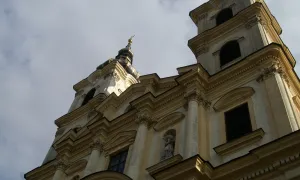
In the village of Horné Zelenice in Trnava region there is an evangelical church from the year 1792. The architecture of the object is in classic Baroque style.
The monument area is registered by the Monument Office of the Slovak Republic under the number ÚZPF 213-875. The area consists of one object, which is the church (ev.a.v.) in the style of the classicizing Baroque from 1792.
The monument has an inventory number 45 and is located in the village Horné Zelenice. It is protected as a national cultural monument.
The church is located in the village of Horné Zelenice. This monument is an architectural object from the end of the 18th century.
Tehdy a dnes
Drag the slider and compare how the monument might have looked when it was built with the view today.
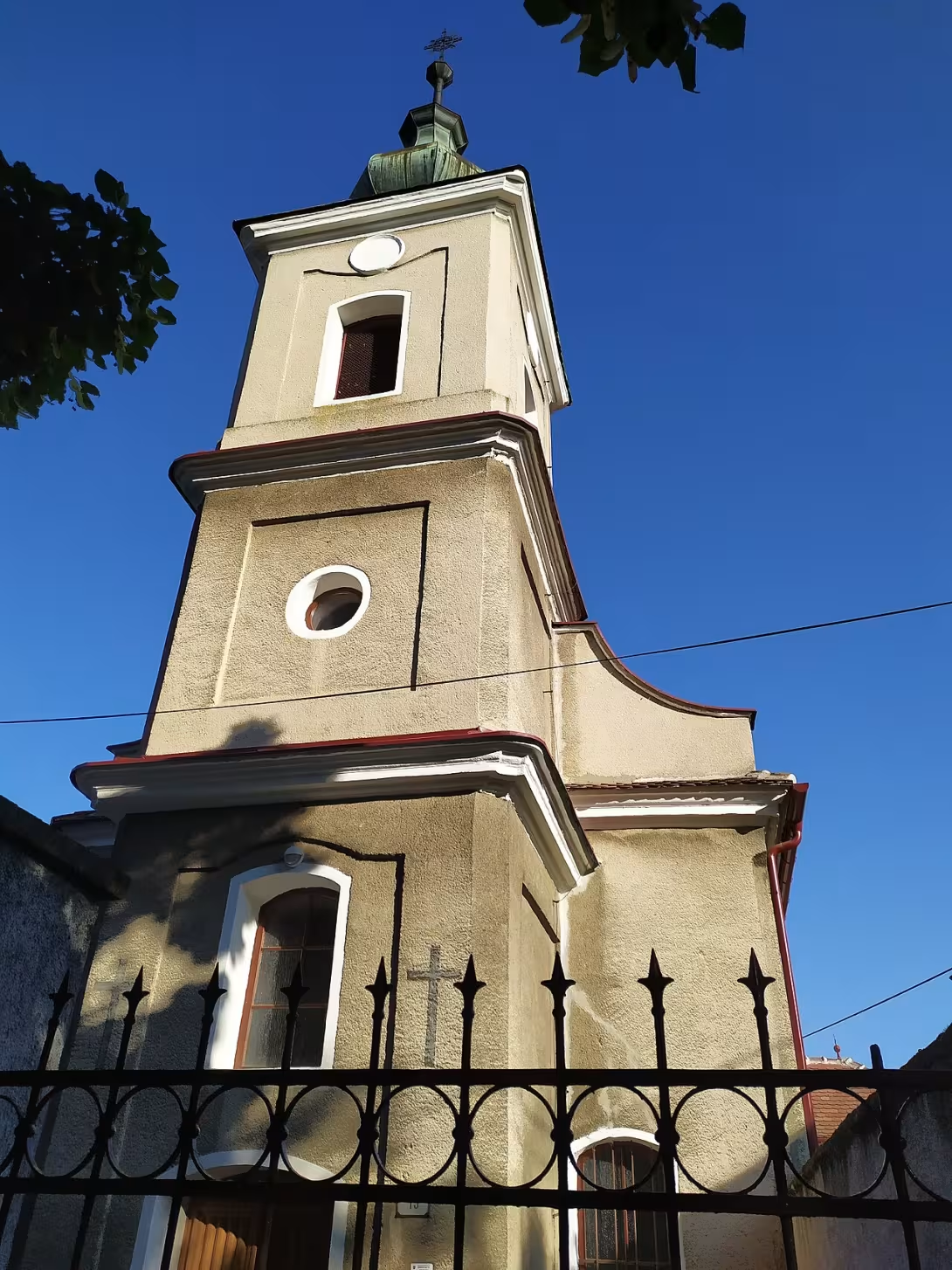
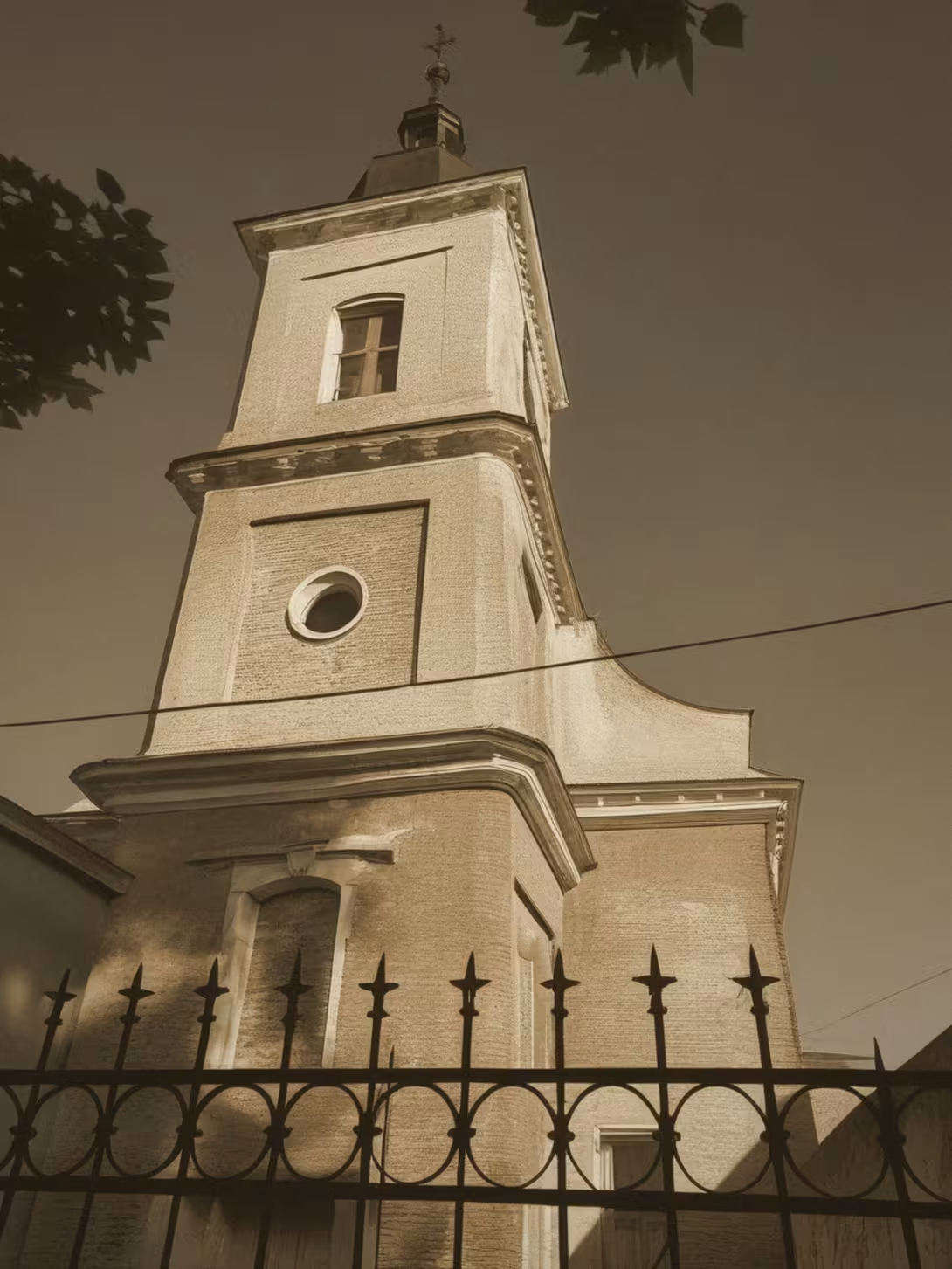
The historical view on the left is a visualisation generated by artificial intelligence and serves as inspiration.
Historical Milestones
- 1792
- Construction of an evangelical church in classic Baroque style.
- 1990-2000
- Entry of an object in the list of national cultural monuments under number 213-875.
Interesting facts
- Evangelical church in the village Horné Zelenice comes from the year 1792 and is built in the style of classic Baroque. - The monument is protected as a national cultural monument and is registered by the Monument Office of the Slovak Republic under the number of ÚZPF 213-875.
Guide
The guide was voiced by a synthetic voice created by artificial intelligence.
Show guide text
The text was prepared by artificial intelligence and has not been editorially reviewed. It may contain inaccuracies.
Welcome to Upper Zelenice. You stand in front of an evangelical church, in the quiet centre of this village, which is knocking towards the south of the Little Carpathians, in the Trnava region. In front of you is a vicious building that proclaims neither its greatness nor pride, but its own presence testifies to the endurance of generations. It is not a monument that surprises you with the dimensions of the cathedral or with the wealth of sculptural decoration. It is a house that breathes of modesty, functionality, and deep spiritual seriousness. Note how its volume is inserted into the country - the ceiling, walls, windows, everything serves one purpose: to create space for word and community. Right now, in silence, standing here alone, you can feel the invisible thread that links the past to the present. Let's go back in time to understand why this church is standing here. The history of the Evangelical Church in this area is not just the data of chronicles; it is the stories of people who risked property, freedom, and often life for their faith. Reformation ideas reached this part of Hungary almost immediately after Martin Luther nailed his tesses to the door of the Vitemberg church in 1517. In the 16th century, the evangelical faith quickly spread among the nobility, the urban population and the rolls. The upper Zelenices, as well as the neighbouring villages, have become part of this wave. However, the joy of new freedom was not long. After the Bile of the Mount in 1620 it was time to recatholize, which aimed to return all of them under the seal of the Roman Church. Evangelical clergyman was banished, churches occupied, schools closed. It was not just a political act for the inhabitants of these parts, it was a blow to identity. It is in this context that the oldest roots of your parish are born. When public worship was banned, people were hiding in forests, hidden valleys, in the walls of their homes. The so-called secret Protestants - the -scriptoprotestanti-- kept faith in their hearts, taught children catechism under threat of punishment, read the Bible and messages in secret. This underground period lasted decades. Erst in 1681, after the Sopron Council, Hungarian King Leopold I released at least a partial freedom of religion. The so called articular provisions allowed the construction of two evangelical churches in each county - one in the city, one in the village. These were raw conditions: churches had to stand behind the city, without towers, bell towers, without ecclesiastical signs, entrances had to be turned away from the main road. It is very likely that the first service spaces in Horné Zelenice - whether it was a wooden chapel or a modified economic object - were created during this difficult period of toleration. Later, in 1781, Joseph II's tolerance patent brought another shift. It was no longer necessary to bet in hiding, to add bell towers, improve exteriors. Many articular churches were then taken over, transferred, or formed in their place new, stone, more permanent. Since the exact dates of construction of this particular object were unknown, the lost archives, fires, wars, we can only guess. Perhaps you are standing in front of a church that originated in the late 18th century as a patent reaction, perhaps the result of the classicistic takeover of an older wooden church in the 19th century, when the Evangelical Church facilitated and grew. The lack of chronology is not just a hole in the register, it is a testament to the storm history that passed through this village. Now look at the architecture. Notice the facade. It's simple, honest. There's no sawmills, no wing altars, no frescoes with angels. Evangelical architecture always stood on the principle: the form follows the function. The most important element is not the altar as the place of sacrifice, but the pulpit as the place of the word. When looking at the outside wall, look for windows. Their shape, size, and arrangement will tell you a lot about how the light got inside. Protestants have always wanted a lot of light - light as a symbol of the Gospel, as a metaphor of knowledge. If you see tall, narrow windows with a collar, this may indicate a classicistic or later historical style. If they are smaller, rectangular, with a simple frame, it can testify to an older, tolerance time, when windows were made small, even from glass savings for safety reasons. The ceiling you see above your head, if you decide to enter inside, is probably surfaced or slightly watered, without complex arches. Empora - choir for singers and organ - usually hanging over the entrance, leaning against the sun or anchored in the wall. It is a place where voices are merged into a common singing, which in the evangelical tradition is not only a performance but a prayer of the whole meeting. Let's go inside. Open the door slowly. Let the eyes get used to the polotm that rules here on a bright day. Notice the atmosphere. It's different from other churches. There's no incense, there's no gold, there's no statues of saints in front of you. There's just simplicity, wood, stone, textiles. The center of interest is the pulpit. It is often embroidery, accessible only by stairs, emphasizing the authority of God's word over the forehead. Under it, in the middle of the presbytery, stands the stool of the Holy Eve - a simple table with chalice and bread. In evangelical theology, it's not the altar of the victim, it's a community table to which everyone is invited to be cut. Side emporas, if they're here, are full of benches. Imagine them full of people - farmers in work clothes, craftsmen, teachers, children. Everyone's looking towards a sling. Acoustics is usually excellent here, churches were built as resonance vessels for speech and singing. Listen quietly. It is full of Echo prayers, preaching, singing chorals that have been here for centuries. Who was standing on the pulpit? Who baptized the children, walked the couples, accompanied the deceased to the final journey? The names of the clergymen, the teachers, the mayors of the parish who molded the village are very rare for us today. We know that the Evangelical Church in Hungary in the 18th and 19th centuries was not just about worship. It was about school. Every parish that allowed it had its own school. The cantor teacher was often the second most important person after the parish. He taught reading, writing, counting, but especially evangelical catechism and singing. There was certainly an evangelical school in Upper Zelenice, possibly right next to the church, possibly in a neighboring house. Generations of children were taught Slovak, German, Hungarian, and they learned to think critically, to read the Bible in their mother tongue. This is invisible, but perhaps the greatest treasure of this memorial. The unknown names of those who taught and learned here, but their work lives in the fact that you stand here today and understand the words that sound here. An interesting thing that also becomes mysteries is the lack of documentation. They're not just lost books. It's the story of a community that had to adapt to changing regimes. In the 19th century, the Evangelical Church in Hungary was exposed to Hungarianization. The services had to be in Hungarian, the schools were Hungarian. Local Gospels, Slovaks, fought for Slovak in the pulpit, school, songbook. It was a silent resistance that was not seen on the facade, but was the heart of the parish. Then came the 20th century with two world wars, collectivization, atheistic state pressure. The church survived. Bells that may have been cast for military use still sound here - or at least their silence resembles their past voice. Note the bell tower if it is part of an object or a separate bell tower. It is often the youngest element of the complex, added only at a time when there was no danger that the ringtone will be punished. Now that you're standing here, between the benches, under the empora, below the ceiling that has kept generations, remember one thing: This church is not a museum. It's not a dead monument that's admired from a distance. It's a living organism. When the bells call on Sunday morning, when the door opens and people from the village, from around them, enter the inside, it becomes why it was built - the house of God and the brotherhood of believers. The modesty you've seen out there is turning inside into a guest room. The space that looks empty is full of the presence of those who were here and those who will be here. Before we say goodbye, let me invite you to a little try. Sit on the bench. Close your eyes. Don't look for architecture details, don't look for dates on memorial tables - they're not even here. Just listen. Listen to the silence of the walls that have understood thousands of prayers. You will feel the coldness of the wood under your hands that your ancestors have laid there. And ask, "What would they say if they saw me standing here, a stranger with ear bracelets, and I hear their story?" They'd probably just smile and say, Hello. Good to see you. Become home
Thank you for taking the time to stop by the Evangelical church in Upper Zelenice. May his quiet strength and modest beauty guide you further along the way. And once you return, the door will be open. Goodbye.
Tips for visitors
Visit time: We recommend coming in spring or autumn months when the surrounding area is natural and light in the morning allows you to observe the details of the building.
Transport: Take a car or public transport to the site; check the current links in the available search engines.
Selection: We recommend having a camera and shoes with you.
Photograph: Use soft light in the morning or shortly before sunset to avoid sharp shadows on the facade.
Family with children: Visit a place where the surrounding area is quiet, allowing you to observe architecture.
Frequently asked questions
Can the monument be visited?
Religious buildings are usually open mainly during services; at other times a visit is normally arranged with the parish or the operator. We have not verified specific times.
Where is the monument?
Location: č. 45, Horné Zelenice, Trnavský kraj. The map on this page shows the exact spot.
Why is the monument protected?
It is listed in the Central List of the Monuments Fund of the Slovak Republic as a national cultural monument (ÚZPF no. 213-875).
For children
Imagine climbing an old, crooked path lined with willows. The air here feels different than in the city. It's quiet, but not so empty. It's the silence you hear when you stop and hear what your time is whispering. Just 234 years ago, in 1792, something special was born in the village of Horné Zelenice in Trnava region. It was not a castle with dragons, nor a fortress with graveshooters. It was an evangelical church. What did it look like when there were only a few generations after its creation? Imagine the villages were small and tight. People lived in close proximity.
Nearby
🏰 Historic sites (300)
- Trojičný stĺp 3.0 km
- Obetiam 1. a 2. svetovej vojny 3.0 km
- Jozef Hutta 3.0 km
- sv. Alžbeta Uhorská 3.1 km
- Beethoven 4.3 km
- Obetiam války 4.5 km
- sv. Urban z Langres 4.7 km
- sv. Vendelín 4.9 km
- Božské srdce Ježišovo 4.9 km
- Trojičný stĺp 5.1 km
- Pamätník SNP 5.2 km
- sv. Róchus 5.2 km
- Trón milosti 5.2 km
- Jozef Seilnacht 5.2 km
- ThDr. Ignác Havran 5.2 km
- Pieta 5.2 km
- sv. Florián 5.3 km
- Mariánsky stĺp 5.3 km
- sv. Šebastián 5.3 km
- sv. Jozef 5.3 km
🍽️ Restaurants and dining (353)
- Kaviareň Albion 1.8 km
- Restauracia Lukab 1.8 km
- Janaček pub 3.0 km
- Bar Marco 3.0 km
- Hostinec vo dvore 3.5 km
- Pohostinstvo Marco 4.5 km
- Rýchle občerstvenie 4.7 km
- Bar 69 4.7 km
- AG play 4.9 km
- La caffetteria 5.1 km
- Coffee berry 5.1 km
- Frašták Pivo a jedlo 5.1 km
- Hanam 5.2 km
- Hotel Jeleň 5.2 km +421917090999 web
- Kriváň 5.2 km
- Erdody 5.2 km
- U deda 5.2 km
- Dublin Pub 5.2 km
- MAM Burger 5.2 km +421908599979 web
- Pelikán 5.3 km
🏨 Accommodation (39)
- Quatro 5.2 km
- Hotel Jeleň 5.2 km +421949601251 web
- Penzion M.L.K. 5.2 km Osloboditeľov 1227/104 web
- Penzión Pompano 5.4 km +421 33 73 200 26 web
- Robotnícka ubytovňa 6.9 km +421 905 899 202 web
- Hotel Mlyn 7.3 km Mlynská 147/10 +421 33 5597 071 web
- Faraon 9.1 km
- Macho 9.2 km
- Važinka 10.4 km P. O. Hviezdoslava 368/8 +421 33 764 41 26 web
- Kaštieľ Koplotovce - Kaplath 10.5 km +421 33 7300 462 web
- Camping Sereď 10.6 km +421 903 934 506 web
- Ubytovňa ŽOS 11.4 km +421 915 124 670
- LARA 11.5 km +421 910 122 231
- Nájomný dom UVM Trnava 11.6 km Sereďská 79 +421949694675 web
- Motorest ESO 11.8 km web
- Lux 11.9 km web
- Hotel Dream 12.2 km Kapitulská 454/12 web
- Hotel LONDON 12.2 km web
- Hotel Phoenix 12.2 km Kapitulská 458/16 web
- Penzión Patriot 12.3 km +421335512511 web
🚲 Rentals and sport (96)
- Letné kúpalisko Hlohovec 4.2 km
- AB Fittness 5.1 km
- Montana Sport 5.3 km
- Adidas 5.6 km
- Bike4you 5.9 km
- GYMEX | Športové centrum 6.0 km
- Termálne kúpalisko 10.1 km web
- Václavík priemyselný tovar 10.1 km
- Camping Sereď 10.7 km +421 903 934 506 web
- Štadión SKF Sereď 10.8 km
- Sportisimo 10.8 km +421 911 072 452
- Husky 11.0 km +421 918 111 106 web
- Sereďská na konci 11.1 km web
- Sportisimo 11.2 km
- SOŠ Elektrotechnická 11.2 km web
- Olympijská / Veterná 11.3 km web
- Kúpalisko Castiglione 11.4 km web
- Športová hala Alberta Kudelu 11.4 km
- Športový areál Lokomotíva 11.4 km web
- Topoľová / Modranka 11.5 km web
🥾 Hiking and nature (39)
- Dunajský vrch 2.9 km
- Šianec 3.9 km
- Taličmáne 3.9 km
- Šianec 3.9 km
- Zámocká záhrada 4.4 km
- Stredné Šumperky 5.2 km
- Park R. Dilonga 5.6 km
- Františkánsky park 5.9 km
- Nový park 6.4 km
- Široká aleja 7.3 km
- Park Blavská 7.4 km
- Gábor 7.6 km
- Sedliská 8.3 km
- Komín 8.6 km
- Zvon 8.8 km
- Prameň čírej vody 9.1 km
- Lipiny 9.2 km
- Rumanovský park 10.8 km
- Zámocký park v Seredi 11.1 km
- Lavička slávy 11.2 km
Thematic route
1. Evangelical Church Type: Sacral object Reason: The main historical point of the route, which represents the spiritual heart of the site.
2. Courtyard outside the church Type: Immediate area Reason: Ideal place for short rest and observation of exterior details in a quiet environment.
3. Church Tower Type: Architectural point Reason: It offers views of the entire village of Horné Zelenice and its nearest surroundings.
Seasonal recommendations
In spring the mountains are green, the hay lies on the ground, and the cloudiness is unpredictable. It is slowly green, but it can rain, so there is a calm and humble atmosphere. For this visit it is good to have protection against rain, bright jacket and light clothing. The best is a short walk when nature does not bother.
In summer nature is green, on the sand yellow and the sun hot. The atmosphere is free, warm, not too busy. For this visit is suitable for heavier shoes, covering, sunglasses and long sleeves. The best time is before or after sunset to make light softer. Nature around can be dry, but plants are young.
In autumn the forest gold and nature is rich, peaceful, the day is short. Clothing should be warm, non-promoting jacket, cap and closed shoes. A good time is early in the morning when the silence and light are subdued. Nature around brings the fall of leaves.
In winter, nature is covered with snow, frost and low sunlight. The atmosphere is quiet. Clothing should be insulated, gloves, blades and insulating boots. Best time is early in the morning or night. Nature around is covered with snow.
Visualisations and artistic views


The visualisations are generated by artificial intelligence and serve as inspiration.
Photographs from the area
Real photos taken near the monument

Source and licence are given for each image.
Visitor Tips
No tips yet. Be the first!
Log in and add your tip.
Location on Map
More monuments – Horné Zelenice
Show all in the town
Visitor photos
No photos yet. Be the first to add a photo from your visit!
Log in and add your photo or leave a rating.
You get more points for a visit verified in the app — we can tell from the GPS that you are there.
Reviews and comments