

greek catholic parish Parish house
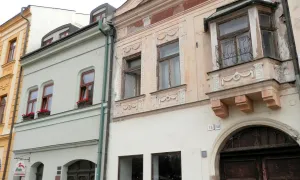
The Greek Catholic parish in Prešov is a national cultural monument. It is a burgher house from 1600, made in the style of Renaissance.
The area is registered by the Monument Office of the Slovak Republic under the number ÚZPF 3180. It consists of a pass-by terraced house (object No. 3180/1).
The building is located at Main 2946/8 in Prešov. The monument is an example of burgher's housing from the Renaissance period in the city center.
Tehdy a dnes
Drag the slider and compare how the monument might have looked when it was built with the view today.
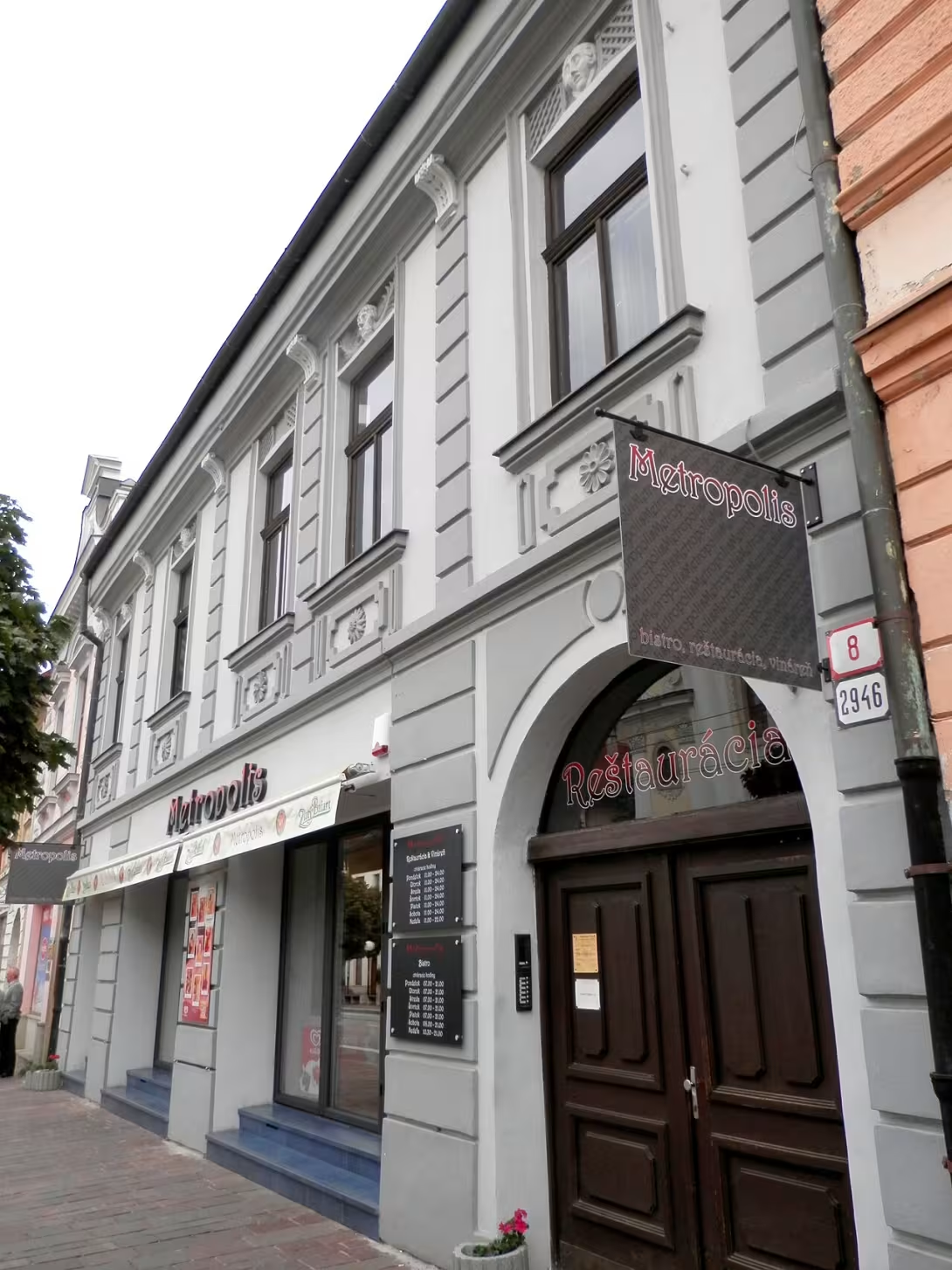
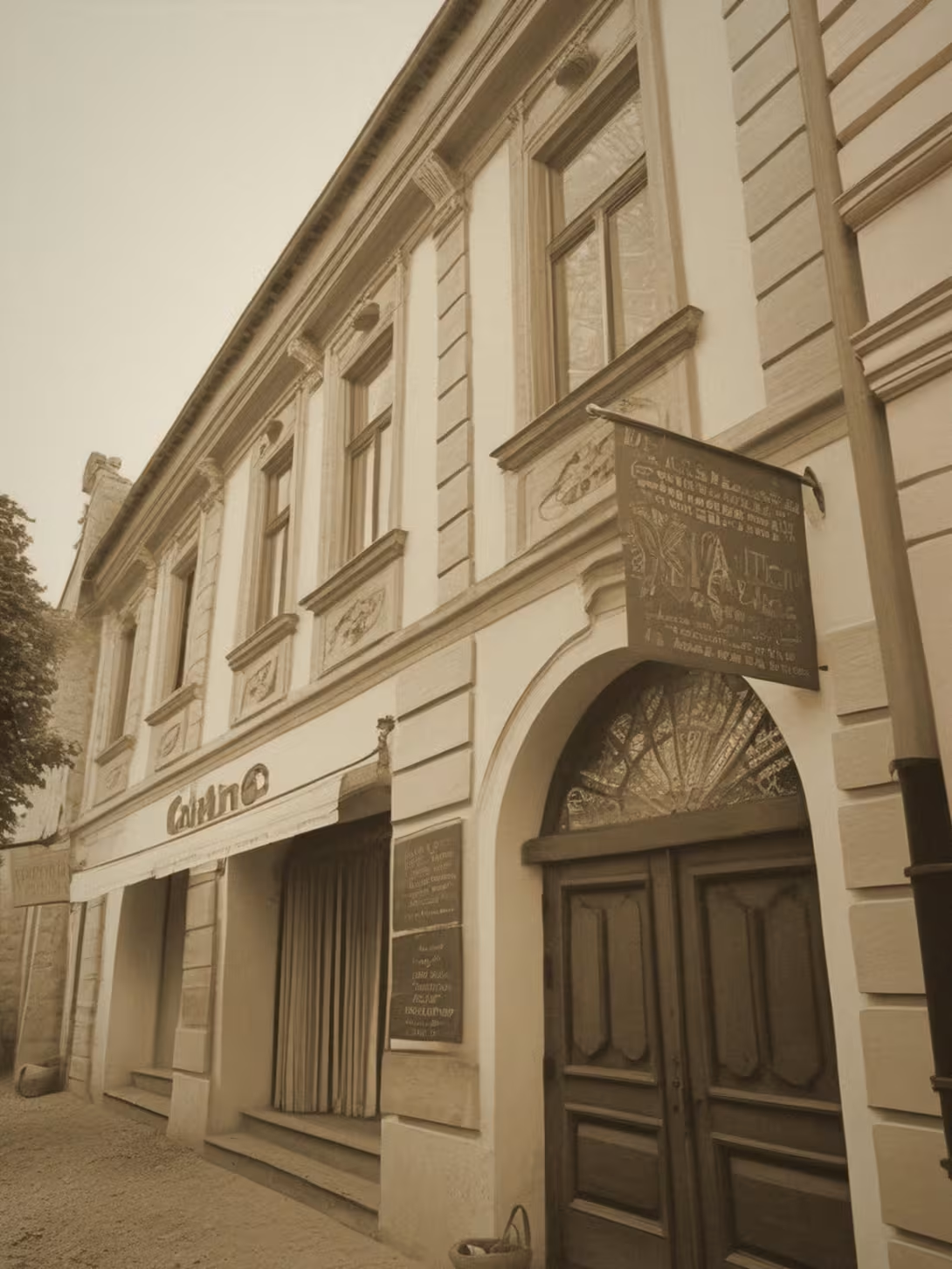
The historical view on the left is a visualisation generated by artificial intelligence and serves as inspiration.
Historical Milestones
- 1600
- Construction of the townhouse in the Renaissance style.
- 1700
- Period of Baroque adjustments typical for burgher houses in Prešov.
- 1900
- Adaptation of the building for the needs of the Greek Catholic parish.
- 1963
- Enrollment of an object in the list of national cultural monuments.
Interesting facts
- It is a national cultural monument in the form of a burgher house from 1600. - The building is made in Renaissance style. - The area consists of a cross-country terraced house. - The monument represents an example of burgher housing from the Renaissance period in the city center.
Guide
Show guide text
The text was prepared by artificial intelligence and has not been editorially reviewed. It may contain inaccuracies.
Welcome to Prešov, a city with rich history and deep traditions. Right now, you are standing in front of a building that bears the name of a Greek Catholic parish, also known as the burgher House. When you look at it, you will see a building that fits into the urban character of the region and testifies to the social order of ancient times. Look carefully at it, see its general appearance and atmosphere. It is a place that quietly tells about the fate of the people who lived and worked here, even though now many of their stories have remained secret in the gas of time. Now let's stop at the question of when and why this building was created. Although the exact chronology of the construction is not exactly documented today and we cannot accurately determine the year when the first stones were laid, the very name House burgher tells us much about the original function of this object. In the historical context Prešov burgher houses represented stability, prosperity and status of families that built the city. Later, however, the building became a Greek Catholic parish, giving it a new spiritual and administrative role. The change of function from a private apartment to a parish house is a typical example of how urban spaces adapted to the needs of the community and church over the centuries. Nyní pay attention to architecture. When you view the front of the building, note the harmony of its lines and the way it fits into the overall image of the street. Although we do not know the specific names of the architects who designed this house, it can be seen that it was a building with clear purpose and aesthetic feeling. Look at the details of windows and entrances that define the rhythm of the facade. See how the building communicates with and feels about the environment. It is a moderation that is typical for many burgher buildings, where luxury was not about pomp, but rather about the quality of the processing and functioning of the premises. If we look for key stories or specific personalities associated with this place, we will find that history is sometimes younger than we would like. The names of the specific owners or clergymen who worked here are not clearly defined in the available documents, but this is the kind of year. Each of us can imagine who has crossed this threshold, what discussions have taken place here and what decisions have been taken here. Imagine the life of a Greek Catholic clergyman in the centre of Prešov, his daily routine, prayers and care for believers in a city that was always full of diverse cultures and confessions. Perhaps you will now be interested in one mystery that accompanies many historical buildings in Prešov. The absence of accurate data and the names of architects creates room for dominations and hypotheses. It is fascinating to think about how many secrets are hidden in the walls of a house that changed its identity from a burgher's residence to a religious center. What would the walls tell us if they could talk? Who was the first city to find refuge, and when exactly did the building become a parish? It is these unknown details that add a certain mystical dimension to the memory that makes us think more and look for answers in the details we see before us. Prešov is a city that has not only been revealed once but requires constant search and curiosity. The Greek Catholic parish is just one of the many corners that make up the city's mosaic. I believe that this short stop helped you to better perceive the value of this building, not only as a physical object, but as a witness to Prešov history. Now I invite you to continue to explore the city. Follow the streets, look for further traces of the past, and allow yourself time to perceive the silence and tranquillity that these old buildings offer. Thank you for a walk together in front of this historic house and I wish you a pleasant day in our beautiful Prešov.
Tips for visitors
We recommend to visit the building in spring or summer, when the facade is well lit by natural light. Since it is a residential building that can only be seen from the outside, it is advisable to arrive at the morning hours when it is more peaceful in the city centre.
We recommend shoes suitable for walking around the historical centre.
When taking pictures, focus on the details of the townhouse. Suitable light for outdoor images is shortly before sunfall, when the colors of the walls are softer and contrasts less pronounced.
Families with children can look around for historical details on the facades of buildings.
Frequently asked questions
Can the monument be visited?
This is a residential or farm building, not a museum with opening hours. Please view it from public space and respect the owners' privacy. We have no information about access to the interior.
Where is the monument?
Location: Hlavná 2946/8, Prešov, Prešovský kraj. The map on this page shows the exact spot.
Why is the monument protected?
It is listed in the Central List of the Monuments Fund of the Slovak Republic as a national cultural monument (ÚZPF no. 417-3180).
For children
Imagine going back in time 426 years later. It's not a science fiction book, but the real history of our town of Prešov. You're standing on a street where people come around today, but there are no buses or modern houses around you. The wind is four centuries old under your feet. In 1600, exactly 426 years ago, there was a very important and interesting house. It was not an ordinary cottage, but a large building we call a Greek Catholic parish today, or a townhouse.
Thematic route
Greek Catholic parish (House of the Town) Type: Historical building / Architectural monument Why it is worth visiting: The building in Prešov is interested in architecture and local significance. It serves as a starting point for getting to know the local heritage.
Seasonal recommendations
Spring In March and April, the Greek Catholic parish in Prešov will awaken from winter sleep. The sun's rays reflect from the white facade and blue windows, creating contrast with the greening trees in the surroundings. Blooming convales and tulips that grow between the stone steps around the building. We recommend a visit in April when nature is in bloom and not too hot. We recommend lightweight clothing that covers the shoulders and neck, because the sun can be strong. It is also suitable for footwear with solid soles, as the trails can be muddy after rain.
Summer In July and August, the stone walls of the building are exposed to bright sunlight, which highlights the details of the building. Weeds and herbs grow around the parish. Visit the parish at morning or evening hours when the sun is not so intense. When visiting, we recommend wearing lightweight, covering clothing, hat or scarf to protect against sunlight.
Fall In September and October, the leaves of the trees around the parish turn yellow, red, and brown. They are accompanied by a cool and bright light. The fallen leaves are drying around the building. Good time to visit is September. We recommend warmer clothes that cover the shoulders and neck, because evenings are cool. It is also suitable for footwear with fixed soles, as the trails can be wet and slippery after rain.
Winter In December and January, sun rays are reflected from white facade, blue windows and snow. Snowflakes settle on stone steps and window sills. Visit the parish in January when the country is covered with the first snow. We recommend layered and warm clothing for the whole body. It is also suitable for footwear with fixed soles, because the trails can be wet and slippery in snow or rain.
Visualisations and artistic views

The visualisations are generated by artificial intelligence and serve as inspiration.
Visitor Tips
No tips yet. Be the first!
Log in and add your tip.
More monuments – Prešov
Show all in the town


Visitor photos
No photos yet. Be the first to add a photo from your visit!
Log in and add your photo or leave a rating.
You get more points for a visit verified in the app — we can tell from the GPS that you are there.
Reviews and comments