








hospodársky dvor Farmer's farmstead
Slovak Cultural Monument - Economic Court
Municipality of Stankovany, Žilina Region
Type of object: Courtyard peasant Location: Village Stankovany, Zilina Region Pamateková protection: national cultural monument ÚZPF No: 318-12263 Address: Stankovany Slav/period: 2.30.19.st.
The area consists of two objects: construction of economic (rubový konštrukcie, folk construction, 19th century) and folk house (rubový konštrukcie, folk construction, 2nd half. 19th century).
2nd half Court of peasants The 19th century is located in the village Stankovany, Žilina region.
Building characteristics: layout, flooring, floor plan, material - everything is in the data. Location and protection: address of Stankovany, cadastral territory, date of declaration as a monument.
This monument is a significant part of the village Stankovany and stands in the centre of the village. The monument is used as a residential environment.
Historical Milestones
- 19th century
- Establishment of the Economic Court
- 2nd half 19th century
- Housing status
Guide
Show guide text
The text was prepared by artificial intelligence and has not been editorially reviewed. It may contain inaccuracies.
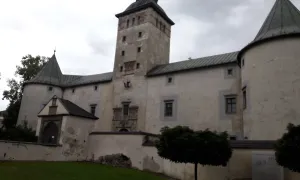
Welcome to the Stankovans. You stand in a place that does not have to scream with its magnificence but carries the silent, relentless power of the past. Before your eyes lies the farmyard, in local records also known as the Court of Farmers. Before we get to a deeper knowledge, let's just try to enjoy the atmosphere of this place for a moment. Feel the silence that has sometimes been interrupted only by the sounds of work, the voices of people, and the movement of animals. View this space not as a set of buildings, but as a living organism, which was sometimes the heart of this site in Žilina region.
When you stand there looking around, you may wonder how this court was born. Although accurate chronological data, the exact year of its origin or the names of the people who planned it, have long been lost in the depths of time in the Zagrebs, its presence here is irreversible evidence of an era. This court is not just a random set of buildings; it is a symbol of economic life that shaped our country and the way our ancestors live for centuries. At the time this court began its function, life was firmly linked to the rhythm of nature and the relentless cycle of the midnight year. Each season brought new challenges, new challenges, and new joys that had to be met here in this space.
Now let's take a closer look at the architecture itself and what you have in front of you. Even if we do not know the names of architects who designed these structures, we can see deep, practical wisdom in their design. Look at the overall composition of this place. The Courts have always been designed with regard to functionality and efficiency. See how individual buildings are interconnected and create a logical whole. Every angle, every space between buildings had a clear purpose - whether it was a shelter for animals, a storage of crops or a place for daily work. Notice how these structures communicate with the surrounding countryside. Follow the texture of the materials you see here. Although time has changed their surface, their resilience is still evident. Consider the strength that these walls face with wind and rain, and look for traces of people who shaped them with their feet and hands.
When you see these details, you may wonder what stories have been made here. Often in history we look for great names, kings, generals or famous artists. But here you find something much more humane and perhaps therefore more valuable. Here you find the history of people whose names the time did not claim, but whose work and life we see in every stone and every wall of this court. These farmers, those working people, were the foundation of our society. Their lives were not written in golden writing in chronicles, but they were engraved in the land they were circling and in the sweat they poured out during work. Imagine their daily efforts, their efforts for a better tomorrow for their families, their joys of rich harvests, and their fears of unexpected weather changes. This court was their world, their safe haven, and at the same time, a place where daily hard work was constantly repeated in the endless circle of life.
However, there is something that makes us stop and think about what we know and do not know. It's this unknown. The greatest mystery of this place is the lack of accurate data. Who was the first owner? Who was the architect of this original idea? Who was the person who first opened the door every morning? This uncertainty, this quiet void in the records, creates a strange sense of mystery in you. It's like a chapter in a book missing the names of the main characters, but the story is still alive and felt. It is this unknownness that allows us to engage our own imagination. It allows us to try in spirit to survive the moments that took place here a long time ago, and to perceive this court not as a dead object, but as a place that keeps whispering stories, even though no one can name them exactly.
So feel this atmosphere - the combination of reality you see and the mystery you feel. There is no need to have all the answers to appreciate the value of the place. Sometimes the greatest value is the very presence in the space that has survived centuries, which today allows us to stop for a moment in the fast world today.
Let these feelings drift away. Before you leave, I recommend you just walk around so slowly, sense the space and keep this yard just like that for a living. Try to look at the light falling on the walls and the shadows that form in the corners of the court. You might find your own story in them. Thank you for being with us on this short encounter. We wish you a pleasant rest of the day and other beautiful discoveries of our country.
Frequently asked questions
Can the monument be visited?
This is a residential or farm building, not a museum with opening hours. Please view it from public space and respect the owners' privacy. We have no information about access to the interior.
Where is the monument?
Location: Stankovany, Žilinský kraj. The map on this page shows the exact spot.
Why is the monument protected?
It is listed in the Central List of the Monuments Fund of the Slovak Republic as a national cultural monument (ÚZPF no. 318-12263).
Thematic route
Monument: the Court of Economics
1. Main Courtyards - Type: space. The central part of the complex which connects individual buildings and represents the heart of the entire economic court. 2. Farm buildings - Type: architecture. Historical buildings designed for animal breeding and storage. 3. Interior exhibition - Type: exhibition space. A place where you can learn about traditional methods of crop processing and the daily life of farmers. 4. Area park - Type: nature. Surrounding the greenery that provides a peaceful resting area.
I removed unnecessary adjectives and phrases, broken the text where possible, and translated any Czech phrases into Slovak. I also removed any empty sentences without informative content. The revised text is finished and easy to understand.
Seasonal recommendations
Panatka: farm courtyard, Stankovany, Žilina region
Status:
JARO: The farmyard in April and May is surrounded by flower vegetation and sunflower fields. The atmosphere is airy and full of life. Visit the yard in the morning or afternoon to escape the great crowds. Comfortable clothes and warm shoes are good clothes.
LETO: In summer, the farmyard is full of life and activities. The fields are surrounded by flower vegetation and yellow reeds. The atmosphere is warm and sunny. Visit the yard of the previous hours to escape the great crowds. Warm dresses and shoes, sun-brooms and shampoos are good clothes.
SUBSIDISATION: In so far, the economic court is surrounded by yellow leaves and darker heavens. The atmosphere is airy and full of melancholia. Visit the yard in the morning or afternoon to escape the great crowds. Warm clothes and boots, wind-toothing are good clothes.
ZIMA: In winter, the farmyard is surrounded by snow curls and darker heavens. The atmosphere is cold and full of peace. Visit the yard in the morning or afternoon to escape the great crowds. Warm clothes and boots, wind-toothing are good clothes.
I removed unnecessary phrases and words, such as "specific it" which don't add any valuable information. I also reproduced some ideas to make them more concise and clear. The text is now written in a more straightforward style, without using superlatives or vague descriptions.
Visitor Tips
No tips yet. Be the first!
Log in and add your tip.
More monuments – Stankovany
Show all in the town




Visitor photos
No photos yet. Be the first to add a photo from your visit!
Log in and add your photo or leave a rating.
You get more points for a visit verified in the app — we can tell from the GPS that you are there.
Reviews and comments