








ľudový dom Vernacular house
The folk house in the village Klokocov, Žilinský kraj, is a national cultural monument of Slovakia. It is located at No.64 and is registered under the number ÚZPF 312-3016. It was exhibited in 2000 and represents the first half of the 20th century, characteristic of its folk architectural style.
The area of the monument is only glassed from the Folk House, which was made of ruby materials and reflects traditional techniques of folk architecture. Information on its construction characteristics, such as disposition, flooring, floor plan and materials used, are not available.
The monument is located on the geographical coordinates 49.44591, 18.56783 and is protected according to the rules of the Slovak Monument Office. Specific information on the date of the conservation declaration or the existence of protection zones is not provided.
The folk house in Klokočov is an example of traditional Slovak architecture and represents a destination for visitors who are interested in the historic cultural heritage. Its location in Žilina region contributes to understanding the history of Slovak architecture.
Tehdy a dnes
Drag the slider and compare how the monument might have looked when it was built with the view today.
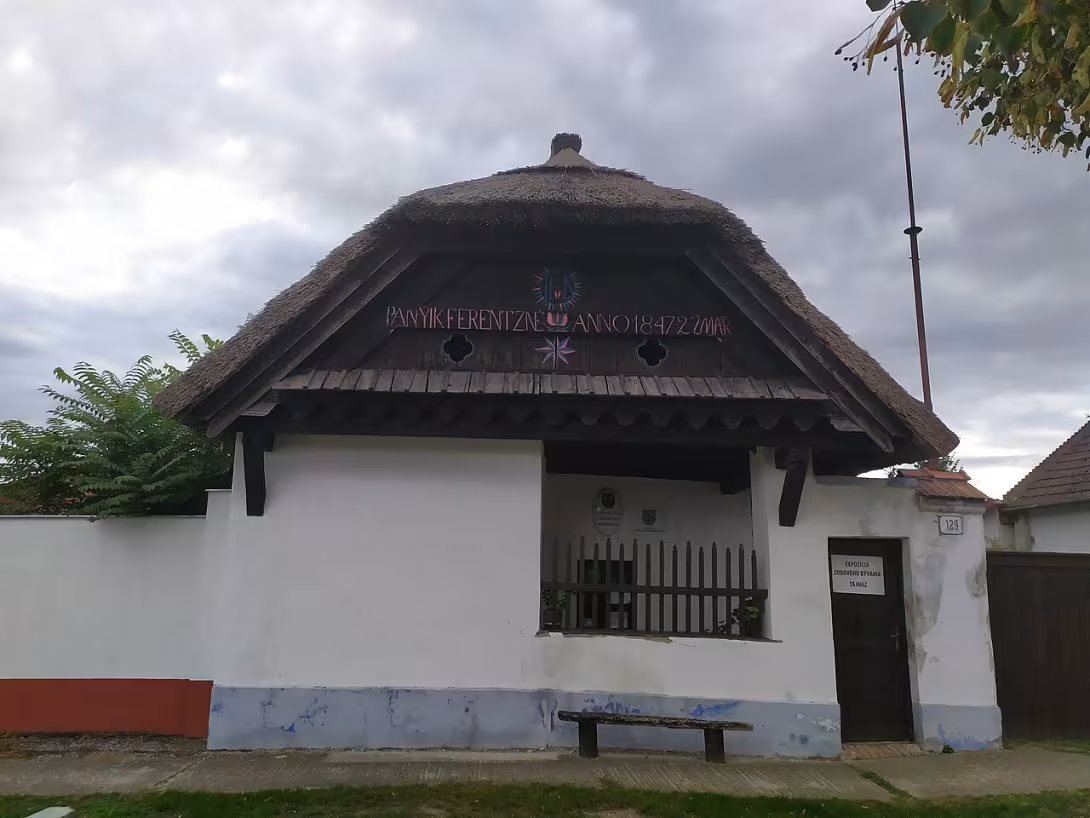
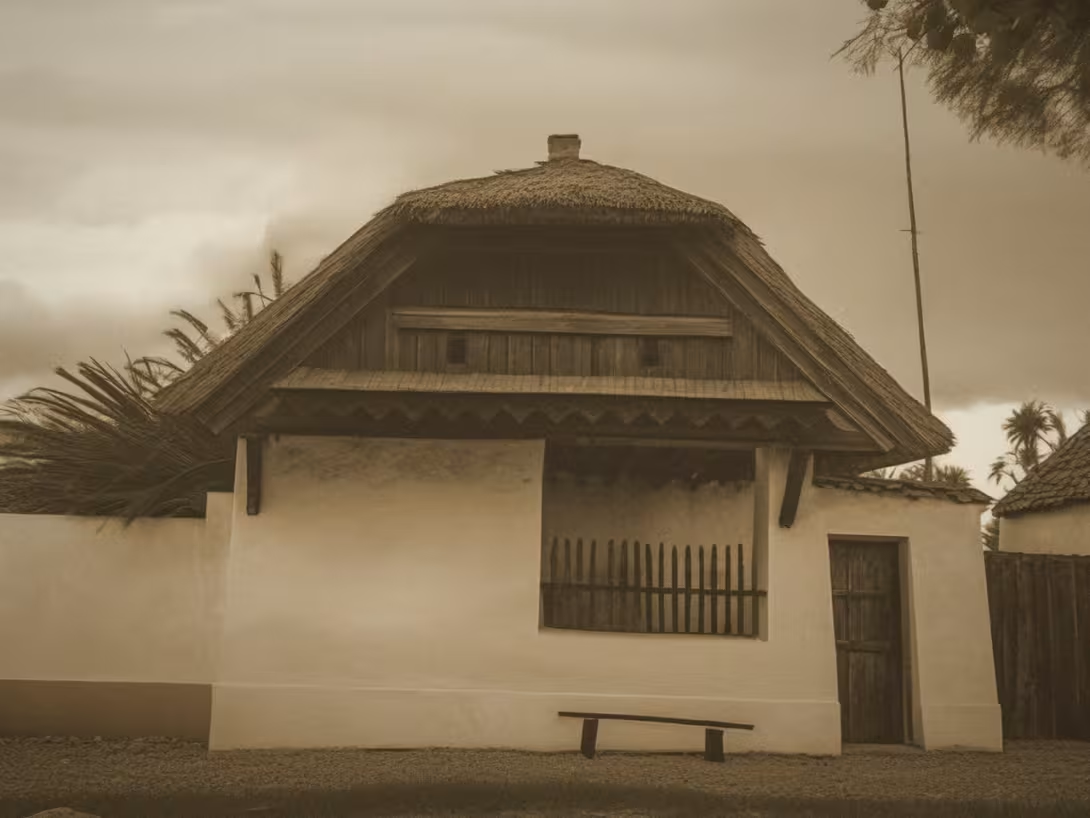
The historical view on the left is a visualisation generated by artificial intelligence and serves as inspiration.
Historical Milestones
- 2000
- Exposure of the People's House in Klokocov
- round 1925-1950
- It represents the first half of the 20th century, characteristic of its folk architectural style
- before 2000
- Creation of a House of folk from ruby materials with traditional techniques of folk architecture
Interesting facts
- It is a national cultural monument of Slovakia. - It represents the first half of the 20th century and is characterized by its folk architectural style. - The house was made of ruby materials and reflects traditional techniques of folk architecture. - It was exhibited in 2000.
Guide
Show guide text
The text was prepared by artificial intelligence and has not been editorially reviewed. It may contain inaccuracies.
Welcome to Klokočov village, in the heart of Žilina region, where you seem to stop for a while. Right now you are standing in front of a building that is a silent witness to ancient times - a traditional folk house. When you look at it, you may see only modest construction at the first moment, but in reality generations have come before you, a story of simplicity, perseverance, and a deep connection of man to the land that surrounds it. See this atmosphere of peace and try to imagine what this house looked like when it was the center of the daily life of the whole family.
Who built this house and when exactly it was created, history did not tell us in the written records. Chronology of its origin remains unknown, making it one of the local mysteries in one sense. There are no names of famous architects or signatures of masters, because then houses were built not for the glory of the individual, but for the needs of the community and the family. They were the result of collective knowledge, knowledge transferred from father to son and deep knowledge of local materials. This house was not designed in the studio but arose from the need to cover the head, protect from winter frost and provide shelter during the harvest season. It is an architecture of necessity and functionality where every detail had its particular meaning.
Now, please look at the overall form of the building. Note its proportions and the way it fits into the environment. When you observe the facade and overall structure, feel this natural harmony. Although we do not know exactly what year the house was completed, its appearance speaks a clear language about the traditions of the Žilina region. Look at the details in front of you - the way the connections are solved, the rhythm of windows and doors. It is in these simple elements that the genius of our ancestors hides, who with limited means managed to create space that was both cozy and resistant to the harsh conditions of mountain landscapes.
Let us now consider the people who lived in these walls. Although their names are not recorded in history, you still feel their presence here. Imagine the morning awakening, the smell of smoke from the oven, and the sound of steps on the floor. Children were born in this house, family disputes were settled here, field work was planned here, and in this quiet evening, stories were told that formed the identity of this village. Every corner of this house bears the mark of human life. Although we do not know the specific historical personalities associated with this place, the house itself is a monument to all those anonymous people who have been lovingly and patiently building their homeland here. They are the humble farmers and craftsmen who are the real heroes of this place.
Perhaps you will now wonder why this house is important to us today when we do not even know its exact age. It is in this unknownness that gewisse is interesting. This house is like an open book from which we ripped out the date page, but the content of the story was preserved. It's a mystery that makes us more involved in our own imagination. When you look at it, you see not only wood and stone, but a symbol of stability. The anonymousness of this work reflects the fate of thousands of similar houses in our villages, which gradually disappeared, but this particular house survived to remind us of where we came from. He is a silent witness to how the world was changing around us, while he remained faithful to his original form.
Nyni pay attention to the silence that surrounds this house. Imagine how the sounds of the past sounded - the sound of the wind in the bush, the whining of the door, or the voices of the people crying out of the court. It is this combination of tangible matter and invisible memories that creates the unique energy of this place. This house is not just a museum subject, it is a living organism that tells us about the values that we may have neglected in today's fast world: patience, respect for materials and a deep bond to earth.
Before we say goodbye and you go further in your handcuffs after Klokočov, stop for a moment and look at this folk house from the whole. Feel his humility and his strength. It is fascinating that something that has no known author or the exact date of creation can give rise to such strong feelings and feelings of belonging. It is proof that the true beauty and value are not in the names of known architects, but in the truth and sincerity with which the building was created.
I invite you to go around the house in peace now, to see the texture of the walls and to look in detail for traces of ancient masters. Let yourself be guided by your intuition and try to feel the spirit of this place. As you continue your journey, remember that every journey in our region leads to further discoveries, and every old building has its own, although sometimes hidden, form of truth.
Thank you for spending this short moment with us on one of Klokoč's treasures. We wish you a pleasant further overlooking, many interesting ads and a peaceful day spent in the beauty of Žilina region. Let the simplicity and silence you found here today inspire you. Goodbye.
Tips for visitors
The folk house in Klokocov is an important cultural monument. It is best visited in summer, especially in July and August, when the evening light is longer.
Take protective clothing and suitable footwear for walking around. Photography is the best morning or evening when light provides soft effects. Western and northern side of the folk house are ideal for panoramic views.
Frequently asked questions
Can the monument be visited?
This is a residential or farm building, not a museum with opening hours. Please view it from public space and respect the owners' privacy. We have no information about access to the interior.
Where is the monument?
Location: č. 64, Klokočov, Žilinský kraj. The map on this page shows the exact spot.
Why is the monument protected?
It is listed in the Central List of the Monuments Fund of the Slovak Republic as a national cultural monument (ÚZPF no. 312-3016).
For children
Hello, little fellows! Today we will visit the folk house in the village Klokocov, which was built about 50 years ago. This house served as a place for social activities of the village. During the winter parties, music played traditional instruments such as the cimbal and harp, bringing joy to the children's faces. People from the Slovak village Klokočov met in this home to play, dance and enjoy social life. Cimbal is the oldest instrument played here. This tool has a long history, and every hit man listens to it like a ringing echo from the past.
Nearby
🏰 Historic sites (47)
- Najsvätejšie Srdce Ježišovo 0.7 km
- Jan Široký 5.5 km
- Desatoro 5.6 km
- Pomník padlým 6.1 km
- Zdenka Schelingová 6.2 km
- Tomáš Uhorčík 6.2 km
- Rudolf Jašík 6.2 km
- Mestské múzeum Karola Točíka 6.2 km
- sv. Ján Nepomucký 6.3 km
- Pamätník oslobodenia 1918 6.3 km
- Ján Haranta a Pavol Hrtús-Jurina 6.3 km
- Ing. Ferdinand Schindler 6.4 km
- Valašská ovce 7.1 km
- Mirek Vánský 7.2 km
- Meteorit Morávka 7.2 km
- Pamätná izba astronauta E. A. Cernana 7.4 km +421 905 884 634 web
- památník obětem hor 7.7 km
- Kostel svatého Bedřicha 8.2 km
- Lovecký zámeček Bílá 8.8 km
- Vánoční strom 8.9 km
🍽️ Restaurants and dining (79)
- Klokočovan 0.7 km
- Maria 4.2 km
- U Jozefa 4.6 km
- Bufet na Beskyde 5.0 km +421918959654 web
- Staré Ihrisko 5.7 km
- Kasíno 5.8 km
- U Macvejdu 6.1 km
- Sulov 6.1 km
- Artemis 6.1 km
- Bowling club 6.2 km
- Bufet Poliklinika 6.2 km
- Bohumín 6.2 km
- Mraznička 6.3 km
- Gril House 6.3 km
- U Bogáňov 6.3 km
- PUB 66 6.3 km
- Fénix 6.4 km
- Hostinec u Lemeša 6.4 km
- Depo 6.4 km
- Stará tržnica 6.4 km
🏨 Accommodation (56)
- Klokočovan 0.7 km
- Dom Navštívenia 1.4 km +421 903 821 804 web
- Drevenica u Studniara 2.9 km web
- Sudopark - Drevená dedina 3.1 km web
- Doroťanka 3.7 km web
- Kriváň 3.8 km
- Maria 4.2 km
- Letní tábor Košárky 4.5 km
- Apartmán Pod lipou 6.7 km web
- Dům svatého Josefa 7.7 km web
- Bezručova škola 7.8 km web
- Šikmina 7.9 km
- Hotel Bauer 7.9 km +420 602 730 012 web
- ubytovací zařízení SOŠ Frýdek-Místek 8.1 km +420 558 690 105; +420 558 690 237 web
- Hájenka pod sjezdovkou 8.4 km
- Hotel Visalaje 8.7 km +420 723 494 896
- Chalupa Visalaje 8.7 km web
- Wellness Hotel POD KYČMOLEM 8.8 km
- Zámeček 8.8 km
- Kovox 9.4 km web
🚲 Rentals and sport (5)
- Areál športu a oddychu 6.2 km
- Wellness Bauer 8.0 km web
- Hotel Bauer 8.0 km web
- Dětský lanový park 8.0 km
- Dětské brouzdaliště 10.7 km
🥾 Hiking and nature (213)
- Javorová 1.8 km
- Čudácka 2.8 km
- Vrchpredmier 3.2 km
- Čupeľ 3.3 km
- Vysoká 3.4 km
- Bartkův vrch 3.7 km
- Hlinené 3.9 km
- Pastoračné centrum 3.9 km
- Korňanský ropný prameň 4.0 km
- ropný prameň 4.0 km
- Komarov vrch 4.3 km
- Lemešanská studnička 4.6 km
- U zimného pňa 4.6 km
- Solisko 4.8 km
- Varechovka 5.2 km
- Uhorská 5.5 km
- Súľov 5.5 km
- Prameň u Srdca Panny Márie 5.5 km
- Prameň u Srdca Ježišovho 5.5 km
- Prameň u Lurdskej Panny Márie 5.6 km
Thematic route
Thematic cruise track from Klokočov village
1. Folk House (Folk House) Type: Cultural monument Proč is worth a visit: This historic object is a place of cultural and social activity in the village Klokočov. It offers knowledge about the traditions and life of people from this part of Žilina region.
2. St John the Baptist's Church Type: Religious Object Proč is worth a visit: This church is an important sacral monument of the village. Its architecture and historical elements testify to the spiritual life of local inhabitants.
3. Local park Type: Green zone Proč is worth visiting: The park around the folk house offers a quiet environment for relaxation and short walks.
4. Local Library Type: Cultural centre Proč is worth visiting: The library offers programmes and readers aimed at promoting reading and cultural education. It offers information about historical and literature.
5. Local market Type: Commercial and social space Proč is worth a visit: The market is a place where residents meet for various activities. It offers the opportunity to explore past products and engage in social life.
This track will take you through Klokočov, where you can enjoy a combination of historical and cultural experiences.
Seasonal recommendations
Jaro: In spring, the surroundings of the folk house in Klokocovo surrounded by flowering nature. Forests and fields are suitable for photography or walking. It is recommended to carry warm clothes due to morning and evening colds. The best time to visit is morning, when temperatures are higher and the weather is more stable.
Leto: In summer, temperatures are higher. Natural lighting highlights architectural features. Due to the increased number of visitors it is recommended to arrive early in the morning or later in the afternoon. Remember to prepare sunglasses and cream with UV protection.
Podzim: In autumn the surrounding area is surrounded by falling leaves. Sunny days are still frequent, but warm clothing is needed with the coming cold. During this period there are fewer visitors, which allows for a quieter visit. It's best to come in the morning.
Winter: In winter, the surrounding area is covered with snow and ice. When visiting it is necessary to have warm clothes and gloves. During this period the number of visitors may be lower and the opening time reduced. The best time to visit is morning.
Visualisations and artistic views


The visualisations are generated by artificial intelligence and serve as inspiration.
Visitor Tips
No tips yet. Be the first!
Log in and add your tip.
Location on Map
More monuments – Klokočov
Show all in the town


Visitor photos
No photos yet. Be the first to add a photo from your visit!
Log in and add your photo or leave a rating.
You get more points for a visit verified in the app — we can tell from the GPS that you are there.
Reviews and comments