

st. Martin's Church Church
St. Martin's church in the village of Banka in Trnava region has its foundations dating back to the 13th century. In 1963 it was declared a National Cultural Monument and the Monument Office of the Slovak Republic records it under the number ÚZPF 768.
The first written mention of the building dates from 1332 to 1337. Archaeological research showed the origin of the original church at the latest in the 13th century, while findings of apsides from 2016 move dating to the period from the 11th century to the first half of the 13th century. In the 16th to 17th centuries the church was used by the Gospels and returned to Catholics in 1650. In 1599 it was probably burned by Crimean Tatars or Turkish troops.
It was originally a small one-ship church with a semi-circular apsid facing east. The northern wall of the ship was preserved in the mass of the present building, of quarry stone, placed in rows and with corners of rough blocks. In the interior of the northern wall was found the primary decoration with horizontal lines formed by a finger into fresh plaster, which formed an illusive block. At the turn of the 13th and 14th centuries in the Gothic period they demolished the original apsid, built a larger presbytery with a flat cap and sacristy on the north side. Later, between 1695 and 1700 the church was extended, the tower was completed and the presbytery was enclosed. In the 20th century, for the deolable state and small capacity began planning the rebuilding, the final form of which was approved in 1930. The sacristy and the fenced wall were then rejuvenated, they built support pillars, they replaced the shrubs with a roof covered with a beaver tile, and they created the present form of a two - church composed of the original and new part.
During the ambush in 1599 he suffered church damage. From this period, stone inscription plates were preserved, which before being rebuilt between 1930 and 1931 were planted as stairs. The area surrounded the stone wall, which was demolished at the annex of the new church in 1931.
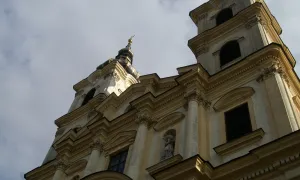
Before the facade of the old church, the original Renaissance stone portal is built into the new wall. On the facade is a stone relief of the Virgin Mary with Jesus from sculptor Ladislav Ďudovít Pollák. The bell contains two bells from 1927 from Brothers Fischer in Trnava. The smaller bell depicts Saint Martin and the larger cross with the Crucified. The flat ceiling of the new church is decorated in the oval field of Christ's resurrection and in medallions church symbolism. A plastic cross road hangs on the sides of the ship. The original altar preserved the goddess with the sculpture of Jesus with chalice and guests. The new altar uses the original altar menza with a plastic depiction of the pelican feeding the young with its own blood. In the interior there is also the original image of Saint Martin in the armor of a horse with a beggar.
The church belongs to the parish of Piešťany - St. Cyril and Methodius. Construction development includes Romanesque period, Gothic, Renaissance and modern adjustments in the 20th century.
Tehdy a dnes
Drag the slider and compare how the monument might have looked when it was built with the view today.
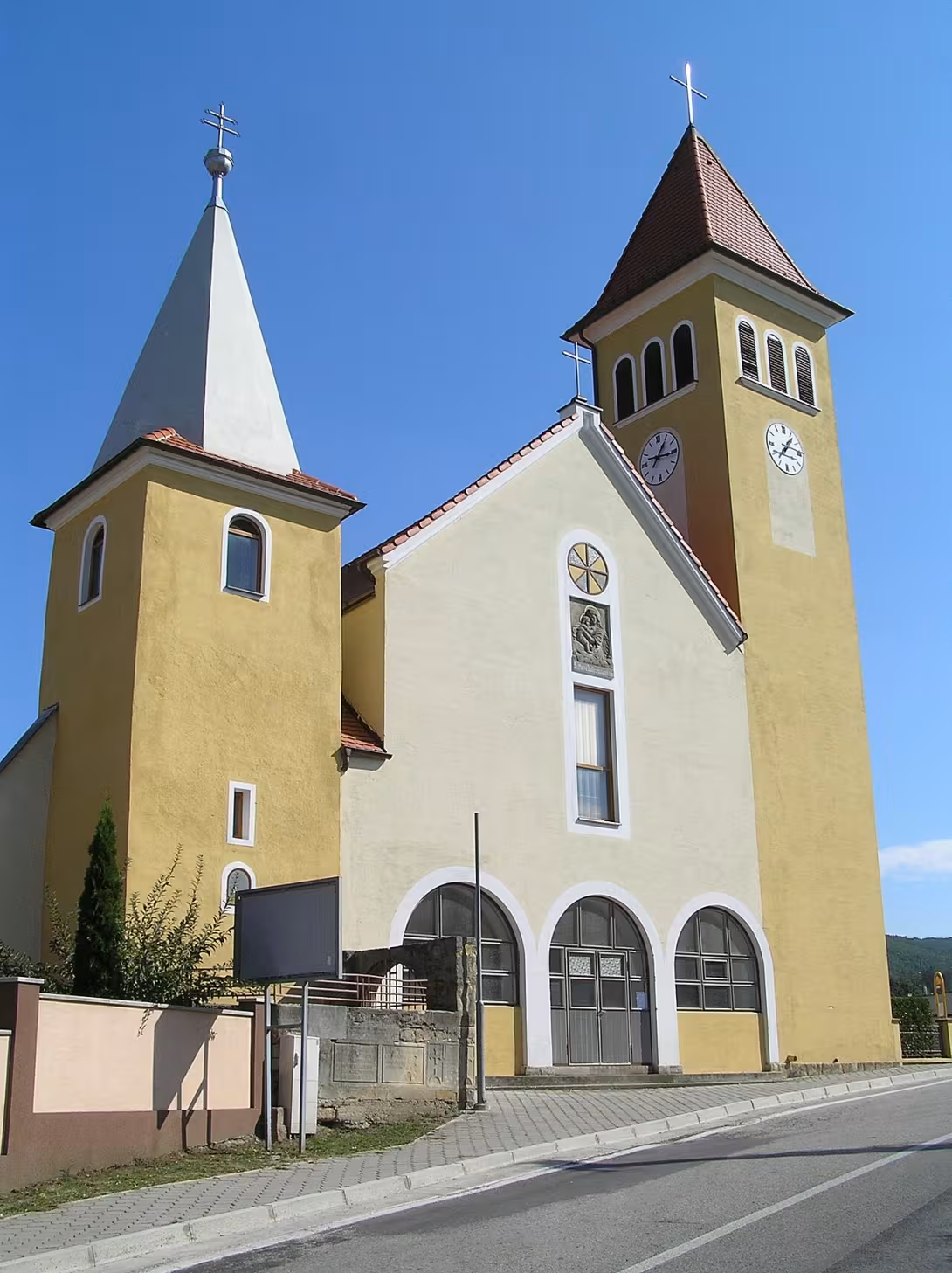
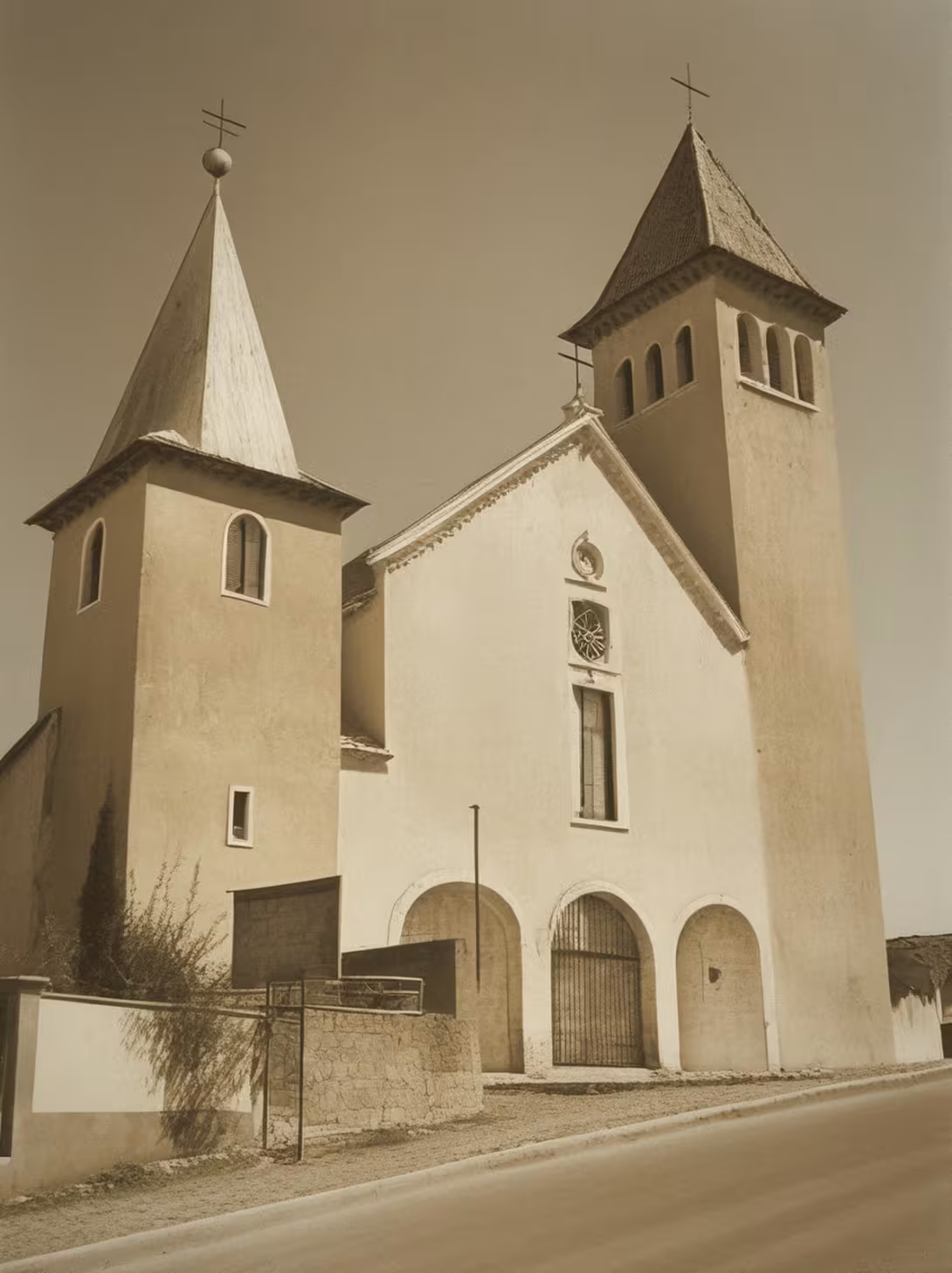
The historical view on the left is a visualisation generated by artificial intelligence and serves as inspiration.
Historical Milestones
- 1332-1337: The first written mention of the church of St. Martin.
- 1599: The church was probably burned by Crimean Tatars or Turkish troops.
- 1650: The church was returned to Catholics.
- 1695-1700: The church was extended, the tower was completed and the presbytery was re-enclosed.
- For the purpose of this Regulation, the following definitions shall apply: Extensive reconstruction of the church and extension of the new building took place.
- 1963: The church was declared a national cultural monument.
Interesting facts
- The foundation of the building dates back to the 13th century, while the findings from 2016 push dating back to the period from the 11th century to the first half of the 13th century. - In 1599 the church was probably burned by Crimean Tatars or Turkish troops. - In the interior of the northern wall was found the primary decoration with horizontal lines formed by a finger into fresh plaster. - On the facade is a stone relief of the Virgin Mary with Jesus from sculptor Ladislav Ďudovít Pollák. - The new altar uses the original altar menza with a plastic depiction of the pelican feeding the
Guide
The guide was voiced by a synthetic voice created by artificial intelligence.
Show guide text
The text was prepared by artificial intelligence and has not been editorially reviewed. It may contain inaccuracies.
Welcome to the village of Banka. Right now you are facing a unique historical monument, which is St. Martin's church. Stop for a moment, breathe in the atmosphere of this place and listen to the story that unfolds before us. When you look in front of you, you see a building with deep roots in Slovak history, silently showing the transformations of time. Let us go further into the past and see how this temple was formed. Although the exact date of establishment and the names of the creators remain shrouded in mystery, the foundations of this building go deep into the past, namely the thirteenth century. However, archaeological research and interesting findings from 2016 have yielded surprising findings that push dating into the past even further, from the eleventh century to the first half of the 13th century. Imagine how many generations of people have walked in these places before us. Now pay attention to the architecture itself and the details you have right before your eyes. Although we do not have the names of medieval builders, the very substance and walls of the church speak the language of ancient times. Note the outer walls and the overall exterior that reflects the long development. When you move your attention to the interior, specifically to the north wall, you encounter a real historical jewel. There was a primary decoration with horizontal lines, a silent witness to the art and faith of our ancestors. Each inch of this space breathes history, although precise architectural styles remain unspecified in historical records. However, the history of this place has not always been peaceful. Key and dramatic moments are associated with the stormy period of the late sixteenth century. In 1599 a huge tragedy struck the village and the church itself. The tabernacle was probably burned down by Crimean Tatars or Turkish troops. Imagine the horror that the inhabitants then experienced when they saw the flames devour their precious temple. But the church rose from the ashes, like the faith of the local people, and survived to this day to tell us its story. It is this embodiment and connection with the difficult tests of the past that make St. Martin's church a fascinating object. The most mysterious and exciting moment for historians remains the mentioned newest archaeological discoveries. Imagine that even in 2016, research revealed that the original dating of foundations could be much older than originally anticipated. This ever-discovering history reminds us that even after centuries, we know the answers to all the questions and still hide secrets beneath the surface awaiting our discovery. Finally, thank you for giving your time to this special place. I hope that the view of the historical walls of St. Martin's church left a deep impression and enriched your visit to the village of Banka. I wish you a pleasant next day, many other discoveries while learning about cultural heritage and goodbye to other wanderings of history.
Tips for visitors
St. Martin church in the village The bank is suitable to visit early in the morning or late in the afternoon, when light highlights architectural details of the building. The surroundings are suitable for a quiet walk.
You can reach the site by car or public transport; check your current connections in timetables. We recommend comfortable shoes, drinking water and weather-appropriate clothing.
For outdoor photography is a suitable angle from the west side, where morning sun rays create a game of shadows on walls. For detailed images of architectural elements, use the afternoon or afternoon light.
Since there are no other attractions in the vicinity, the visit will focus on the building itself in Trnava region. It is a suitable place for families with children looking for a peaceful trip.
Frequently asked questions
Can the monument be visited?
Religious buildings are usually open mainly during services; at other times a visit is normally arranged with the parish or the operator. We have not verified specific times.
Where is the monument?
Location: Kamenná 3947/1, Banka, Trnavský kraj. The map on this page shows the exact spot.
Why is the monument protected?
It is listed in the Central List of the Monuments Fund of the Slovak Republic as a national cultural monument (ÚZPF no. 214-768).
For children
Close your eyes now and imagine pressing the invisible button on the time machine. Do you feel the sudden impact? Get out of the vehicle and look around you. We traveled exactly 626 years back to when the world looked completely different. No cars, no phones, just the elegant woods and the roads that horses were driving. Right here in the village of Banka, the building is growing, which then proudly recognized its power - the church of St. Martin.
Nearby
🏰 Historic sites (171)
- sv. Vendelín 0.3 km
- Kúpeľný most 0.4 km
- Ján Torkoš 0.6 km
- Výstavná sieň v Napoleonských kúpeľoch 0.6 km +421 902 960 567
- Adam Trajan 0.6 km
- Anna Vršanská a Ján Vršanský 0.6 km
- Kúpeľný park 0.6 km
- Alžbeta Bavorská (Sissi) 0.7 km
- Demeter 0.7 km
- Herkules s hadom 0.7 km
- Herkules s kyjakom a kožou nemejského leva 0.7 km
- Herkules so psom Kerberom 0.7 km
- Aténa 0.7 km
- Karel Domin 0.8 km
- Hermes 0.8 km
- Thermia Palace 0.8 km Nábrežie Justusa Jána Torkosa 3590/2 +421 337 756 111 web
- Chloris 0.8 km
- Výstavná sieň Mólo 0.8 km
- Ľudovít (Lajos) Winter 0.9 km
- Anton Kajlich a Aurel Kajlich 1.0 km
🍽️ Restaurants and dining (242)
- CARAT café 0.3 km
- Pohostinstvo Papagáj 0.4 km
- Koliba 0.5 km
- Café Franz Jozef 0.6 km
- Cantinetta 0.6 km
- Na ihrisku 0.7 km
- Elizabeth 0.7 km
- Café Alexander 0.8 km Nábrežie Justusa Jána Torkosa 3590/2
- Park Café 0.8 km
- Bufet Eva 0.9 km +421 905 612 163
- Heaven Caffe & Bar 1.0 km
- Organila food drink 1.0 km +421911457776
- Espresso Vila Trajan 1.0 km
- Vila Trajan 1.0 km
- Lavazza 1.0 km
- Colonade Restaurant 1.1 km
- U páva 1.1 km
- Mliečak 1.1 km +421 949 001 008
- Mr Maroon 1.1 km
- Zuckmann 1.1 km Winterova 56
🏨 Accommodation (59)
- Panoráma 0.5 km
- Pro Patria 0.6 km
- Penzión Benátky 0.8 km Topoľčianska 4003/1 web
- Patrícia 0.8 km
- Penzión Danninger 0.8 km Bananská 3826/70 +421 908 536 810 web
- Balnea Esplanade 0.8 km
- Lux 0.9 km
- Alameda 0.9 km
- Hotel Pavla 1.0 km Sad A. Kmeťa 1785/76 web
- Vila Trajan 1.0 km
- Penzión Annavila 1.0 km web
- Magnólia 1.0 km
- Balnea Splendid 1.1 km
- Jalta 1.1 km web
- Balnea Grand 1.1 km
- Villa Veres 1.2 km
- Park Avenue 1.3 km
- Maroon 1.3 km Nitrianska 1857/24
- Leier Apartments 1.4 km web
- Camping Pullmann 1.4 km web
🚲 Rentals and sport (29)
- Kúpalisko Eva 0.8 km +42133775 24 06
- Detský bazén 0.9 km
- Bicycle Rental 1.1 km +421 915 270 556
- V-Šport 1.3 km
- EXIsport 1.3 km +421337740507 web
- Montana sport 1.4 km
- Atletický štadión Piešťany 1.6 km
- F4F športové trofeje, gravírovanie 1.7 km
- Diplomat aréna 1.8 km Kuzmányho 7820/19
- Vlnka 2.0 km
- Topšport 2.1 km
- Extrem šport 2.1 km
- Veslársky klub Sĺňava Piešťany 2.2 km
- Welo, s. r. o. 2.2 km
- Plaváreň 2.3 km
- Zimný štadión Piešťany 2.4 km
- StrapoBikes 2.4 km Žilinská cesta 16A +421 908 953 478 web
- Spinning 2.5 km
- Bowling center Victoria 2.5 km
- HS centrum 2.5 km
🥾 Hiking and nature (77)
- Hlavina 0.5 km
- Akupresúrny chodník 1.2 km
- Mestský park 1.3 km
- Ahoj 2.0 km
- Park na Hoštákoch 2.2 km
- Park Alexandra Šindelára 2.5 km
- Panská záhrada 2.5 km
- Vrbina 2.6 km
- Zlatý vrch - južný vrchol 2.9 km
- Zlatý vrch 3.0 km
- Svinský vrch 3.1 km
- Havran 3.2 km
- Kostolec 4.7 km
- Burkova Studnička 5.2 km
- Zacharov prameň 5.2 km
- Kaštieľsky park 5.4 km
- Čertova pec 5.5 km
- Háj 5.5 km
- Malý Krahulčí vrch 5.6 km
- Skalka 5.6 km
Thematic route
1. St Martin's Church - Type: Sacral monument - Why it is worth a visit: The main goal of the trip, which includes historical construction with architectural details. The building is located in the village of Banka.
2. Church surroundings - Type: Exterior and immediate area - Why it is worth visiting: The space around the building allows you to see the outside architecture and walls. It's a place to walk.
3. Area and entry zone - Type: Monument space - Why it is worth a visit: The immediate vicinity of the entrance shows the installation of the building into the field.
Seasonal recommendations
In spring, St. Martin's church is surrounded by fresh greenery and first spring flowers that create a picturesque contrast to the ancient wall of sacral construction. Low but already warm sunlight during the morning falls on the facade and highlights the architectural details of this historic building in the village of Banka. Since it is a period of variable weather, we recommend wearing strong shoes suitable for muddled terrain in the surrounding area and remembering the waterproof windstorm. The neighborhood remembers only occasional hikers, so you will enjoy a peaceful atmosphere for spring meditation.
During the summer, the surroundings of the church are dominated by rich colors of lush vegetation and high trees provide a pleasant shade that you appreciate during warm sunny days. The sun's rays penetrate through dense deciduous vegetation and create an interesting game of light and shadow on the exterior of buildings, ideal for photography in the morning. The main summer season brings together light, airwear, sunglasses and sufficient supply of drinking water, as summer temperatures are relatively high in the Trnava region. The surrounding area attracts longer walks, while the building itself has peaceful surroundings.
Autumn brings a beautiful variety of warm colors to the surroundings of the Bank when the leaves of the trees are coloured yellow, orange, and red, creating an impressive scene for photographing sacral monuments. The sun drops below the horizon and creates a soft, scattered light that gives the whole place a melancholy and dignified atmosphere. During this period, layered clothing and warmer coat are essential, as autumn winds can be cool, especially in the afternoon before dark. As the tourist season weakens, you can enjoy the surrounding area in complete silence and without more people moving.
The sharp winter sun shortly before noon creates a bright shine and sharp shade on the snow layer, underlining the raw beauty of the historical masonry. Hot winter clothes, hats, gloves and, above all, non-slip shoes are essential for visiting during this period, as access routes can be icy. In December and during the winter months, there is a deep tranquillity that interrupts perhaps just the sound of the wind in the bare treetops.
Visualisations and artistic views


The visualisations are generated by artificial intelligence and serve as inspiration.
Photographs from the area
Real photos taken near the monument

Source and licence are given for each image.
Visitor Tips
No tips yet. Be the first!
Log in and add your tip.
Location on Map
Visitor photos
No photos yet. Be the first to add a photo from your visit!
Log in and add your photo or leave a rating.
You get more points for a visit verified in the app — we can tell from the GPS that you are there.
Reviews and comments