

st. Michael's Church Church
St. Michael's Church in the village of Lower Tižina in Žilina region is a Roman Catholic church from 1875. The building is built in late classicistic style with later applied neo-romantic details. The Slovak Monument Office registers it under number ÚZPF 1338.
The first building of the church on this place was established in 1792 in the parish garden, but later Cinderella Cinderella in the fire. Subsequently a brick church was established, which was completed in 1875. The realization of the building was led by Master Vincent Rahak of Moravia.
The building has a single-ship space with a presbytery with a round cap. The ship is encircled by the Prussian vaults with inter-knife bands. In the axis of the western facade stands a high tower with a pyramid. The facade is complemented by pseudo-romanous earwash.
Nearly the entire village burned down in the fire of July 28, 1904, including the interior of the church. You forced the disaster to repair the roof and restore the equipment. After the fire, the object was installed with neo-romantic details. Today's church face was shaped by Anton Fraštacký, a follower of Franciscan priest Hilarion Kuhajda. Kuhajda founded a breath band that played at church and secular festivals, but her instruments burned in the fire.
The interior was restored in the early 20th century. The main and side altars, the pulpit and the orgon come from the post-fire period. The altars were made in 1913 by carver Ján Mládenek from Kysucké Nové Mesto. The Statue of the Blessed Virgin Maria from the same year was purchased in Tirol, San Ulrich Gröden, from Master Jozef Reifener. Paintings made in 1914 by painter Jozef Hanul of the Three Sliačov in Liptov.
The church was renovated in 1991. In the autumn of 2011, they restored the roof covered with copper sheet, repaired the windows, and pressed the facade.
The church stands in the middle of the village and is in good condition.
Tehdy a dnes
Drag the slider and compare how the monument might have looked when it was built with the view today.
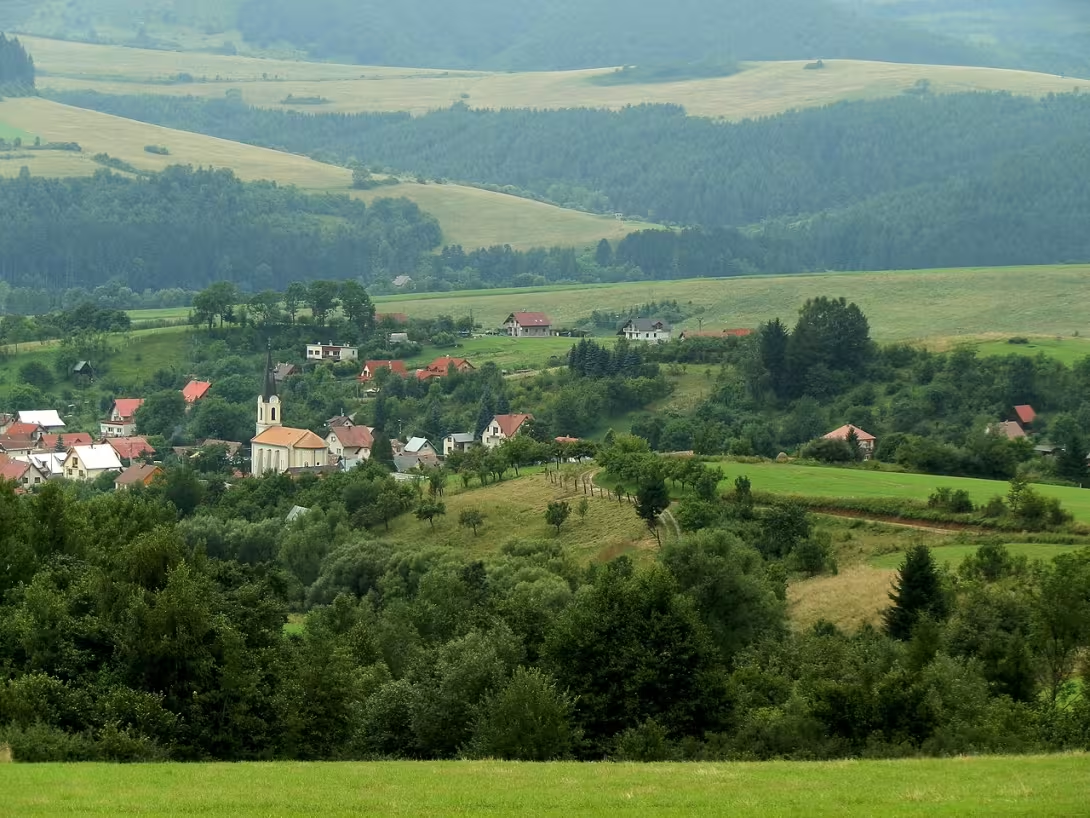
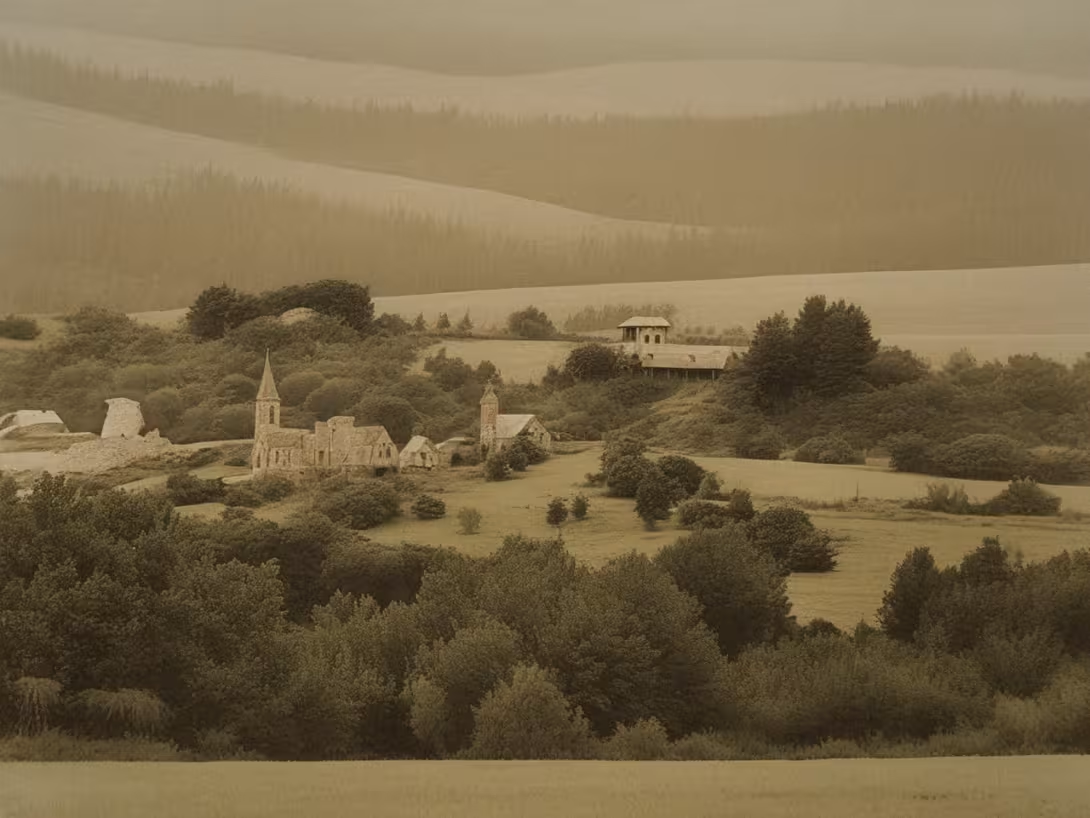
The historical view on the left is a visualisation generated by artificial intelligence and serves as inspiration.
Historical Milestones
- 1792
- construction of the first church which later cremated after the fire
- 1875
- construction of a new brick church
- 1904
- fire in which almost the entire village burned down and the interior of the church
- 1913
- construction of the main and side altar by the carver John Mladenko
- 1914
- paintings in the temple by painter Joseph Hanul
- 1991
- reconstruction of the church
- 2011
- renovation of the roof covered with copper sheet and surface repairs facade and windows
Interesting facts
- The church from 1875 is built in late classicistic style with neo-Romantic details. - The first building from 1792 in the parish garden Cindered in the fire, later a brick church under the leadership of Master Vincent Rahak of Moravia was created. - During the fire of 28 July 1904, almost the entire village burned down, including the interior of the church and instruments of the wind band founded by Hilarion Kuhajda. - The main and side altar was made in 1913 by carver Ján Mládenek, while the statue of Blessed Virgin Mary was purchased in Tirol. - Paintings in the interior made in 1914 by
Guide
The guide was voiced by a synthetic voice created by artificial intelligence.
Show guide text
The text was prepared by artificial intelligence and has not been editorially reviewed. It may contain inaccuracies.
Welcome to the village of Dolná Tizina, in the heart of Žilina region. Right now you are standing in front of St. Michael's church, which dominates the space around you and testifies to the deep faith and perseverance of the local inhabitants. When you look at the construction, you may be impressed by its peaceful aura and the way it fits into the country. It's a place that bears traces of generations and stories of how people could rise from the ashes and rebuild something beautiful. Let's go now to the history of this temple together so that you can better understand what happened behind and around its walls. The story of this place doesn't start with the building you see in front of you, but much earlier. The first church in this location was built in 1792. At that time it was the center of the spiritual life of the community, but fate had other plans for this construction. The first building, located in the parish garden, was unfortunately cremated by a fire. The fires were a frequent and devastating phenomenon in these times, but the loss of the first temple was no reason for the inhabitants of Lower Tizhina to surrender. On the contrary, it has become an impulse to create something more permanent and stable. Now note the overall form of the building. What you see today is the result of later efforts. In 1875 a new brick building was completed. Master Vincent Rahak, who was from Moravia, helped to build it. He was the one behind the church getting its present form. If you now look at the details of the facade and the overall composition, you will see the influence of late classicistic style. This style is characterized by some mildness and elegance, but it is complemented by neo-romantic details. It is an interesting combination that gives the building stability while gentle rhythm. Look carefully at the lines of the building and see how these two architectural currents connect in this particular object. However, the history of this church is not only a story of construction, but also a story of tragedy and subsequent restoration. Let's move forward in time a few years, to 1904. On July 12, this year, the village was hit by a disaster that changed the lives of almost all its inhabitants. There was a huge fire that destroyed almost the entire village. The flames didn't pick and devour the interior of the church. Imagine that feeling of despair when people saw their second temple burn out in a short time. It was a deep blow to the whole community, but the power of the local people showed again. NYNIS pay attention to what happened in the coming years. Although the building survived, its interior needed completely new equipment. In 1913 came help in the person of carver Ján Mladenko. It was he who created the main and side altar, which are the key elements of each temple. His artistic skills helped restore his spiritual dignity to the church. Just a year later, in 1914, Joseph Hanul, a painter who made paintings at the temple, joined the work. These works of art from the early twentieth century provided space for peace and made it a place suitable for meditation and prayer. It is fascinating to think about the way this church changed over the centuries. From the first wooden church from 1792, through brick building from 1875 to the tragic fire from 1904 and subsequent artistic restoration in the eve of World War I. Each of these layers gives the building depth. However, in order to preserve the construction for future generations, it was necessary to take care of it in modern history. In 1991, the church underwent a comprehensive reconstruction that ensured that you can today stand before this monument and admire its beauty in full measure. If you stop now and feel the atmosphere of this place quietly, you may feel the special contrast between the fragility of the material and the strength of the human spirit. It is this cycle of destruction and restoration that is interesting. The fact that the church survived a massive fire from 1904 that destroyed almost the entire village makes it a symbol of survival. It is a witness that even after the greatest disaster, something new and even more beautiful can be built. Look again at the overall silhouette of the building. Feel the harmony of late-classicism and neo-romantic elements that connect the verschiedene eras. This church is not only a set of walls and roofs, but it is a monument to the people who lived, worked and loved here. From Moravian master Vincent Rahak to carver John Mladenko and painter Joseph Hanul - all left their mark in this space. Finally, we invite you to indulge in this moment of peace and to go around the building in silence. Take a close look at its walls and think about all the events that have taken place here. When you leave, suck into yourself a sense of stability that this church will take. Thank you for sharing with us this short trip to the history of Lower Tizhina and St. Michael's Church. We wish you a pleasant sequel to your journey and many new discoveries.
Tips for visitors
It is recommended to visit in spring or autumn when the light is soft and the environment quieter. Photos can capture architectural details of the exterior preferably during morning or late afternoon hours. It is advisable to carry a camera and comfortable shoes. Families with children can take on the architecture and atmosphere of the place. Other specific objectives are not mentioned in the immediate vicinity.
Frequently asked questions
Can the monument be visited?
Religious buildings are usually open mainly during services; at other times a visit is normally arranged with the parish or the operator. We have not verified specific times.
Where is the monument?
Location: č. 335, Dolná Tižina, Žilinský kraj. The map on this page shows the exact spot.
Why is the monument protected?
It is listed in the Central List of the Monuments Fund of the Slovak Republic as a national cultural monument (ÚZPF no. 31B-1338).
For children
Imagine that you have a time ship and you'll be transported exactly 151 years back. You close your eyes, it beeps and suddenly you're in Lower Tizhina. There are no cars around you, just the silence, the noise of trees and the smell of fresh wood. It's 1875 and something big is happening.
Nearby
🏰 Historic sites (180)
- Poľovnícka spoločnosť Kriváň - Malá Fatra 1.3 km
- Kaštieľ Krasňany 2.0 km web
- SNP 3.7 km
- Miro Kuc 3.9 km
- Starý hrad 4.5 km
- Hrádok Varín 4.5 km
- Kúdeľná izba 4.9 km +421904 887 728 web
- Ježiš Kristus 4.9 km
- sv. Marek 4.9 km
- Kaštieľ Gbeľany 4.9 km Hlavná 2/30
- sv. Ján Nepomucký 5.0 km
- V odboji padlým železničiarom 5.0 km
- Pamätník francúzskych partizánov 5.4 km
- Morový cintorín 5.7 km
- Kúria 5.7 km Potočná 55/51
- sv. Ján Nepomucký 5.9 km
- Kúria 5.9 km Hlavná 8/8
- Kostol Sedembolestnej Panny Márie 5.9 km
- Nivelačný bod z doby Rakúska-Uhorska 5.9 km web
- Kaštieľ Nededza 5.9 km Hlavná 3/3 web
🍽️ Restaurants and dining (497)
- Pohostinstvo Stredná 0.2 km
- Pohostinstvo Sitila 1.4 km
- Pohostinstvo Pod Kúrom 1.8 km
- ATC Varín 2.8 km
- Hostinec U Kubíka 3.3 km
- Hostinec Drevenička 3.3 km
- Penzión v Starom mlyne 3.3 km +421 907 294 724 web
- Penzión a pizzeria u Šujana 3.4 km +421 904 537 648 web
- Hostinec U Kubíka 3.4 km
- U Púčka 3.5 km
- U babky 3.6 km
- Meydan Kebab 3.7 km +421 903 573 414 web
- Amfora 3.8 km
- Na brehu 3.9 km
- Country Saloon 4.1 km
- Pizza Pablo 4.3 km +421 911 242 345 web
- Cyclocamp 4.6 km
- Mario 4.7 km
- Pizzeria burger & grill bar Ranc Konik 4.8 km +421949001800 web
- Pizzeria alla stazione 4.9 km +421 902 870 970 web
🏨 Accommodation (162)
- Penzión u Adama 0.3 km +421 905 471 361 web
- Diana 1.2 km
- Autocamping Varín 2.9 km +421 911 49 42 42 web
- Penzión v Starom mlyne 3.4 km SNP 283/41 +421 907 294 724 web
- Stredisko internátnej prípravy ŽSR 4.5 km
- Božka 4.5 km
- Bukovina 4.7 km web
- Château Gbeľany 5.0 km +421 41 420 41 41 web
- Penzion Alžbetka 5.2 km +421 915 666 386 web
- Hotel Bránica 5.2 km +421 41 5693035 web
- ubytovanie v súkromí 5.3 km
- Penzión Irenka 5.4 km
- Kempík Starhrad 5.7 km +421 948 500 009
- Camping Belá Nižné Kamence 6.3 km +421 905 742 514 web
- Chalupa U Toma 6.5 km +421 915 063 910;+420 725 586 699 web
- Chalupa Višňa 6.8 km
- Chalupa Podolina 8.0 km +421 903 234 536 web
- Chalupa Janina 8.0 km +421905553660
- Chalupa Aden 8.2 km +421 907 124 615 web
- Horský hotel Hájnice 8.2 km +421 41 420 77 00 web
🚲 Rentals and sport (99)
- Starý bazén pod Jedľovinou 2.5 km
- Športový areál Juraja Sobolu 4.0 km Športová
- Lezecká stena Village resort Hanuliak 4.1 km +421 41 707 89 06 web
- Termálne kúpalisko Stráňavy 7.3 km +421 905 938 124 web
- H sport 9.8 km
- Skialpshop 9.9 km
- Terchovec 10.0 km web
- Rekreačno informačné centrum Terchovec 10.1 km web
- Lanové centrum Dino Adventure 10.2 km web
- Vodné dielo 10.2 km web
- Kubicasport 10.3 km +421 41 565 13 49 web
- Kubicasport 10.6 km +421 41 565 13 49 web
- Coop - Polomská 10.8 km web
- ESMO Rosinská cesta 10.9 km web
- Tulská - Pačino 11.0 km web
- VELOsprint Žilina 11.2 km +421 41 22 117 44 web
- Sv. Cyrila a Metoda 11.2 km web
- Mestská športová hala 11.4 km
- FRI 11.4 km web
- Internáty Veľký diel 11.4 km web
🥾 Hiking and nature (264)
- Kozí hrb 1.0 km
- Kopanica 1.3 km
- Borová skala 1.5 km
- Želehosť 2.2 km
- Diel 2.3 km
- Dúbravy 2.4 km
- Bačínsky vrch 2.5 km
- Rúbane 2.6 km
- Podhrbie 2.8 km
- Jedľovina 2.9 km
- Borie 3.0 km
- Prostá 3.1 km
- Kráľovec 3.1 km
- Félix 3.3 km
- Hôrka 3.7 km
- Kykula 3.7 km
- Žiar 3.7 km
- Kopa 3.8 km
- Vajcovka 1 3.9 km
- Dúbravy 3.9 km
Thematic route
As there are no other objects listed in the area of the area of the main objective, I propose a thematic route:
1. St. Michael's Church - The main monument. Visit this sacral object in the village Dolná Tizina. 2. Interior of the church - Indoor space. Look carefully at the artistic details, altars, and temple equipment. 3. Church area - surrounding courtyard. Take a walk around the building and its connection to the country.
Seasonal recommendations
In the spring, the surroundings around St. Michael's Church in Dolná Tizina are surrounded by freshness and waking nature. The sun during this period highlights the details of the facade of the building. It is recommended to visit the site in the morning. Due to variable weather, it is advisable to wear layered clothing and shoes suitable for wet terrain. Summer months bring to Žilina region intense light and rich colors of the country. The meadows around the church are in full bloom. Visitors are recommended in the early morning or late evening hours to avoid a glow. It is advisable to choose light, breathable clothing and sun protection. Autumn in Lower The Tižina stretches the country with golden and red tones. The low sun creates long shadows that are suitable for photographing the exterior of the church. It is practical to choose days with clear skies and to wear a warmer sweater or a windshield, as mornings can be cold. Winter by snow often covers surrounding meadows and highlights the silhouette of sacral construction. A shorter day should be foreseen for travel planning. We recommend thermal layers, waterproof shoes and warm winter clothing.
Visualisations and artistic views


The visualisations are generated by artificial intelligence and serve as inspiration.
Visitor Tips
No tips yet. Be the first!
Log in and add your tip.
Location on Map
More monuments – Dolná Tižina
Show all in the town



Visitor photos
No photos yet. Be the first to add a photo from your visit!
Log in and add your photo or leave a rating.
You get more points for a visit verified in the app — we can tell from the GPS that you are there.
Reviews and comments