

st.Margita church Church
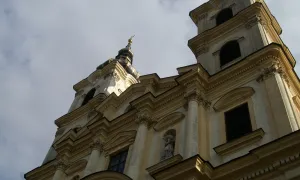
The church of Saint Margita in the village Gabčíkovo in the Trnava region comes from the second half of the 14th century. The building has undergone several reconstructions. Its present form is defined by late baroque and classicist style from the end of the 18th century.
The predecessor of today's church was probably created in the second third of the 14th century as a single-ship object with a polygonal presbyter. At the end of the 15th century it was adapted in late Gothic style. The West Tower was built probably in 1648. In the 1970s and 1980s the church was completely rebuilt into late baroque style. In 1886 the chapel extension extended the building.
From the Gothic period remained the foundation walls, the sharps window on the east side of the Presbytery and the late Gothic portal leading from the sanctuary to the original northern sacristy. One-ship space with a polygonal closure Presbytery has a vault type of Czech plaque, which is also used in the church boat. The facade is divided by a lysene frame and the shield facade contains a tower covered with a pyramid.
The interior is decorated with arches from the new castle painter Teodor Székházy from the beginning of the 20th century and newer frescoes from the same period. The main late Baroque altar of St. Margita Antiochia dates back to 1770; it contains an image from 1929 by Michal Fay and the exhortation of St. Anna with little Mary. Virgin's Altar Mary is in Baroque-Classicist style with a painting from the second half of the 18th century. The pulpit dates back to the second half of the 18th century. The equipment complements the image of St. Ladislav from 1939 from E. Lengyelová and 14 images of the cross road. There is a gothic stone baptistery with a six-side shopping and stand.
The 18th-century church was influenced by Count Amade Tade. On the outside wall above the entrance to the crypt is visible coat of arms and slogan of the Amade family: Amore et candore.
The church is located in the center of the village Gabčíkovo. The building is registered in the Central List of Monument Fund of SR under the number 83/1.
Tehdy a dnes
Drag the slider and compare how the monument might have looked when it was built with the view today.
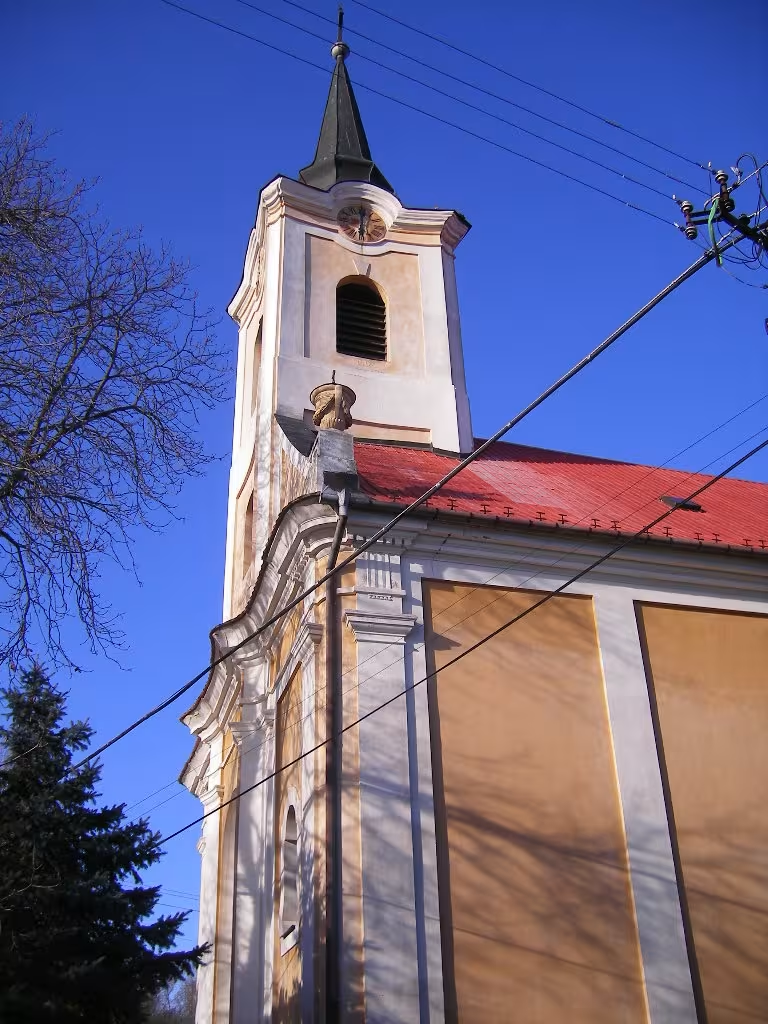
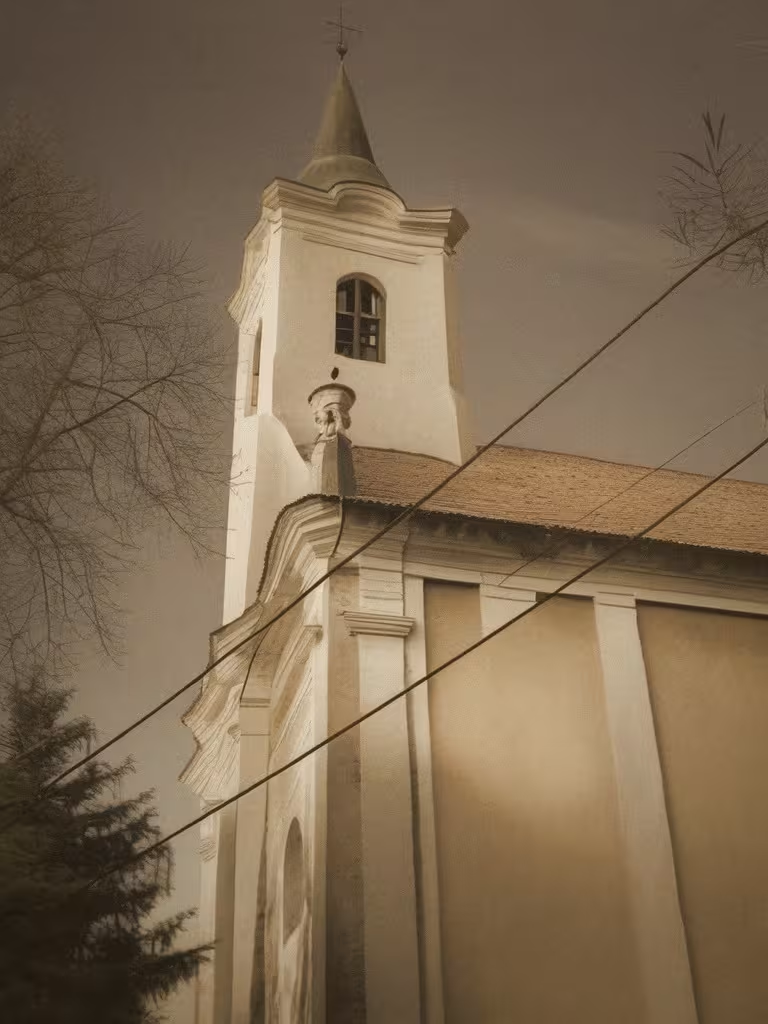
The historical view on the left is a visualisation generated by artificial intelligence and serves as inspiration.
Historical Milestones
- 1350
- original gothic church in the middle of the 14th century
- 1480
- modify construction in late 15th century in late gothic style
- 1648
- likely extension of the tower on the west side
- 1770
- complete reconstruction of the church into late baroque style by Count Amade Tadéom
- 1886
- extension of the building to the chapel
Interesting facts
- The church comes from the second half of the 14th century and its current form is defined by late baroque and classicist style from the late 18th century. - The Gothic period preserved the foundation walls, the sharps window on the east side of the Presbytery, the late-Gothic portal and the stone baptismal. - The interior is decorated with arches and frescoes from the new castle painter Teodor Székházy from the early 20th century. - The main late Baroque altar of St.
Guide
The guide was voiced by a synthetic voice created by artificial intelligence.
Show guide text
The text was prepared by artificial intelligence and has not been editorially reviewed. It may contain inaccuracies.
Welcome to the village of Gabčíkovo. You are standing in front of a building that is a silent witness to the centuries of change and transformation in this area. In front of you is the church of St Margita, a building that connects the ancient medieval roots with the elegance of the later period with its lines and atmosphere. Now that you're looking at it, you may first see its present form, but beneath the surface of these walls lies a layered history that reaches deep into the past.
Let's get together in time to understand how this building was created. The story of this place begins in the middle of the 14th century, namely around the year a thousand penalized fifty, when there was an original Gothic church. At that time, architecture was an expression of spiritual desire and stability, reflected in the foundations of the building. However, time passed and the needs of the community grew, so in the late Gothic style in the late 15th century, about a thousand and four hundred and eighty, the church underwent an adjustment. This is a time when Gothic has become more detailed and complex. The next important step was probably to add a tower on the west side around the year a thousand six hundredths of eight, giving the building the necessary verticalness and dominance in the country.
However, he or she will change your view of the details and see the overall form of the building. What you see before you today is the result of a radical change from the end of the eighteenth century. In a thousand seven hundred and eighty Count Amade Tade decided to completely rebuild the church into a late baroque style. It is this intervention that defines the present appearance of the temple, which also complements the elements of classicalism. Baroque has brought dynamics and a feeling of grandeur into the architecture, which is evident when looking at the overall composition of the object. Later, in the year one thousand eight hundred eighty-six, the building was still extended to the chapel, finally closing the formal development of the building we know today.
Now as you slowly approach the wall and perceive the atmosphere of this place, try to imagine that you are the detectives of history. Although the baroque dominates, Gothic still survives here, it is just more subtle. If you look to the east side of the presbytery, you can find a sharps window that is a direct reference to the original medieval temple. Note also the late Gothic portal, which survived all the reconstructions and still enters the area with dignity from the fifteenth ego century. And although many elements are hidden, inside the building is a stone baptismal plant, one of the most valuable witnesses of ancient times. Remember that even the foundation walls under your feet are Gothic and hold memory for almost seven centuries.
It is fascinating to think about how one person, in this case Count Amade Tade, was able to change the face of the whole church. His vision of late Baroque reconstruction completely transformed the character of the building from ascetic gothic to representative temple. It's a story about power, vision and the pursuit of modernization that was typical of noble families of the time. Although we do not know exactly who the architects who designed the different stages of construction were, their work speaks for itself.
This contrast between what is visible and what is hidden is an interesting thing that might interest you. It's almost like a layered cake of history. On the surface we have an elegant baroque and classicism from the end of the eighteenth century, but deep beneath it the heart of Gothic from the middle of the 14th century pulsing. This duality makes the church of St. Margita a unique object, because in one building you can feel the spirit of two completely different ages of European architecture.
Now that you have learned of the way of this temple from Gothic foundations to Baroque completion and addition of the chapel in the 19th century, we invite you to your own discovery. Go around the building, see the silence of this place and try to find in the details the above traces of the past. Let your curiosity guide you and give yourself a moment of meditation over how many generations of people have passed through this door and how many stories these walls are hiding inside themselves.
Thank you for a walk in the history of St Margita church in Gabčíkovo. We hope you enjoyed this short dive into the past. We wish you a pleasant rest of the day and a pleasant continuation in your journey along the beautiful Trnava region.
Tips for visitors
The best time to visit is jaro or autumn, when pleasant temperatures allow a detailed examination of the exterior of the church of St. Margita without summer heat. To the church and its surroundings, take appropriate clothes corresponding to the sacral nature of the building. Since this is a religious place, it is appropriate to maintain silence and respect for the place. From the point of view of photography, the best moments are shortly before sunset when the golden light highlights the architecture of the building. We recommend taking pictures of the facade from different angles to capture the overall composition of the building in the context of the village Gabčíkovo. For families with children, visiting a good opportunity for a short trip and getting to know local history. Since there are no other attractions in the immediate vicinity, we recommend that children prepare simple questions about the architecture of the church to make the visit more interactive.
Frequently asked questions
Can the monument be visited?
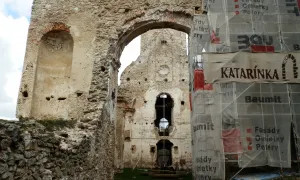
Religious buildings are usually open mainly during services; at other times a visit is normally arranged with the parish or the operator. We have not verified specific times. According to the heritage register restoration is under way, so access may be restricted.
Where is the monument?
Location: Námestie Svätej Trojice 1043/14, Gabčíkovo, Trnavský kraj. The map on this page shows the exact spot.
Why is the monument protected?
It is listed in the Central List of the Monuments Fund of the Slovak Republic as a national cultural monument (ÚZPF no. 211-83).
For children
Imagine that we travel through time. We'll be stopping by just in 1400. It's exactly 626 years ago. It was not only a quiet alley back then in Gabčíkov, but a living place where children were born, which are no longer among us today. Right in the heart of the village stood a church, which was more important to people than modern phones. It was their home, their port, and the place where they prayed for good harvest and health.
Nearby
🏰 Historic sites (120)
- sv. Vendelín 0.0 km
- Najsvätejšia Trojica 0.1 km
- Kaštieľ Vrakúň 5.5 km Dvojrad 333/2 web
- Socha Panny Márie 5.7 km
- Szent János 6.4 km
- Sv. Florián 6.5 km
- A Duna-szabályozás áldozatainak emlékműve (1933) 6.9 km
- Betonhajó 7.1 km
- Obetiam I. a II. svetovej vojny 8.4 km
- Dunai Hajós 8.4 km
- Millenniumi-emlékmú 8.8 km
- Szűz Mária 8.8 km
- Lipóti falumúzeum 8.9 km +36 30 631 1889
- Szent Kelemen 9.2 km
- Zsidó temető 9.2 km
- Pro Patria et libertate! 9.2 km
- Matej Korvín 9.3 km
- sv. Anton Paduánsky 9.3 km
- A Vilaghaboruk Aldozatái 9.4 km
- sv. Florián 9.4 km
🍽️ Restaurants and dining (163)
- Paša 0.5 km
- Pizzeria Kovacs 0.6 km Športová 1642/29
- Reštaurácia Nimród 2.0 km +421 31 559 45 52 web
- SVD Bufet 2.9 km +421 905 638 799
- Komp Kávézó 4.5 km
- Hullám Csárda 4.6 km +421 31 559 41 92
- Penzion Platan 6.2 km +421 31 55 49 414 web
- Hostinec Zöldfa 6.2 km
- Hostinec Duna 6.5 km
- Topoľ 6.7 km
- Veterán 8.5 km
- Titán Halászcsárda 8.5 km Rákóczi Ferenc utca 66 +36 96 283 611
- Presszó 8.6 km
- Hostinec Nyírfa 8.8 km
- Kék Duna 8.9 km web
- Orchidea 9.0 km
- Čárda u Jozefa 9.0 km
- Ásványráró Sport Büfé 9.2 km
- Hostinec Bicsak 9.3 km
- Öreg Duna Csárda 9.5 km
🏨 Accommodation (80)
- Účelové zariadenie Gabčíkovo 1.0 km web
- Hotel Amade Château 5.5 km +421 918 620 498 web
- Vadludak 7.4 km
- Part Camping Ásványráró 7.8 km Kikötői utca 51 web
- Orchidea Hotel**** 9.0 km Rákóczi Ferenc utca 42-44 web
- Holt-Duna Kemping 9.4 km
- Tündérrózsa Camping 9.7 km
- Lipóti Termál Camping 9.7 km Fő út 84 +36 30 4737 656 web
- Autokemping Thermalpark 10.2 km +421905895964 web
- Ilona vendégház 10.4 km
- Therma 10.6 km
- Legend 10.6 km web
- Apartmány Termál 10.7 km web
- Hencz Penzion 10.7 km
- Kék apartman 10.7 km Kossuth Lajos utca 13 web
- Kont panzió 10.7 km Kossuth Lajos utca 17
- Hédervári Kócsag tábor 10.7 km Kossuth Lajos utca 67 +36 30 939 0350 web
- Kont panzió 10.7 km Kossuth Lajos utca 15
- Therma 10.7 km
- Fortune 10.8 km
🚲 Rentals and sport (39)
- Vizitúra stég 7.6 km
- Ásványrárói Sportcsarnok 9.2 km
- Lipót SE 9.5 km
- Veľký zážitkový bazén 10.5 km
- Taliansky bazén 10.5 km
- Jacuzzi 10.5 km
- Kneippov kúpeľ 10.5 km
- Rekreačný bazén 10.6 km
- Relax termálny bazén 10.6 km
- Detský bazén 10.6 km
- Rotunda termálny bazén 10.6 km
- Rotunda termálny bazén 10.6 km
- Wellness bazén 10.6 km
- Detský bazén 10.6 km
- Ochladzovací bazén 10.6 km
- Malý plavecký bazén 10.6 km
- Caprilio 11.5 km Hlavná 5929/76 web
- Cyklosport 11.6 km
- Kellys 12.1 km
- Intersport 12.4 km Galantská cesta 6117/17
🥾 Hiking and nature (27)
- Madárfigyelő torony 6.4 km
- Istragov 7.1 km
- Cement-hídi pihenő 7.9 km
- Barátság-ligeti pihenő 9.2 km
- Nyáros komp 9.2 km
- Holt-Duna-csatorna pihenő 9.6 km
- Tanyahajó 9.7 km
- Turistická zastávka sv. Martina 10.5 km
- Kápolnakert 10.6 km
- Hotel Therma Park 10.7 km
- Zsidódomb 10.9 km
- Angolkert 11.1 km
- Boglyakemencék 11.4 km
- Régi tűzoltókocsi 11.6 km
- Park kráľa Žigmunda 12.1 km
- Vízitúra pihenőhely 12.9 km
- Denkpáli hallépcső 13.3 km
- amatőrcsillagász észlelőhely (7,0 mn sötét-égbolt) 13.3 km web
- Morotva Tavi Tanösvény Kilátó 13.3 km
- Amatőrcsillagász-észlelőhely 13.4 km web
Thematic route
1. The exterior of the church of St. Margita - Architecture. Facade and external details of the building. 2. Interior of the church - sacral space. The inner structure of the temple and a place to think. 3. Main altar - Artwork. Center of interior with religious symbols. 4. Church area - Outdoor space. The immediate vicinity of the building.
Seasonal recommendations
In spring, the surroundings of the church of St. Margita in Gabčíkovo will be surrounded by fresh greenery. Fine lighting during this period is suitable for outdoor photography of the building. It is recommended to visit in the morning and layered clothes due to variable weather.
Summer season brings intense light and rich colors of nature. Due to high temperatures it is advisable to visit the place early in the morning or late in the evening. It is practical to wear lightweight, breathable materials and use sun protection.
Podzim in Trnava region changes the colors of the leaves around the church. Golden and weaker light gives the building a peaceful look. When planning the trip, it is advisable to take an impetuous jacket or sweater, as temperatures fall sharply.
Winter brings to Gabčíkova silence, which can emphasize snow cover. The lighting is weaker and the days are short. For visitors, warm clothing and firm footwear are essential to ensure stability on wet surfaces.
Visualisations and artistic views


The visualisations are generated by artificial intelligence and serve as inspiration.
Photographs from the area
Real photos taken near the monument


Source and licence are given for each image.
Visitor Tips
No tips yet. Be the first!
Log in and add your tip.
Location on Map
Visitor photos
No photos yet. Be the first to add a photo from your visit!
Log in and add your photo or leave a rating.
You get more points for a visit verified in the app — we can tell from the GPS that you are there.
Reviews and comments