








st. Trinity's filial church Church with grounds
The purple church of the Holy Trinity in Munich Lehota, located in the Trencin region, is a medieval gothic Roman Catholic church from the second half of the 14th century. Single boat with a polygonal presbytery and northern sacristy, protected as a national cultural monument of the Slovak Republic.
The church was built during the second half of the 14th century, probably under the direction of Nitra bishops, as Munich Lehota was at that time under their jurisdiction. In the Middle Ages there was also a separate parish in the village, which probably died in the 16th century after the Turkish devastation.
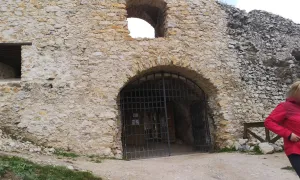
During its history, the church has undergone several modifications. In the 16th or 17th centuries the area was surrounded by a stone castle wall. During the Reformation of the 17th century, the church belonged to the evangelicals for a time, according to the principle of its rulership. Historical records show that during the uprising of Štefan Bočkai (in 1611), the temple was plundered and valuable jewels were stolen.
At the beginning of the second half of the 18th century, the church was largely devastated. Already in 1713 a new table ceiling was added, which was made by Terézia Mottesiczká. During the Baroque reconstruction, the church's ship received a new ceiling, and the window openings were likely extended.
In the 20th century the architecture was enriched by several additions. In 1939 the southern atrium was built and in 1996 a hall was established before the western entrance. During the repair between 1958 and 1959 the church received a new roofing, a new roof covering and the original narrow window on the western facade was replaced by a circular-shaped window. In 1975, there was a major repair of the interior, implemented by Decora Trenčín. In 2014, historical-architectonic research was carried out in the church, which helped refine its construction development. It was followed by the restoration of the monument.
Architecturally, the church is a single-shiped building with the western and southern atrium. Behind its western shield there is a wooden prism bell tower. The Presbytery is separated from the ship architecturally and with a rectangular retreat, the shape of which is made up of three supporting pillars with oblique ending. The shrine is lit by 3 tall windows of stone gothic windows with a ring in the shape of a nun, while the ship is illuminated by younger windows with a semicircular incantation. On the west facade above the modern hall there is a circular window without a circle.
The interior of the church is rich in Gothic details. Presbyterium is encircled by two fields of stone rib vault, composed of one field of cross vault and polygonal end field with ray (paprskovitou) vault. Clinically sprained ribs are mounted on the wall without sharp-slit consoles and intersect in two round smooth bolts. Sakristia has a stone vault, while the ship is flat-footed. The ship and the shrine are separated by the fractured winning arch. From the presbytery leads to the sacristy gothic stone portal in the shape of a broken arch with bevel and nose. In the northern wall of the sanctuary there is a stone pastophorium with a triangular ending and motif of the nun, while in the southern wall there is a stone sitting finished with segment arch. The northern wall of the sacristy preserved a stone bench with an undecorated water container and a drain duct led to the facade. In the eastern window of the sacristy there is an original Gothic forged grid.
The original mobilizer from the early centuries of the church does not exist. Today, on the main altar of the Holy Trinity of 1969 is located relief of God the Father holding the cross with the Crucified and Dove. Side altars The Immaculate Conception of the Virgin Mary and the Divine Heart of Jesus came from the late 19th century and adorned their columns with acantes. The paintings themselves on the side altars come from 1947 and 1949, respectively, and are the work of academic painter J. Obrske and Professor J. Popeliš.
In the tower there are currently two bells: the smaller bell is dedicated to St. VendELEN and comes from 1840; the larger bell is dedicated to the Holy Trinity was cast by Octave Winter in Broumove in 1926. The original medieval large bell from the church was torn down and reclaimed during World War I for the needs of weapons production for the Austro-Hungarian army. The bell in the church worked manually until 1987, since it was fully electrified.
In the village there is an interesting reputation for the place of construction for centuries. Originally, the temple was to stand on the hill of Kostelec, where there was once a hospice where monks lived. They decided to build a church, but the towing animals (voys and horses) with the stone loaded each time spontaneously turned to the place in the village where the church stands today. Although the Furmani forced the animals to transport cargo to Kostelec, which during the day the masters built the masons, the next morning they found it demolished and fell from a pile of stone every night. When they decided to guard at night, they saw a little child walking around a pile. After they cried it, the child fled and stopped right at the present place of the church in the village. The ancestors took it as a sign, changed the plans, and built the sanctuary there. The inhabitants of the surrounding villages from the time of the inhabitants of Times called the nickname " "kostelski.".
The area registers the Monument Office of the Slovak Republic under the number of ÚZPF 1252 and consists of 3 objects: 1252/1 - Church (r.k.sv.Trojice, Gothic, 2nd half. 14.st.), 1252/2 - Wall (stone, Renaissance, 16.-17.st.?), and 1252/3 - Church cemetery (not studied, 14.st.).
Today the Church of the Holy Trinity in Munich Lehota is actively used as a place of religious services and cultural events. His historical and architectural values testify to the rich heritage that is important to protect for future generations.
Tehdy a dnes
Drag the slider and compare how the monument might have looked when it was built with the view today.
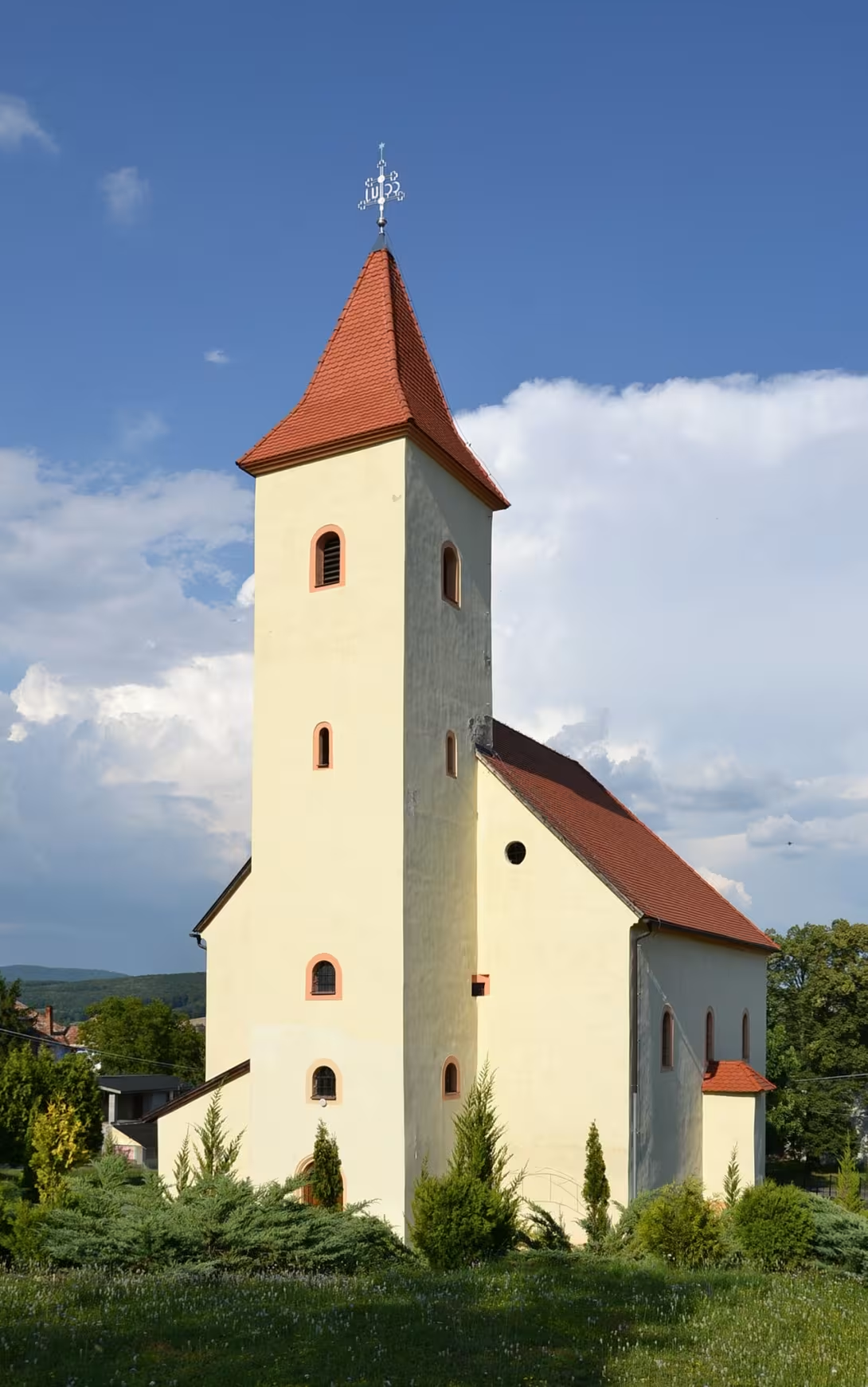

The historical view on the left is a visualisation generated by artificial intelligence and serves as inspiration.
Historical Milestones
- 2nd half of the 14th century: church construction
- 16th or 17th century: enrichment of the area with a stone castle wall
- 17th century: the church belonged to the gospels during the reformation
- 1611: robbing the temple of the bastards during the uprising of Stefan Bočkai
- 1713: construction of new table ceiling
- second half of the 18th century: baroque church restoration
- 1939: construction of the southern atrium
- 1958 - 1959: repair of roofing and roofing
- 1975: general interior repair
- 1996: construction of the attic bef
Restoration history
| Years | Type | Extent | Condition after restoration |
|---|---|---|---|
| 2016–2017 |
Obnova a reštaurovanie
filiálny kostol sv.Trojice |
Komplexná | dobrý |
Source: Monuments Board of the Slovak Republic — open data, licence CC BY 4.0
Heritage surveys
-
2014 — Architektonicky-historícký výskum
Čiastkový pamiatkový výskum
Interesting facts
- The purple church of the Holy Trinity was built in the second half of the 14th century. - The church was probably administered by Nitra bishops, since Munich Lehota was under their jurisdiction. During the uprising of Štefan Bočkai in 1611 the temple was robbed by scumbags and stolen valuable jewels. In the 16th or 17th centuries the area was surrounded by a stone castle wall. - During the Baroque reconstruction, the church's ship received a new ceiling, and the window openings were likely extended.
Tips for visitors
The best time to visit the philial church of St. Trinity is spring or autumn, when the weather is stable and allows easy movement around the sacral structure.
The location is available by car and public transport; check the current links in the search engine.
It is recommended to have comfortable shoes and water for a walk in the area.
For photography are the best places overlooking the exterior of the church; the most beautiful light is during the morning or evening hours.
Frequently asked questions
Can the monument be visited?
According to the heritage register the site is not presented to the public – there are no accessible remains or information on site.
Where is the monument?
Location: Mníchova Lehota, Trenčiansky kraj. The map on this page shows the exact spot.
Why is the monument protected?
It is listed in the Central List of the Monuments Fund of the Slovak Republic as a national cultural monument (ÚZPF no. 229-1252).
For children
I think it would be interesting to explore the Church of the Holy Trinity in Munich Lehota! At first glance, it seems like a stone cross on the magic Earth map. How do you imagine? More than 600 years ago, namely in 1400, this monument was born when locals and shepherds moved here during that time.
Nearby
🏰 Historic sites (168)
- Padlým kuruckým vojakom 2.1 km
- Obetiam 2. svetovej vojny a SNP 3.4 km
- Padlým ruským vojakom 3.5 km
- Samuel Timon 3.5 km
- Jozefovi Oravcovi 3.5 km
- Jozefovi Halabrinovi 3.5 km
- Štefanovi Ježíkovi 3.5 km
- Samuela Timona 3.5 km
- sv. Ján Nepomucký 3.6 km
- Dedinský skanzen 3.7 km
- Sv. Florián 3.7 km
- Kaštieľ Madocsanyiovcov 4.5 km
- Antonín Benjamin Svojsík 4.9 km
- sv. Ján Nepomucký 5.0 km
- Pamätník vojakom z 1. svetovej vojny 5.0 km
- Memento 5.4 km
- Hangár X 5.4 km +421 949 849 412 web
- Gustáv Hano 5.8 km
- Tupolev Tu-143 VR-3 Rejs 5.8 km
- Aero L-39 Albatros 5.8 km
🍽️ Restaurants and dining (346)
- Corleone 0.1 km
- Krčmička u BOŠA 0.5 km
- Gazdovský Dvor 3.0 km
- Chata pod Ostrým vrchom 3.1 km
- Emily 3.1 km
- Pohostinstvo u Hrocha 3.1 km
- U Ježíka 3.5 km
- NADJA 3.5 km
- Curkárň, kaviareň 3.6 km
- Hostinec u Ondreja 3.8 km +421 32 652 87 84 web
- Pegas 3.8 km
- Pizza Bruno 3.9 km +421 908 87 87 87 web
- Bistro Kulturák Turná 4.0 km web
- Havran 4.1 km +421 915 390 767 web
- Alcatraz Pizza and Burgers 4.3 km
- Subway 4.3 km
- Foodcourt 4.4 km
- Glacio Caffe 4.4 km
- UGO 4.4 km +421 904 937 001 web
- Laugo Café & Coctails Bar 4.4 km
🏨 Accommodation (108)
- Chata pod Ostrým vrchom 3.1 km
- Hostinec u Ondreja 3.8 km
- Havran 4.1 km +421 915 390 767 web
- Fireplace 4.2 km
- Bindárka 1968 5.1 km
- Penzión Formula 5.1 km Bezručova 2045/68
- Penzión na letisku 5.5 km
- Hotel Veverica 5.6 km +421 32 642 08 81 web
- Chata Trubárka 5.6 km Kubrická 227/77 +421 32 2289 010 web
- Turistická ubytovňa Kubrica 5.7 km +421 32 7441 348 web
- Hotel S.O.G. 6.3 km Jesenského 598/32 web
- Penzión Kyselka 6.3 km +421 32 7434 212 web
- Penzión Feši 6.6 km +421 948 621 231 web
- Ubytovanie KUBRÁ 623* 6.6 km K zábraniu 623/4 web
- Ubytovňa Janka 6.6 km
- Penzión Tiberia 6.6 km web
- Penzión Exclusive 6.6 km
- Hostinec & Penzión Nad Stajňou 6.7 km web
- Penzión Evergreen 6.7 km Kubranská 4/8
- Penzión Lyjana 6.7 km
🚲 Rentals and sport (55)
- Tenisová akadémia - Tenisová hala 2.5 km
- Bowling 3.8 km
- bikerx 4.3 km web
- Intersport 4.3 km
- A3 SPORT 4.3 km
- Nordblanc 4.4 km
- Adidas - HZH Sport 4.4 km
- EXIsport 4.4 km
- A PRO Sport 4.5 km
- Decathlon 4.5 km Belá 6469 +421 3 2221 1680 web
- Sportisimo 4.8 km
- AXB sport servis 5.0 km
- BSK 5.3 km
- Bicykloraj 5.4 km +421 911 122 661 web
- inSPORTline 5.5 km
- SPORT 2000 - Tulák outfit 5.6 km web
- Mountainshop 5.9 km
- Cykloshop.sk 5.9 km +421 919 363 442 web
- Hudy Racing Arena 6.2 km +421 32 7401 100 web
- T-Šport 6.7 km +421 32 652 1420 web
🥾 Hiking and nature (301)
- Prameň v dome č. 79 0.2 km
- Prirodny minerálny zdroj, vrt HG-3 0.9 km
- Kyselka v Brezinách 1.0 km
- Prameň vedľa brány 1.3 km
- Brezinská kyselka 1.7 km
- Rázová 1.8 km
- Turnianska kyselka 1.9 km
- Prameň nad Veľkou kyslou 2.0 km
- Sopkov kameň 2.0 km
- Soblahovska Kyselka 2.2 km
- Kyselka na Huku I 2.2 km
- Prameň v olšine 2.2 km
- Dolňanská kyselka 2.2 km
- Kyselka v Jarkoch 2.2 km
- Na vrchu Rígeľ 2.3 km
- Macková 2.4 km
- Humenec 2.6 km
- Vodný zdroj Mníchova Lehota 2.6 km
- Mladé háje 2.8 km
- Dúbrava 2.9 km
Thematic route
1. Church of St. Trinity - Outdoor space. Ideal point to start a visit, where you can quietly perceive the architecture and environment around the monument.
2. The purple church of St. Trinity - Temple. The main point of the route, which is an important spiritual and historical monument in the village of Munich Lehota.
3. Interior of the church - Indoor space. A place designed to admire artwork and altar as well as peaceful contemplation.
Seasonal recommendations
Spring return to Munich Times brings a particularly gentle atmosphere to the surroundings of the philial church of the Holy Trinity. It is during this period that nature awakens around sacral construction, when the leaves on the trees in the area begin to roar and the grass becomes fresh green. The light is unique in the spring season, as the sun shines at a lower angle, creating long and delicate shadow effects on the facade of the building, ideal for photography shots. This period is particularly suitable for peaceful walks, as the main summer season is not yet underway and the surrounding area is quieter. Clothes should be layered because spring days can be variable, with sudden temperature fluctuations and occasional rain. The best time to visit is noon when nature is heated and light is clear enough to make the details of architecture and the surrounding environment stand out. Summer in Munich The Lehote offers the longest days and the most intense light that reveals every detailed line of church building. In the summer months nature is in full blossom, with rich vegetation and deep greenery, which creates a pleasant contrast with the stone walls of sacral monuments. The atmosphere here in summer is often associated with higher temperatures, which requires adequate clothing - light, breathable materials, and sun protection, such as hats or sunglasses. The main summer season brings more movement and life to the village, so visitors can expect a more vibrant environment around the area. For the most comfortable experience, it is advisable to choose the morning or late afternoon when sunlight is not so intense and the temperature is acceptable for longer stays outside. Podzim brings a special, melancholy beauty to the vicinity of the Church of the Holy Trinity in Munich Lehota. The leaves on the trees change color to shades of yellow, orange, and red, creating a color palette that perfectly complements the historical architecture. The light in the underwinter is softer and warmer, giving the whole environment a cozy and peaceful touch. The atmosphere is typically cooler and often accompanied by morning dew or milk, which can be very atmospheric for visitors. Clothing should be layered and protected from cold, with an emphasis on heat and dryness, as winter days may be wet. The best time to visit is the afternoons when the sun begins to bow to the horizon and the light has a golden shade that highlights the textures of stone walls and surrounding nature. Winter in Munich Lehotе offers a unique view of the philatelic church of the Trinity, often wrapped in silence and peace. The frozen nature and the possible snow veil add majestic and noble appearance to the area, where the sacral structure protrudes between the white surroundings. The light in winter is sharp and bright, which creates striking contrasts between light and shadow, ideal for dramatic photography shots. The atmosphere here is quiet and soothing, without summer rush, which allows a deeper focus on the historical context of the monument. Clothing must be warm and layered, with emphasis on frost and wind protection, including gloves, dresses and shoes. The best time to visit is noon when the sun reaches the highest point and the temperature is relatively warmest, which makes it easier to move around the area and admire the details of the building in a cool environment.
Visualisations and artistic views


The visualisations are generated by artificial intelligence and serve as inspiration.
Photographs from the area
Real photos taken near the monument


Source and licence are given for each image.
Visitor Tips
No tips yet. Be the first!
Log in and add your tip.
Zdroje a literatura
The factual basis for this text was the article na Wikipedii, whose authors are Wikipedia contributors. The article is available under the licence CC BY-SA 4.0.
Location on Map
More monuments – Mníchova Lehota
Show all in the town


Visitor photos
No photos yet. Be the first to add a photo from your visit!
Log in and add your photo or leave a rating.
You get more points for a visit verified in the app — we can tell from the GPS that you are there.
Reviews and comments