

church of the Virgin Mary Birth Church and chapel
In the village Čierny Brod in Trnava region there is a church with an area, which is declared a national cultural monument. The main building, the Church of the Nativity of the Virgin Mary, comes from the first half of the 13th century and is built in Romanesque style.
The monument area consists of a set of two objects. The first one is the Romanesque church of the Nativity of the Virgin Mary, whose dating dates from 1220 to 1230. The second building in the area is the Chapel of Our Lady of Seven Painful, which represents Baroque architecture from 1753.
The monument is located at the address number 480 in the village Čierny Brod. The Slovak Monument Office registers it under the number ÚZPF 212-9.
The church and chapel are located in the village of Čierny Brod and represent within the locality the connection of Romanesque and Baroque architecture. The historical value of the complex results from its age and the preservation of two different construction periods. The place is available for visitors who are interested in authentic monuments from the early Middle Ages and the Baroque.
Tehdy a dnes
Drag the slider and compare how the monument might have looked when it was built with the view today.
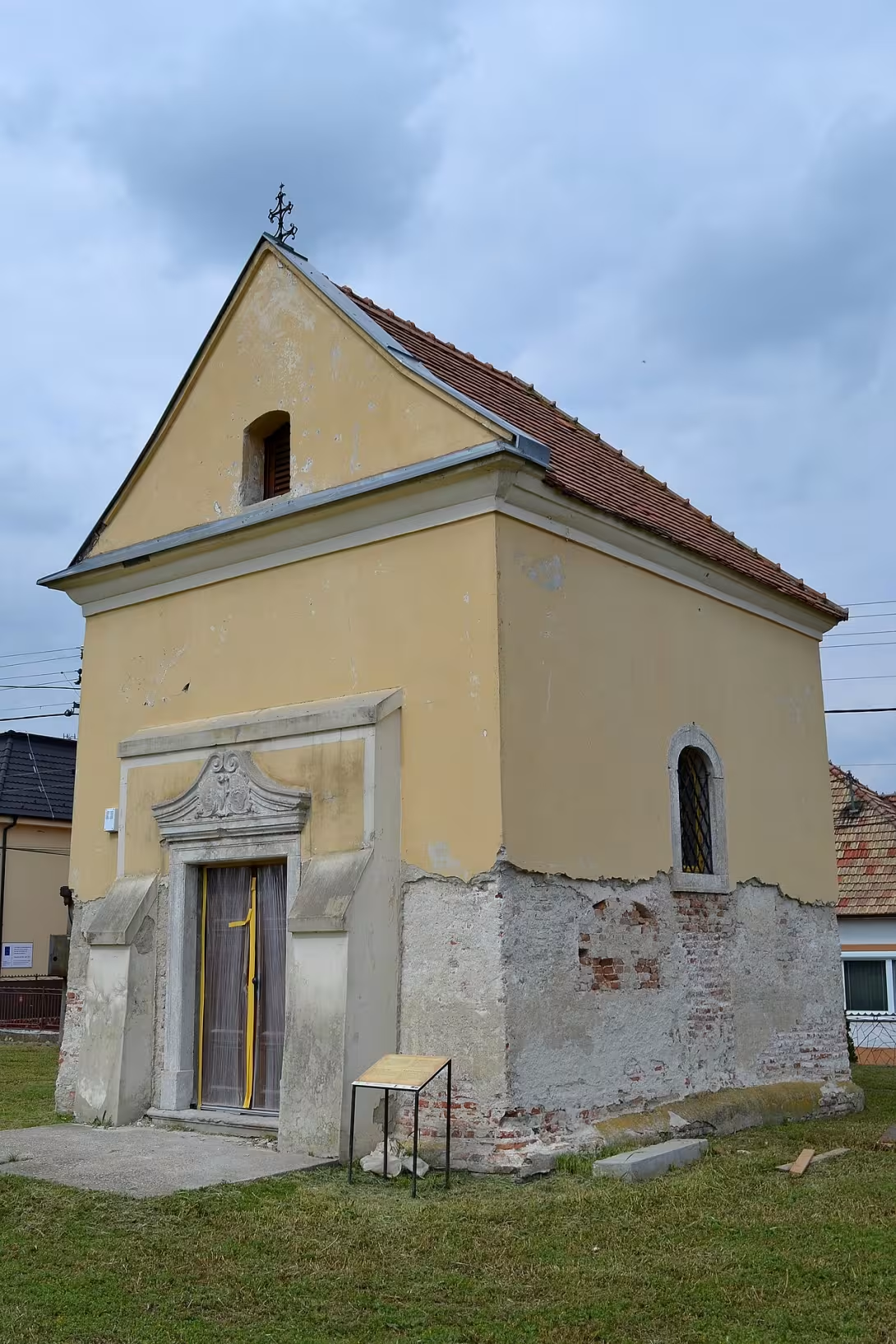
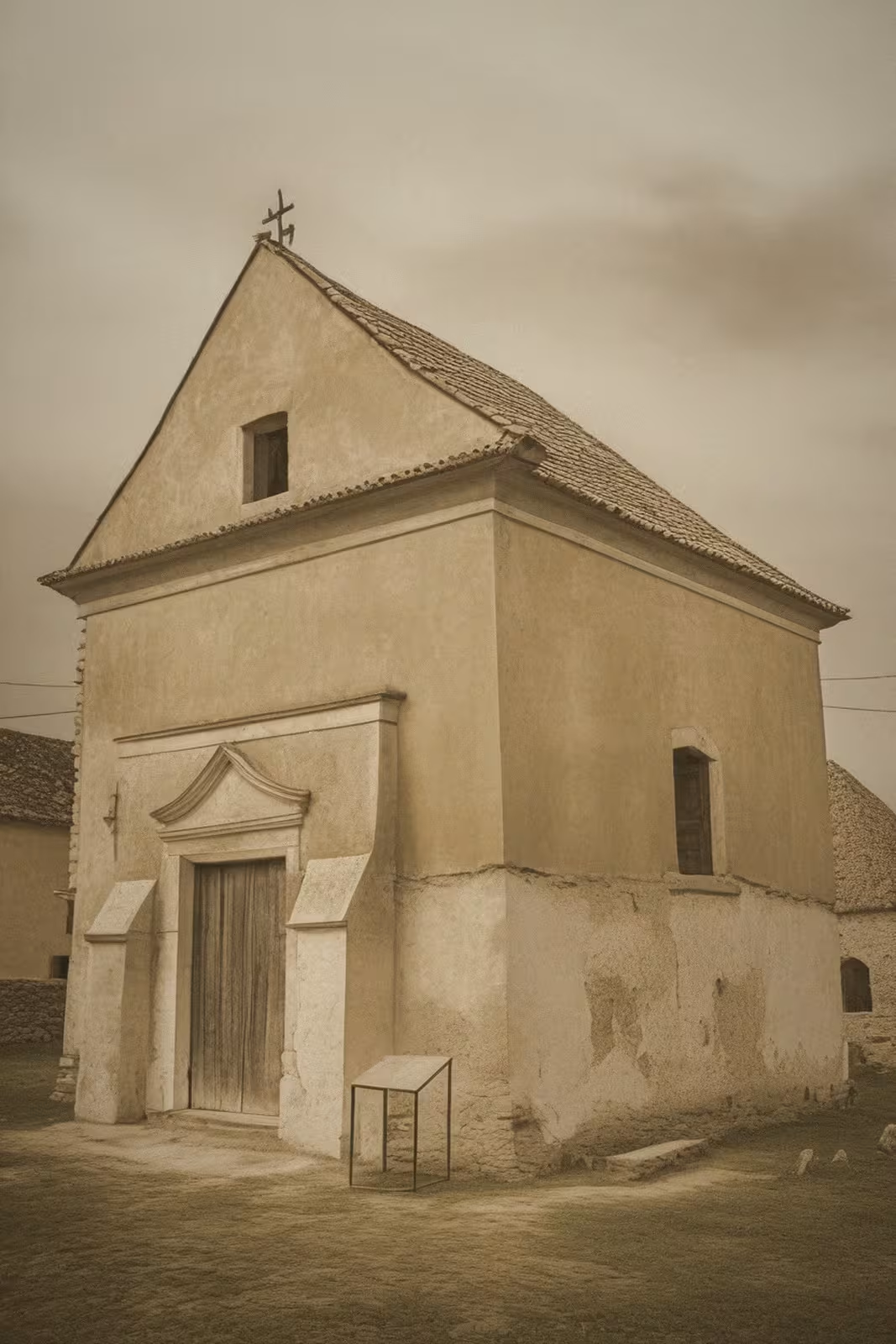
The historical view on the left is a visualisation generated by artificial intelligence and serves as inspiration.
Historical Milestones
- 1220
- Creation of the Church of the Virgin Mary Birth
- 1230
- Complete the construction of the Romanesque church
- 1753
- The status of the Virgin Mary Chapel of Seven Painful
Restoration history
| Years | Type | Extent | Condition after restoration |
|---|---|---|---|
| 2017 |
Obnova a reštaurovanie
kaplnka Piety,rod.Jezernických |
Časť obnovená komplexne | dobrý |
| 2016 |
Obnova a reštaurovanie
kaplnka Piety,rod.Jezernických |
Časť obnovená komplexne | dobrý |
Source: Monuments Board of the Slovak Republic — open data, licence CC BY 4.0
Interesting facts
- The church with an area in the village of Čierny Brod is declared a national cultural monument. - The main building, the Church of the Nativity of the Virgin Mary, comes from the first half of the 13th century and is built in the Romanesque style. - The monument area consists of a set of two objects. - The second building in the area is the Baroque Chapel of Our Lady of Seven Painful from 1753. - The monument represents the combination of Romanesque and Baroque architecture.
Guide
Show guide text
The text was prepared by artificial intelligence and has not been editorially reviewed. It may contain inaccuracies.
Welcome to Black Brody. You are standing in front of the Church of the Nativity of the Virgin Mary, in the quiet centre of this histórical village in southern Slovakia, where the Danube plains meet with the protrusions of the Little Carpathians. Before you, the rods that have stood here for decades, perhaps even centuries, serve as a silent witness to the lives of generations of local inhabitants. The first impression is the impression of patience and modest beauty - you don't see the proud towers or rich facades known from the city cathedrals, but precisely in this simplicity lies its strength. The facade, slightly coloured, with an entrance portal that invites inside, tells the story of faithfulness and daily prayer. Notice how the church naturally participates in the surrounding area, as if there were always, as part of the country, a part of the people. Let us now move on to the past, though the road will not be easy. Unfortunately, the evidence we have at our disposal is very modest. Chronology of construction is unknown, the names of architects who designed and built this church have been lost in the months of time, and not even historical personalities that would operate here or be closely immersed with it are unknown to us. It is a situation we know well from many smaller church buildings in Slovakia - their history was not written in large chronicles, but lived in the hearts of parishioners, in a bell that sounds into the fields, in olive oil that lit at the altar. We assume that the church originated at a time when Black Brod developed as a village with Hungarian and German settlements, probably in early modern times, perhaps even later Gothic or early Renaissance, but without specific data it remains only an estimate based on the typology of similar buildings in the region. It was a church of parish, a refuge in Turkish raids, Danube floods and heavy winters. There were places where the children were baptized, the young men's promises were given, and from where they were accompanied to the local cemetery. It is this anonymity that is part of his dignity - not the work of one genius, but the work of a community. Nyny pay attention to architecture, which we can only approach by observing what we see right now. Since we do not keep written records of the construction stages, we need to read from the stones and the bar. You are standing in front of an object that has a classic direction with a presbytery to the sunrise and a Christian hope. The construction is made of bricks or stones - typical of our countries - and the ceilinging is probably hipped or cross hipped in the ship and in the presbytery, although the outer walls may cover it later. Look at the windows. Their shape, whether narrow and high with a Gothic perimeter, or wider with a Renaissance or Baroque division, could tell us more about data, but without more detailed analysis we remain when describing the visible: the regular rhythm of holes, which illuminates the interior space. Notice the portal. It's the line between the world of the end and the world of the inside. His makeshift or, conversely, his seal finish, a stone or a brick, preachs about the hands that he was faced with. The tower - if it is here - serves not only as a bearer of bells, but as a vertical dominance that points up. If you look at the roof, you will see coverings that protect the ceiling from rain and snow, the practical thing that survived the mods. Inside, if you choose to enter, we will take you in a space where light plays a major role. The walls, perhaps with fragments of older paintings, maybe just white plastered, create an atmosphere of destruction. The main altar, the side altars, the pulpit, the baptismal niche - these are elements that have been here for hundreds of years, serving a certain role. Do not look for world-class art wonders, look for the miracle of faith and permanence. The sprout stories and personalities minted with this place are, as we have already said, unknown. There are no epitaphs of famous scholars or memorials of battles. Stories here are personal, family, local. It's the story of a grandfather who opened the door every morning and lit candles. The story of the grandmother who prayed for sons on the front. The story of a parishioner who, in times of totalitarianity, kept the parishioner alive, though at risk of freedom. The story of a bell who learned to ring on holidays and sadness. These names are unknown, but their tracks are in the fringed thresholds, in the painted benches, in the scratched door of the Confessional. Black Brod has his own history - he was the property of different noble families, he survived reformation, recatolization, Hungarian uprisings, both world wars. The church was at the heart of it all. It was the point people returned to when the world moved too fast. It's a story about endurance. The fact that even without known names and data, the building can be the holder of the identity of the whole region. And now something that could be the mystery you're looking for. Exactly the unknown is the greatest mystery here. Why don't we have any records? Burned in the parish house? Did war take them? Or did no one think to write them down because it was obvious that the church was here and would be? There are legends that are sold orally - hidden crypts under the presbytery, where ancient gentlemen from outside the castle should rest, a treasure hidden in the wall by the addition of the Hussite troops, a bell that itself began to move before the disaster. They're just legends, folklore, but they give this place a dimension that exceeds concrete and brick. Another attraction is the locality itself - Black Brod lies in an area where trade routes crossed and where the Danube changed its troughs. The church therefore stood at the border, at the meeting place of cultures, languages, fates. Maybe that's why he's so versatile in his locality. When you stand up silently and close your eyes, you may hear the echoes of the Latin litas, the German Mass, the Hungarian prayers, the Slovak song. It all sounds together in a quiet wall. Let's go say goodbye now, but not from the church, just from this call. I invite you to move inside now, if it's open, or you have passed it around. Touch the cold wall. Sit on the bench in front of the church square and look at the tower. Welcome to the fact that you are part of this continuous chain of people who stood before you here. Church of the Nativity of the Virgin Mary in the Black Brody is not a memorial that you should just look at and photograph. It's a living organism that breathes through your breathing while you're here. Be connected to his silence, his unknown history, his simple beauty. I hope this visit has brought you a feeling of climate and connection with something greater than us. Thank you for coming. Have a good time, and may the Virgin Mary, to whom this church is sanctified, keep you on your way.
Tips for visitors
The best time to visit the Church of the Virgin Mary Birth is early in the morning or late in the afternoon in spring and autumn season, when the light is soft and the colors of the surroundings live. In summer, it is recommended to come early to avoid more visitors and experience a quieter atmosphere. Take comfortable shoes with you, as walking along stone paths may be longer. Prepare a bottle of water, sunglasses and possibly a map or GPS application for orientation in the area. Photography is most striking during the golden hours - shortly after sunrise and just before sunset - when light highlights the details of the facade and interior. It is advisable for families with children to plan a visit so that they have enough time to move freely in the outdoor courtyard and a short break in the shadows. Children appreciate running space and the possibility to explore old stone walls, while parents can use benches to relax.
Frequently asked questions
Can the monument be visited?
Religious buildings are usually open mainly during services; at other times a visit is normally arranged with the parish or the operator. We have not verified specific times.
Where is the monument?
Location: č. 480, Čierny Brod, Trnavský kraj. The map on this page shows the exact spot.
Why is the monument protected?
It is listed in the Central List of the Monuments Fund of the Slovak Republic as a national cultural monument (ÚZPF no. 212-9).
For children
Imagine standing in a place where 806 years ago, in 1220, the first stone house was built. There was no car at the time, just horse cars and children playing in the meadow. The house was just the Church of the Virgin Mary Birth in Black Brody. At that time, it was like a huge fortress of sand and stones, where everyone met - shepherds, smiths, teachers, and old wise men. Their hearts sounded singing and prayers throughout the region.
Nearby
🏰 Historic sites (215)
- Pieta 0.0 km
- Kopjafa 0.9 km
- sv. Florián 1.1 km
- Trojičný stĺp 1.2 km
- sv. Ján Nepomucký 1.4 km
- Sv. Vendelín 1.8 km
- Kúria rodu Fekete 1.8 km
- Štefan Major 2.0 km
- Kúria Ábrahámffyovcov 2.1 km
- Pamätník vysídlených a deportovaných 2.2 km
- Sv. Ján 2.2 km
- Panna Mária 2.2 km
- Sv. Ján Nepomucký 2.3 km
- Sv. Vendelín 2.4 km
- sv. Florián 2.4 km
- Najsvätejšia Trojica 2.4 km
- Kaštieľ Košúty 2.4 km
- István Széchenyi 2.4 km
- Najsvätejšia Trojica 2.7 km
- Sv. Vendelín 2.8 km
🍽️ Restaurants and dining (134)
- Pizza Kiss 0.9 km
- Restaurant Wien 1.6 km
- Kiki's Bar 2.2 km
- Hostinec Topi 2.2 km
- Petrov Grunt 2.3 km
- Pohostinstvo U Berty 4.9 km
- Chilli's Pub 4.9 km
- Pizza and more 5.2 km Fučíkova 732/296 +421910494444 web
- Renegade 5.4 km
- Vén Diófa Reštaurácia - Penzión 5.4 km Hlavná 6/6 +421 31 785 51 67 web
- Restaurant and Coffee Bar Tevel 5.5 km
- Grand 5.5 km Fučíkova 100/87
- Kebab Antalya 5.6 km
- SnackCafe 5.6 km Fučíkova 420/215
- Bagetéria u Šuriho 5.6 km
- TRÓJA 5.6 km +421 904 662 058 web
- Hostinec u Joža 5.6 km
- KEBAB HOUSES 5.7 km Fučíkova 133/112
- Panda 5.7 km
- PizzaX 5.7 km
🏨 Accommodation (30)
- AQUArea Čierna Voda 5.0 km +421 902 673 675 web
- Hotel Tevel 5.5 km
- Autokemping Vincov Les 5.9 km
- Penzión a relaxačné centrum Viktória 6.0 km web
- City Hotel 6.8 km Vajanského 869/10
- Ubytovňa Kolan 7.5 km web
- Táborisko Potônske Lúky 7.8 km +421 910 324 881 web
- Penzión Aniko Gold 8.0 km +421 31 55 00016 web
- Dom športu 8.1 km +421 910 936 903 web
- Hotel Galanta 9.5 km Orechová 2626/1 web
- Penzión Komlóš 10.0 km
- Jazero Tomašíkovo 10.1 km
- Hviezda 10.2 km web
- Diakovce 10.3 km
- Formula 10.8 km
- Táborisko Vodný mlyn 11.3 km
- Merci Hotel 11.9 km web
- Ister 12.0 km Dunajská 1266/36
- Táborisko pod Krížom 12.4 km +421 949 009 488 web
- Táborisko PomoRanč 12.4 km +421 940 636 602 web
🚲 Rentals and sport (13)
- BikeMan 5.8 km
- ZAJO 6.5 km 29. augusta 1646/6A +421 915 390 713 web
- gaudio 6.8 km web
- Szolgai 7.0 km
- Šport Mirka 7.3 km
- svetbicyklov.sk 7.3 km Obrancov mieru 3194/3 +421 908 117 033 web
- Sportisimo 8.0 km
- Športcentrum Arkádia 8.2 km
- TJ Horné Saliby 8.6 km
- Člny nože.sk 9.6 km +421 910 658 040 web
- Slovakia Ring 12.7 km +421 917 544 227 web
- Královský prístav 12.8 km
- Slovenské motokárové centrum 13.2 km web
🥾 Hiking and nature (17)
- Sládkovičovská Duna 6.8 km
- Vodný mlyn pri Tomášikove 7.4 km
- Galantský park 7.7 km
- Spodný diel 7.9 km
- Galandia 8.2 km +421 313 812 042 web
- Rozhľadňa Ranč na Striebornom jazere 8.3 km
- Sikulská brána 10.5 km
- Vyhliadka Umpire 10.6 km
- Vyhliadka Rahno 10.7 km
- Prístrešok τπ 10.8 km
- Da Vinciho most 10.9 km
- Penroseho trojuholník 10.9 km
- Vodný kolový mlyn Jelka 11.3 km web
- Rozhľadňa Hniezdo 11.6 km
- Mlyn a vodná píla Jahodná 13.5 km Mlynská 816/132
- Pod Vŕbami 14.5 km
- Vodný mlyn pri Dunajskom Klátove 14.5 km web
Thematic route
Church of the Nativity of the Virgin Mary (interior), Type: sacral object. The inside of the temple provides a peaceful environment and artistic details. Church Tower, Type: architectural point. The tower reveals a view of the surroundings and the village. Church area, Type: historical space. The area serves as a historical space.
Seasonal recommendations
In spring, the surroundings of the Church of the Nativity of the Virgin Mary flourish. Fresh green creates contrast with historical walls. We recommend to visit the locality in the morning with gentle light. Due to variable weather, it is advisable to wear layers and wear comfortable shoes.
Summer season in Black Brody brings intense sunlight and rich colors of leaves. The building is clearly visible. A good time to visit is late afternoon or evening when temperatures are more pleasant. We recommend light, breathable clothing and sun protection.
Autumn around the church is peaceful. Colorful leaves and morning mist change the atmosphere of the area. In the middle of the day the low sun highlights the texture of the walls. Due to the cold and humidity we recommend waterproof shoes and warmer sweater.
In winter the church area is quiet. Snow highlights the contours of the structure and creates a sharp contrast with darker elements of architecture. Plan your visit until early lunch to use daylight. Warm winter clothes, gloves, and hats are essential.
Visualisations and artistic views


The visualisations are generated by artificial intelligence and serve as inspiration.
Photographs from the area
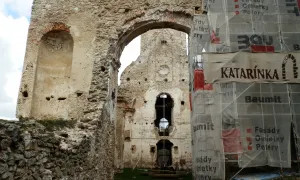
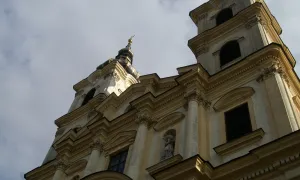
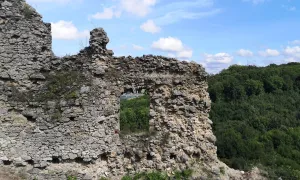
Real photos taken near the monument

Source and licence are given for each image.
Visitor Tips
No tips yet. Be the first!
Log in and add your tip.
Location on Map
Visitor photos
No photos yet. Be the first to add a photo from your visit!
Log in and add your photo or leave a rating.
You get more points for a visit verified in the app — we can tell from the GPS that you are there.
Reviews and comments